Why Atheists Keep Finding God (in everything) - Alex O’Connor - #1175
Episode
116 min
Read time
3 min
Topics
Health & Wellness, Leadership, Design & UX
AI-Generated Summary
Key Takeaways
- ✓Confidence calibration in philosophy: On questions like God's existence and consciousness, intellectual humility is more defensible than militant certainty. O'Connor shifted from aggressive atheism to identifying as agnostic because the arguments on all sides are riddled with unresolved problems. Plato and modern philosophers battle identical questions with no cumulative progress, unlike physics. This suggests treating these as open questions rather than settled debates worth winning.
- ✓Science describes behavior, not substance: Newton's gravitational equations describe *how* objects fall, not *why* gravity exists — Newton himself wrote "hypothesis non fingo" (I frame no hypothesis) on that question. Science mathematizes regularities and reduces phenomena to more fundamental descriptions, but never reaches the underlying substance of anything. Asking science what matter fundamentally *is* — not what it does — falls outside its methodology by design.
- ✓Consciousness cannot be defined or pointed at: Every definition of consciousness requires prior conscious experience to understand it. Thomas Nagel's definition — "there is something it is like to be that thing" — is the most cited, yet remains functionally vague. Consciousness cannot be compared to external things because nothing exists outside it. Anil Seth's definition (what disappears under anesthesia) identifies the phenomenon but does not explain it.
- ✓Emergence arguments for consciousness are circular: Every example used to illustrate how consciousness "emerges" from matter — temperature, images on screens, zeros and ones — is itself an example of something appearing *within* consciousness. Heat is the felt sensation, not the atomic vibration. The image exists only when someone perceives the screen. Defenders of emergent consciousness are unknowingly citing conscious experiences as proof that consciousness emerges from non-conscious matter.
- ✓Meditation and psychedelics remove conceptual filters, not reality: Experienced meditators and psychedelic users converge on nondual awareness across cultures and centuries because both methods suppress the brain's habitual concept-layering. The brain constructs a simplified story of reality — optical illusions demonstrate this — rather than transmitting it transparently. Removing those filters does not reveal a different reality but the same reality without the brain's editorial compression applied to it.
What It Covers
Alex O'Connor, philosopher and former militant atheist, explores why consciousness poses an unsolvable problem for materialism, why science cannot explain the foundational substance of reality, how mystical experience across cultures points toward consciousness as primary rather than emergent, and why the boundary between atheism and certain forms of theism is less clear than the New Atheist movement suggested.
Key Questions Answered
- •Confidence calibration in philosophy: On questions like God's existence and consciousness, intellectual humility is more defensible than militant certainty. O'Connor shifted from aggressive atheism to identifying as agnostic because the arguments on all sides are riddled with unresolved problems. Plato and modern philosophers battle identical questions with no cumulative progress, unlike physics. This suggests treating these as open questions rather than settled debates worth winning.
- •Science describes behavior, not substance: Newton's gravitational equations describe *how* objects fall, not *why* gravity exists — Newton himself wrote "hypothesis non fingo" (I frame no hypothesis) on that question. Science mathematizes regularities and reduces phenomena to more fundamental descriptions, but never reaches the underlying substance of anything. Asking science what matter fundamentally *is* — not what it does — falls outside its methodology by design.
- •Consciousness cannot be defined or pointed at: Every definition of consciousness requires prior conscious experience to understand it. Thomas Nagel's definition — "there is something it is like to be that thing" — is the most cited, yet remains functionally vague. Consciousness cannot be compared to external things because nothing exists outside it. Anil Seth's definition (what disappears under anesthesia) identifies the phenomenon but does not explain it.
- •Emergence arguments for consciousness are circular: Every example used to illustrate how consciousness "emerges" from matter — temperature, images on screens, zeros and ones — is itself an example of something appearing *within* consciousness. Heat is the felt sensation, not the atomic vibration. The image exists only when someone perceives the screen. Defenders of emergent consciousness are unknowingly citing conscious experiences as proof that consciousness emerges from non-conscious matter.
- •Meditation and psychedelics remove conceptual filters, not reality: Experienced meditators and psychedelic users converge on nondual awareness across cultures and centuries because both methods suppress the brain's habitual concept-layering. The brain constructs a simplified story of reality — optical illusions demonstrate this — rather than transmitting it transparently. Removing those filters does not reveal a different reality but the same reality without the brain's editorial compression applied to it.
- •Mystical experience resists scientific assessment by definition: If consciousness is the instrument through which all empirical investigation occurs, then subjective religious or mystical experiences cannot be evaluated using tools designed to eliminate subjectivity. Science moves toward objectivity; consciousness *is* subjectivity. Critiquing a transformative personal experience with manuscript dating, as Richard Dawkins did with Ayaan Hirsi Ali's conversion story, addresses a different category of claim entirely.
- •Idealism is no stranger than standard theism: The view that physical reality is an expression of a foundational mental substance — idealism — is at least as parsimonious as the monotheistic model where an omnipotent deity creates a material universe and selectively grants consciousness to some of it. Spinoza's formulation, *Deus sive Natura* (God or Nature), treats ultimate reality as one substance rather than two interacting kinds, which avoids the hard problem of mind-body interaction entirely.
Notable Moment
Thomas Aquinas abandoned the *Summa Theologica* — arguably history's most rigorous philosophical defense of God — unfinished after a brief mystical experience during Mass. When a colleague urged him to finish it, Aquinas reportedly said everything he had written felt like straw compared to what he had seen. The episode illustrates O'Connor's point that religious philosophy ultimately serves experience, not the other way around.
Episode Transcript
Brand new modern wisdom merch goes live this Friday. Look at this beautiful doing the thing angel. We've got our first ever death metal design sleeveless t shirt and a hoodie. This awesome high country ranch thing that we've got. This snake design, which I love, Wisdom Nation World Tour, Wisdom Coffee, and much more. Sign up at mwmerch.com now to be the first person to get access. We were talking about the arc from sometimes a sort of mean debate bro persona Mhmm. Into something that's a little bit maybe softer, more empathetic, more understanding. Yeah. Where do you sort of come in to land on, like, these are the facts, and I should just say them in this way versus I can still do that with a degree of, like, grace and compassion? I get a lot of flack for this, and I think it's because people enjoy seeing someone who has thought about a view, knows what they think, and and wants to defend it against against critique, especially when it's something that people consider important, like views on the existence of god or ethics or something like that. It's really important to people that there are people who are sort of strongly advocating for those positions. But I think that particularly when it comes to questions about God and questions about consciousness and foundational philosophy, it would be foolish to think that my confidence should approximate anything like closeness to truth that warrants a kind of, forthright exposition. Like, militant sort of fervor. Certainly militant. I mean, there's not much for me to be militant about. You know, even when I was an atheist, I prefer to call myself an agnostic now because it's very difficult to claim that the universe is made out of consciousness and and sound like there isn't something a bit weird going on. Mhmm. But I used to think to myself, like, you know, I... I'm not exactly celebrating the fact that that people would become atheists because they're listening to me. I mean, I have always said that I'd love for Christianity to be true or, you know, I'd love for for a number of religious traditions to be true or just the idea that there is a god and an eternal life in this kind of stuff. Think that would be great. You know, that would be awesome. I'd love for that to to happen, and I'm totally open to it. It's difficult to say that at the same time as when someone comes up and says, hey, man. I listened to your argument, and it made me think that, you know, there's no god to go, yeah, hurrah. Brilliant. Awesome. You know? It's one thing to show up to the pearly gates and say, you know, sorry, father. You didn't give me enough evidence, as Bertrand Russell would have said. It's another thing to show up with, like, you know, 2,000,000 people behind you who you've also turned …
Get the full transcript (24,449 words) + summary by email — free
One-time email with the complete transcript and AI summary of this episode. No account needed.
One email, no spam. We’ll also show you what SignalCast does.

You just read a 3-minute summary of a 113-minute episode.
Get Modern Wisdom summarized like this every Monday — plus up to 2 more podcasts, free.
Pick Your Podcasts — FreeKeep Reading
More from Modern Wisdom
How To Turn Your Pain Into Greatness - Bugzy Malone - #1174
Nov 9 · 127 min

The Diary of a CEO
Most Replayed Moment: Christian vs Atheist - Is Faith A Human Creation?
Oct 16
More from Modern Wisdom
Your Home Might Be Destroying Your Health (& how to fix it) - Michael Feldstein - #1173
Nov 7 · 82 min

a16z Podcast
What Happens When Al Agents Can Spend Your Money?
Oct 19
Books, tools, and gear mentioned in this episode
SignalCast may earn commission on purchases via these links. As an Amazon Associate, SignalCast earns from qualifying purchases.
Books
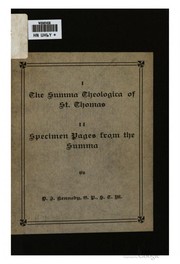
by Thomas Aquinas
“Thomas Aquinas abandoned the *Summa Theologica* — arguably history's most rigorous philosophical defense of God — unfinished after a brief mystical experience during Mass.”
More from Modern Wisdom
We summarize every new episode. Want them in your inbox?
How To Turn Your Pain Into Greatness - Bugzy Malone - #1174
Your Home Might Be Destroying Your Health (& how to fix it) - Michael Feldstein - #1173
How War Shaped Human Evolution - David Geary - #1172
How To Make Better Decisions (with way less uncertainty) - Joe Hudson - #1171
Expelled, Arrested & Somehow Winning At Life - James Smith - #1170
Similar Episodes
Related episodes from other podcasts

The Diary of a CEO
Oct 16
Most Replayed Moment: Christian vs Atheist - Is Faith A Human Creation?

a16z Podcast
Oct 19
What Happens When Al Agents Can Spend Your Money?

The Daily (NYT)
Sep 14
The A.I. Researcher Whose Rebellion Is Changing Everything

Eye on AI
Sep 8
86% of What Coding Agents Do Is Just Reading — Not Solving | Alexander Whedon of Subquadratic

No Priors: Artificial Intelligence | Technology | Startups
Aug 20
From Restoring Sight to Reimagining the Brain, with Max Hodak
Explore Related Topics
This podcast is featured in Best Mindset Podcasts (2026) — ranked and reviewed with AI summaries.
Read this week's Health & Longevity Podcast Insights — cross-podcast analysis updated weekly.
You're clearly into Modern Wisdom.
Every Monday, we deliver AI summaries of the latest episodes from Modern Wisdom and 192+ other podcasts. Free for one show.
Start My Monday DigestNo credit card · Unsubscribe anytime