How To Make Better Decisions (with way less uncertainty) - Joe Hudson - #1171
Episode
103 min
Read time
3 min
Topics
Career Growth, Relationships, Investing
AI-Generated Summary
Key Takeaways
- ✓Decisions are neurologically emotional, not logical: Neuroscientist Antonio Damasio's research shows that people with damage to the brain's emotional center lose the ability to make decisions entirely — their IQ remains intact but daily functioning collapses. Every decision, from hiring to investing, is ultimately a choice about how you want to feel. Logic only serves to estimate which option produces a desired emotional state. Recognizing this eliminates the myth of purely rational decision making and redirects effort toward emotional literacy.
- ✓Fear creates binary thinking and false finality: When fear underlies a decision, the brain collapses the available option set into two choices — stay or leave, take the job or don't — and treats the outcome as permanent. This prevents creative third options from surfacing and makes the stakes feel catastrophic. The antidote is Stoic-style negative visualization: mentally walking through the feared outcome in full detail, past the imagined endpoint, until the emotional charge dissipates and clearer thinking becomes accessible.
- ✓Principles-based decision making removes 80% of deliberation: Hudson maintains five to seven personal and business principles that resolve roughly 80% of decisions automatically, similar to Berkshire Hathaway's investment criteria. One personal principle — "everything is an iteration" — reframes failure as experimental data, eliminating the habenula-driven shutdown that causes people to abandon diets or projects after a single setback. Principles work as a portfolio strategy: consistent application over time produces reliable outcomes without requiring each individual decision to be perfect.
- ✓Emotion tolerance directly determines the size of your option set: If rejection, embarrassment, or failure feel intolerable, those outcomes get unconsciously removed from consideration before a decision is even consciously made. A person comfortable with rejection can approach ten potential partners; someone who cannot tolerate that feeling has effectively zero options. Expanding emotional tolerance — through deliberate exposure and acceptance rather than suppression — mechanically expands the range of decisions available, including career risks, difficult conversations, and boundary-setting.
- ✓Resentment signals self-abandonment, not external wrongdoing: Resentment in relationships or work consistently indicates that a person has been overriding their own preferences to manage someone else's emotions. Tracking resentment backward reveals the specific moments of self-abandonment. Hudson recommends auditing the previous month for instances where an internal signal said "no" but the action taken was "yes." This resentment audit rebuilds sensitivity to the internal compass that chronic people-pleasers have suppressed through years of approval-seeking behavior.
What It Covers
Executive coach Joe Hudson breaks down the neuroscience and psychology of decision making with Chris Williamson, arguing that all decisions are emotionally driven, not logical. Hudson outlines why fear narrows options to binary thinking, how principles-based frameworks replace guesswork, and why embracing uncomfortable emotions — rather than avoiding them — is the core mechanism behind consistently better decisions.
Key Questions Answered
- •Decisions are neurologically emotional, not logical: Neuroscientist Antonio Damasio's research shows that people with damage to the brain's emotional center lose the ability to make decisions entirely — their IQ remains intact but daily functioning collapses. Every decision, from hiring to investing, is ultimately a choice about how you want to feel. Logic only serves to estimate which option produces a desired emotional state. Recognizing this eliminates the myth of purely rational decision making and redirects effort toward emotional literacy.
- •Fear creates binary thinking and false finality: When fear underlies a decision, the brain collapses the available option set into two choices — stay or leave, take the job or don't — and treats the outcome as permanent. This prevents creative third options from surfacing and makes the stakes feel catastrophic. The antidote is Stoic-style negative visualization: mentally walking through the feared outcome in full detail, past the imagined endpoint, until the emotional charge dissipates and clearer thinking becomes accessible.
- •Principles-based decision making removes 80% of deliberation: Hudson maintains five to seven personal and business principles that resolve roughly 80% of decisions automatically, similar to Berkshire Hathaway's investment criteria. One personal principle — "everything is an iteration" — reframes failure as experimental data, eliminating the habenula-driven shutdown that causes people to abandon diets or projects after a single setback. Principles work as a portfolio strategy: consistent application over time produces reliable outcomes without requiring each individual decision to be perfect.
- •Emotion tolerance directly determines the size of your option set: If rejection, embarrassment, or failure feel intolerable, those outcomes get unconsciously removed from consideration before a decision is even consciously made. A person comfortable with rejection can approach ten potential partners; someone who cannot tolerate that feeling has effectively zero options. Expanding emotional tolerance — through deliberate exposure and acceptance rather than suppression — mechanically expands the range of decisions available, including career risks, difficult conversations, and boundary-setting.
- •Resentment signals self-abandonment, not external wrongdoing: Resentment in relationships or work consistently indicates that a person has been overriding their own preferences to manage someone else's emotions. Tracking resentment backward reveals the specific moments of self-abandonment. Hudson recommends auditing the previous month for instances where an internal signal said "no" but the action taken was "yes." This resentment audit rebuilds sensitivity to the internal compass that chronic people-pleasers have suppressed through years of approval-seeking behavior.
- •Indecisiveness inflicts the exact cost people fear the outcome will: People stuck in prolonged indecision about relationships, careers, or locations typically fear feeling trapped, lonely, or like a failure. Hudson points out that the indecision itself produces those identical feelings — stagnation, isolation, and shame — often at greater intensity than the feared outcome would. Making a decision, even an imperfect one, ends the self-imposed suffering and opens the possibility of correction, while continued indecision guarantees the feared emotional state with no exit path.
- •Making decisions fast outperforms making decisions correctly: High-performing CEOs prioritize decision velocity over decision accuracy. Making 100 decisions per day and testing them against reality generates faster learning loops than deliberating to make 10 perfect ones. Each decision becomes an experiment that produces real-world feedback. Hudson applies this organizationally by requiring every team member to run three to five experiments on how to do their job differently each quarter, institutionalizing iteration as the operating model rather than treating it as a fallback for failure.
Notable Moment
Hudson describes paying a barber — whose paintings he admired — two thousand dollars to collect fifty rejections from galleries within sixty days. The barber failed to reach fifty rejections because he received two acceptances along the way and subsequently began earning income from his art. The reframe converted the goal from seeking approval to accumulating rejections, dissolving the fear entirely.
Episode Transcript
I wanna talk about decision making. Great. There's a line from Alex Hormozi that says, the life that you want is on the other side of a few hard decisions, and the reason that you're unhappy is because you're not making them. In your experience, how important is the skill of decision making and guiding someone's life? It's everything. Like, if you look at... If I'd say... Like, the one of the things I talk about when I'm working with leaders who are, like, growing billion dollar companies is that your business is only two things. It's the relationships that are held in the business and the decisions that you make. Everything else can... Goes to those two things. There's some capital, you know, there's potentially some IP, but those came from decisions that people made. So it is... For a business, it's the critical thing, and if you look at, I think it was founder of Amazon, Jeff Bezos, who said, for my next company, I want it to be the best decision making company in the world. So after somebody grew the biggest company in the world, he then said, my next company is gonna be just really great at making decisions. That's how important it is for a company. But if you look at your life, well, what doesn't happen from a decision? Right? Like, if you're smoking cigarettes, if you are building a company, if you are getting married, who you're getting married to, how you stay married, how you fight, all these things are decisions that we make. From... For... I think for the framework purposes, I think it's really important to separate what... And this is this is the way I think about it. So it's... Is there's choices and there's decisions. So choices are just the things that you don't think about. Like, now, you're sitting like this, you never thought about it. Mhmm. You just... Right? And... Or the first question, maybe you thought, this is a great first question. Maybe you're like, is that the right first question, or is that the other... Is that the right first question? If you are just making choices, it means that you're not sitting there really spending time on it. And so that... I call that a choice, and decisions is where you're really making... Spending time on it. So knowing how to make great choices and great decisions is all of life. Like, everything that you're gonna end... When you're at your grave, it's gonna be a series of decisions that you made. So I'd say super hypercritical. And if you can learn how to make great decisions, then you're gonna make decisions that are gonna make a great life. Can you train decisiveness, or is it largely a personality trait? You can absolutely train decisiveness. I don't think it's a training, but it's a a recognition. There's some recognitions that can happen that allow for decisiveness. So once you really understand what's …
Get the full transcript (19,031 words) + summary by email — free
One-time email with the complete transcript and AI summary of this episode. No account needed.
One email, no spam. We’ll also show you what SignalCast does.

You just read a 3-minute summary of a 100-minute episode.
Get Modern Wisdom summarized like this every Monday — plus up to 2 more podcasts, free.
Pick Your Podcasts — FreeKeep Reading
More from Modern Wisdom
Expelled, Arrested & Somehow Winning At Life - James Smith - #1170
Oct 31 · 80 min

The Rich Roll Podcast
How to Stop Sabotaging Your Own Life With Joe Hudson
May 25
More from Modern Wisdom
35 Emotions Explained By Evolutionary Psychology - Rob Kurzban - #1169
Oct 29 · 148 min

Lenny's Podcast
The art of influence: The single most important skill that AI can’t replace | Jessica Fain (Webflow, ex-Slack)
Mar 22
Books, tools, and gear mentioned in this episode
SignalCast may earn commission on purchases via these links. As an Amazon Associate, SignalCast earns from qualifying purchases.
Books
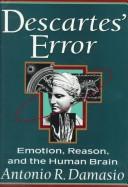
by Antonio Damasio
“Neuroscientist Antonio Damasio's research shows that people with damage to the brain's emotional center lose the ability to make decisions entirely — their IQ remains intact but daily functioning collapses.”
More from Modern Wisdom
We summarize every new episode. Want them in your inbox?
Expelled, Arrested & Somehow Winning At Life - James Smith - #1170
35 Emotions Explained By Evolutionary Psychology - Rob Kurzban - #1169
Crypto Scams, Dopamine Websites, Tasteful Slop & Vape Shop Energy - Rabbit Hole #6 - #1168
Positive Psychology Founder: How To Stop Your Negative Thoughts - Martin Seligman - #1167
Why Men & Women Are Giving Up On Each Other - Daniel Cox - #1166
Similar Episodes
Related episodes from other podcasts

The Rich Roll Podcast
May 25
How to Stop Sabotaging Your Own Life With Joe Hudson

Lenny's Podcast
Mar 22
The art of influence: The single most important skill that AI can’t replace | Jessica Fain (Webflow, ex-Slack)

Deep Questions with Cal Newport
Oct 26
When Productivity Theory Meets Practice

Huberman Lab
Jun 18
Essentials: Improve Flexibility with Research-Supported Stretching Protocols

The Vergecast
May 26
How clips ate the internet
Explore Related Topics
This podcast is featured in Best Mindset Podcasts (2026) — ranked and reviewed with AI summaries.
Read this week's Investing & Markets Podcast Insights — cross-podcast analysis updated weekly.
You're clearly into Modern Wisdom.
Every Monday, we deliver AI summaries of the latest episodes from Modern Wisdom and 192+ other podcasts. Free for one show.
Start My Monday DigestNo credit card · Unsubscribe anytime