Rabbit Hole: Who Will Survive The AI Era? (cats, mostly) - #1105
Episode
148 min
Read time
4 min
Topics
Productivity, Health & Wellness, Personal Finance
AI-Generated Summary
Key Takeaways
- ✓Language Immersion vs. Classroom Learning: Adults can acquire conversational fluency in a new language significantly faster than children when using full immersion, because adults already possess abstract conceptual frameworks like subjunctive grammar that can be explained directly. The Michel Thomas Method demonstrates basic conversational scaffolding achievable within a single week. Classroom-based weekly lessons, by contrast, lack the practice density required to move from unconscious incompetence to conscious competence, making six weeks of immersion roughly equivalent to a full year of weekly classes.
- ✓Selective Forgetting as Cognitive Advantage: The human brain's capacity to forget is not a flaw but a functional feature. Retaining every memory with equal salience makes it harder to release grievances, move past failures, and update beliefs. Athletes who cannot forget errors develop "yips" — involuntary hesitation responses that degrade performance. Practically, processing an experience, extracting the lesson, and deliberately discarding the emotional residue mirrors how elite performers maintain consistency under pressure across sports and high-stakes decision-making.
- ✓AI Memory Lacks Salience Pruning: Current AI memory systems store facts without any mechanism to determine relevance over time. When companies inject large volumes of stored memories into model context windows, the result is noise rather than useful recall. The human brain continuously prunes memories by emotional and contextual salience, a process AI has not replicated. Builders of AI products should design explicit forgetting or relevance-decay mechanisms rather than assuming more stored context always produces better, more personalized outputs.
- ✓Visual Memory Can Be Trained Through Drawing Practice: Improving visual memory begins with learning to observe rather than recall mental concepts. A practical entry point is the book Drawing on the Right Side of the Brain, combined with live gesture drawing sessions available in most cities. A specific technique: when drawing any object, start only with the dark or shadow areas rather than the outline. This forces direct visual reference instead of defaulting to a stored mental symbol, measurably sharpening attentional acuity and recall over time.
- ✓Meaning Crisis Predates and Outlasts AI: Across more than 200 science fiction books analyzed by a researcher facing stage four cancer, 59% centered on the search for meaning post-scarcity, with identity second at 17%. Viktor Frankl's observation that survival without purpose produces misery maps directly onto current trends. Removing friction from relationships, work, and consumption via technology reduces the resistance that historically generated purpose. Meaning appears to require friction — challenge, stakes, and negotiation with a resistant world — making frictionless abundance a structural threat to wellbeing independent of AI.
What It Covers
Chris Williamson, Tim Ferriss, and two guests explore a wide-ranging set of topics across a 148-minute conversation, covering AI's impact on human meaning and purpose, language acquisition methods, memory science, visual cognition differences like aphantasia, the resurgence of religion in secular societies, and comparative quality-of-life metrics between the UK and US states.
Key Questions Answered
- •Language Immersion vs. Classroom Learning: Adults can acquire conversational fluency in a new language significantly faster than children when using full immersion, because adults already possess abstract conceptual frameworks like subjunctive grammar that can be explained directly. The Michel Thomas Method demonstrates basic conversational scaffolding achievable within a single week. Classroom-based weekly lessons, by contrast, lack the practice density required to move from unconscious incompetence to conscious competence, making six weeks of immersion roughly equivalent to a full year of weekly classes.
- •Selective Forgetting as Cognitive Advantage: The human brain's capacity to forget is not a flaw but a functional feature. Retaining every memory with equal salience makes it harder to release grievances, move past failures, and update beliefs. Athletes who cannot forget errors develop "yips" — involuntary hesitation responses that degrade performance. Practically, processing an experience, extracting the lesson, and deliberately discarding the emotional residue mirrors how elite performers maintain consistency under pressure across sports and high-stakes decision-making.
- •AI Memory Lacks Salience Pruning: Current AI memory systems store facts without any mechanism to determine relevance over time. When companies inject large volumes of stored memories into model context windows, the result is noise rather than useful recall. The human brain continuously prunes memories by emotional and contextual salience, a process AI has not replicated. Builders of AI products should design explicit forgetting or relevance-decay mechanisms rather than assuming more stored context always produces better, more personalized outputs.
- •Visual Memory Can Be Trained Through Drawing Practice: Improving visual memory begins with learning to observe rather than recall mental concepts. A practical entry point is the book Drawing on the Right Side of the Brain, combined with live gesture drawing sessions available in most cities. A specific technique: when drawing any object, start only with the dark or shadow areas rather than the outline. This forces direct visual reference instead of defaulting to a stored mental symbol, measurably sharpening attentional acuity and recall over time.
- •Meaning Crisis Predates and Outlasts AI: Across more than 200 science fiction books analyzed by a researcher facing stage four cancer, 59% centered on the search for meaning post-scarcity, with identity second at 17%. Viktor Frankl's observation that survival without purpose produces misery maps directly onto current trends. Removing friction from relationships, work, and consumption via technology reduces the resistance that historically generated purpose. Meaning appears to require friction — challenge, stakes, and negotiation with a resistant world — making frictionless abundance a structural threat to wellbeing independent of AI.
- •Religion Resurging as Rational Response to Uncertainty: Latin Mass attendance, conducted entirely in a language most attendees do not speak, is among the fastest-growing religious services in the Western world. Research consistently shows religious practitioners report higher happiness, longer lifespans, stronger community ties, and better health outcomes than secular counterparts. The debate between Richard Dawkins-style rationalist atheism and pragmatic acceptance of comforting belief systems is shifting, with atheism losing cultural traction as meaninglessness increases. The outcomes data increasingly frames religious participation as rational rather than irrational behavior.
- •UK vs. US State Rankings Reveal a Productivity-Wellbeing Tradeoff: A comparative chart ranking the UK against all 50 US states places the UK first in life expectancy, homicide rate, gun deaths, prisoner population, healthcare coverage, paid maternity leave, statutory holiday, years in education, and road deaths. The UK ranks second in drug deaths and third in minimum wage. It ranks fifty-first — below all 50 states — in GDP per capita. This data illustrates a measurable tradeoff: the UK optimizes for population-level wellbeing metrics while the US optimizes for individual wealth generation.
Notable Moment
Tim Ferriss describes arriving in Japan at age 15 as an exchange student, expecting Japanese language lessons, only to discover his entire academic curriculum — physics, world history, and all subjects — would be taught in Japanese. With no smartphones and no English escape route available, total involuntary immersion produced full fluency within a year, and upon returning to the US, he spent weeks accidentally responding to his mother in Japanese.
Episode Transcript
British supremacy in messaging services. We need to try and get everybody to use WhatsApp. The superior messaging system, and Americans refuse to use it. Do you know what I think? We was talking about this earlier as to why Americans don't use WhatsApp more. One of the theories is that, America had free SMS before anybody else. So us Brits had to pay. How much would did it used to be for a text back in the day? Fifteen p maybe? Fifteen p. Ten p. Ten p. That would ramp up very fast. But that was why people used to use elite speak. Right? That was why you was there, like, l y because you're trying to snap everything to under a 160 characters. Yeah. I once, when I was 14 years old, had my first ever girlfriend, and we would text and we would text and we would text. You fucking bankrupted yourself. Oh, my dad's sore sleep. My dad comes down one day. And you know when you have, like, a four that you'd stack in a printer? He just drops that. So it's on the phone bill, and it wrapped up about £800. Itamized bill. Text messages. Yes. So I then sent her That's a lot of sexting at fourteen. Yeah. I then sent her one final text, which was, can't do text anymore. Let's do calls. So we did calls all the time. Next next month so I had to pay off about $1,213,100 pounds of of debt to my father. Still paying it off? Yeah. He's 14. I'm gonna take my Dad, you're cock blocking me. So that's how once 14, I'm trying to get I'm trying to get my cred up. But, yeah, I just WhatsApp's a superior Tim uses WhatsApp. Tim's good on WhatsApp. I mean, look. I use every new inbox that is slowly eroding the sanity of everybody who's listening to us. Yeah. Did you guys see the Nikkita Beard tweet a long time ago? It feels like, he said something like, every time I use WhatsApp, it feels like I landed in a third world country. You're allowed to say that. Okay. Fair enough. You're allowed to say that. No. I'm really We race swapped you. I drop on Long Island. I think I'm allowed to say it too. We wait race swapped Sean for you. Fair enough. That's the primary reason. I think I'm sitting in the same spot here. That's correct. Yeah. Yeah. Yeah. Yeah. People like Sean. You lost weight and the bean's gone. This is the designated seat for the minority. You grew up on Long Island. Mhmm. I didn't know that. Where? Oh, yeah. Way out by Montauk. Back when there were potato farms That explains a lot. Has changed. Now there are nightclubs that make all the locals crazy. But yes. So is that beyond the Hamptons? Yeah. Montauk is the end of the line. So if you take Long Island Railroad out …
Get the full transcript (28,620 words) + summary by email — free
One-time email with the complete transcript and AI summary of this episode. No account needed.
One email, no spam. We’ll also show you what SignalCast does.

You just read a 3-minute summary of a 145-minute episode.
Get Modern Wisdom summarized like this every Monday — plus up to 2 more podcasts, free.
Pick Your Podcasts — FreeKeep Reading
More from Modern Wisdom
Why Life Feels So Dull All The Time (and how to fix it) - Robert Greene - #1162
Oct 12 · 141 min

My First Million
25% Of My Portfolio Is One Overvalued Stock, Here's Why
Apr 22
More from Modern Wisdom
The Only 12 Lessons Buried In Every Self-Help Book - Spencer Greenberg - #1161
Oct 10 · 87 min

The Tim Ferriss Show
#858: The Random Show, Couch Edition! — Supplements, Hummingbirds, Cock Rings, Optimizing Mitochondria, Breathing and Balance Training, Cool Grip Strength Tools, and More
Mar 18
Books, tools, and gear mentioned in this episode
SignalCast may earn commission on purchases via these links. As an Amazon Associate, SignalCast earns from qualifying purchases.
Books
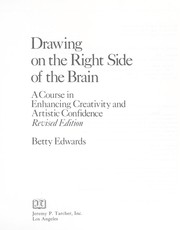 Drawing on the Right Side of the BrainRecommended
“A practical entry point is the book Drawing on the Right Side of the Brain, combined with live gesture drawing sessions available in most cities.”
More from Modern Wisdom
We summarize every new episode. Want them in your inbox?
Why Life Feels So Dull All The Time (and how to fix it) - Robert Greene - #1162
The Only 12 Lessons Buried In Every Self-Help Book - Spencer Greenberg - #1161
CIA Whistleblower: “The Shadow Government Is Real” - John Kiriakou - #1160
4 Men Share How They Hit Rock Bottom (and got out) - Dr K, Joe Hudson & Connor Beaton - #1159
Willpower Expert: The Secret To Effortless Discipline - Angela Duckworth - #1158
Similar Episodes
Related episodes from other podcasts

My First Million
Apr 22
25% Of My Portfolio Is One Overvalued Stock, Here's Why

The Tim Ferriss Show
Mar 18
#858: The Random Show, Couch Edition! — Supplements, Hummingbirds, Cock Rings, Optimizing Mitochondria, Breathing and Balance Training, Cool Grip Strength Tools, and More

The Diary of a CEO
Dec 29
Chris Williamson: If You Don't Fix This Now, 2026 Is Already Over!

Everything Everywhere Daily
Oct 14
The 2026 Ig Nobel Prizes
The Tim Ferriss Show
Oct 8
#886: The Random Show — AI Super Assistants, Boner Pills, Dream Engineering, Wizards, Supplements, Books, and More
Explore Related Topics
This podcast is featured in Best Mindset Podcasts (2026) — ranked and reviewed with AI summaries.
Read this week's Health & Longevity Podcast Insights — cross-podcast analysis updated weekly.
You're clearly into Modern Wisdom.
Every Monday, we deliver AI summaries of the latest episodes from Modern Wisdom and 192+ other podcasts. Free for one show.
Start My Monday DigestNo credit card · Unsubscribe anytime