#1071 - Bill Gurley - If You Hate Your Job, This is How to Start Over
Episode
116 min
Read time
4 min
Topics
Career Growth, Productivity, Personal Finance
AI-Generated Summary
Key Takeaways
- ✓Boldness Regret vs. Action Regret: Wharton People Analytics research confirms 6 out of 10 people would choose a different career if starting over. Psychologist Daniel Pink's data shows regrets worsen with age, and the dominant category is inaction — things people never attempted. Humans readily forgive mistakes but ruminate endlessly on untried paths. The Zeigarnik Effect explains this: the brain treats unpursued dreams as permanent open loops, generating ongoing psychological tension that compounds over decades.
- ✓Regret Minimization Framework: Jeff Bezos developed a decision tool when leaving D.E. Shaw to start Amazon: project yourself to age 80 and ask which choice your future self would regret more. Gurley applied a similar forward-projection technique at each career transition, mentally simulating 30 years in a role and measuring his emotional response. If imagining that future produces discomfort, treat it as a signal to begin planning a change — not to quit immediately, but to start building the path.
- ✓Financial Flexibility as Career Optionality: Spending up to the limit of a high salary creates a trap. Gurley observed Wall Street peers with Hampton rentals and club memberships who became structurally unable to leave despite dissatisfaction. For young professionals with decent salaries, deliberately not spending against income preserves the ability to change cities, switch industries, or take pay cuts during transitions. Financial flexibility functions as a hidden metric that enables career optionality — one that lifestyle inflation permanently destroys.
- ✓Side Hustle as Low-Risk Career Testing: Ben Gilbert of the Acquired podcast negotiated side projects at every employer — at Microsoft he created Microsoft Garage, connecting the company to founders; at Madrona VC he launched the podcast that became his primary career. The framework: ask employers explicitly for permission to pursue parallel projects on personal time. This approach provides two simultaneous shots on goal, accelerates learning, and signals proactivity to employers while generating real-world data on whether a potential new direction is viable before committing fully.
- ✓Peer Group Architecture Over Mentorship: Rather than cold-contacting senior executives with a near-zero response rate, build a peer cohort of people at the same career stage across different organizations. Chris Del Conte, now UT Austin's athletic director, formed a text group with seven peers early in sports administration — all eight eventually became Division I athletic directors. MrBeast replicated this at 17 with a Skype group that collectively accumulated the equivalent of 40,000 hours of YouTube platform knowledge by sharing every discovery in real time.
What It Covers
Bill Gurley, 25-year venture capitalist and author, examines why 6-7 out of 10 people report career regret in surveys, how the modern education conveyor belt produces skilled grinders without passion, and what practical frameworks — including Bezos's regret minimization method — help people identify, pursue, and successfully transition into work they genuinely love.
Key Questions Answered
- •Boldness Regret vs. Action Regret: Wharton People Analytics research confirms 6 out of 10 people would choose a different career if starting over. Psychologist Daniel Pink's data shows regrets worsen with age, and the dominant category is inaction — things people never attempted. Humans readily forgive mistakes but ruminate endlessly on untried paths. The Zeigarnik Effect explains this: the brain treats unpursued dreams as permanent open loops, generating ongoing psychological tension that compounds over decades.
- •Regret Minimization Framework: Jeff Bezos developed a decision tool when leaving D.E. Shaw to start Amazon: project yourself to age 80 and ask which choice your future self would regret more. Gurley applied a similar forward-projection technique at each career transition, mentally simulating 30 years in a role and measuring his emotional response. If imagining that future produces discomfort, treat it as a signal to begin planning a change — not to quit immediately, but to start building the path.
- •Financial Flexibility as Career Optionality: Spending up to the limit of a high salary creates a trap. Gurley observed Wall Street peers with Hampton rentals and club memberships who became structurally unable to leave despite dissatisfaction. For young professionals with decent salaries, deliberately not spending against income preserves the ability to change cities, switch industries, or take pay cuts during transitions. Financial flexibility functions as a hidden metric that enables career optionality — one that lifestyle inflation permanently destroys.
- •Side Hustle as Low-Risk Career Testing: Ben Gilbert of the Acquired podcast negotiated side projects at every employer — at Microsoft he created Microsoft Garage, connecting the company to founders; at Madrona VC he launched the podcast that became his primary career. The framework: ask employers explicitly for permission to pursue parallel projects on personal time. This approach provides two simultaneous shots on goal, accelerates learning, and signals proactivity to employers while generating real-world data on whether a potential new direction is viable before committing fully.
- •Peer Group Architecture Over Mentorship: Rather than cold-contacting senior executives with a near-zero response rate, build a peer cohort of people at the same career stage across different organizations. Chris Del Conte, now UT Austin's athletic director, formed a text group with seven peers early in sports administration — all eight eventually became Division I athletic directors. MrBeast replicated this at 17 with a Skype group that collectively accumulated the equivalent of 40,000 hours of YouTube platform knowledge by sharing every discovery in real time.
- •Passion as the Diagnostic Test for Sustainable Performance: Angela Duckworth, a decade after publishing Grit, stated she wished she had weighted passion and perseverance equally rather than emphasizing perseverance. The practical test: does learning in your field feel effortless — would you do it instead of watching television? Gurley's second principle of career success is continuous learning, and the clearest signal that someone has found their domain is that studying it feels indistinguishable from leisure. Without passion, perseverance produces burnout; with it, the same effort produces flow states.
- •AI as Jetpack vs. Threat — Determined by Career Orientation: Two people at identical career stages experience AI oppositely based on their relationship to their work. Someone who followed a prescribed path into a role they don't love perceives AI as an existential threat to their position. Someone who is a proactive, self-directed learner building genuine craft treats AI as a force multiplier. The actionable position: identify the current edge of AI capability within your specific field and become the most AI-productive person in that domain — that person becomes the internal expert others consult.
Notable Moment
Gurley recounts Tito's Vodka founder Bert Beveridge's origin: a seismologist turned mortgage broker who watched a PBS special instructing viewers to list what they love alongside what they're skilled at and find the overlap. With no industry knowledge, no Texas distilling licenses in existence, and funding via 19 credit cards, he built what became North America's best-selling spirit — entirely bootstrapped, 100% owner-retained.
Episode Transcript
What got you into thinking about the idea of career regret as somebody that's had a very seemingly successful and fun career? What did you think about it? I, I used to I so I spent twenty five years as a venture capitalist and the four years before that as a sell side analyst on Wall Street. And through that process, I started writing as a way to differentiate myself. And so I was a early blogger. It was actually a fax, that's how old I am, when I started. And I got in the habit of when I had ideas, jotting them down. And then, you know, either developing them a lot of them ended up just undeveloped, but I would if I developed them, they would become a blog post. And there was a period in my career where I was reading a ton of biographies, and I finished this third one and saw a through line with these other two from people that were in wildly different fields, and I jotted those notes down. And that thing kinda simmered and breathed and and took on a little bit of a life. And I got asked by the dean of the business school here in Austin at University of Texas to talk to the MBA class one day. And I was like, can I do this? And he said, sure. So I pulled it out and developed it a little bit as a PowerPoint presentation. Anyway, they posted that on YouTube. A few people noticed. Some people that have been on your show, James Clear noticed. And he posted it on his website and people started prodding me to develop it as a book. And, a few years ago, I decided to begin retirement as a venture capitalist. It actually takes a while, unfortunately. And in that window, I thought about doing this. I thought about doing a book, and a lot of people wanted me to do a book. A lot of people wanted me to do a VC book or an investment book or a tell all book on the Uber experience. And I was more drawn to this idea. And a few other people prodded me who said, you know, like, go go do and it felt more authentic. It felt like something that could have a bigger impact. Mhmm. And I was drawn to that at this moment in my life. I was drawn to this particular thing. So I spent, like, six years, working with a co writer and researcher developing and developing it further and making it this way. But you used the word regret. We did along the way, I launched a survey on SurveyMonkey that said if you could go back and start over, would you would you do a different career? And seven out of 10 people said yes. And I eventually took that to Wharton people analytics, and they did a more scientific version of it, much broader …
Get the full transcript (20,865 words) + summary by email — free
One-time email with the complete transcript and AI summary of this episode. No account needed.
One email, no spam. We’ll also show you what SignalCast does.

You just read a 3-minute summary of a 113-minute episode.
Get Modern Wisdom summarized like this every Monday — plus up to 2 more podcasts, free.
Pick Your Podcasts — FreeKeep Reading
More from Modern Wisdom
Raccoon Wars, NFL Scammers & Past Crimes - Matt McCusker #1149
Sep 12 · 98 min

Afford Anything
Bill Gurley: The Biggest Career Regret Most People Have
Mar 13
More from Modern Wisdom
Best Peptides, Stem Cells, Testosterone & Exercise Hacks - Biohacking Roundtable - #1148
Sep 10 · 170 min

My First Million
Bill Gurley: 6 Out of 10 People Are Making This Mistake
Mar 9
Books, tools, and gear mentioned in this episode
SignalCast may earn commission on purchases via these links. As an Amazon Associate, SignalCast earns from qualifying purchases.
Books
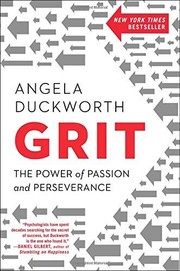
by Angela Duckworth
“Angela Duckworth, a decade after publishing Grit, stated she wished she had weighted passion and perseverance equally rather than emphasizing perseverance.”
podcast
“Ben Gilbert of the Acquired podcast negotiated side projects at every employer — at Microsoft he created Microsoft Garage, connecting the company to founders; at Madrona VC he launched the podcast that became his primary career.”
More from Modern Wisdom
We summarize every new episode. Want them in your inbox?
Raccoon Wars, NFL Scammers & Past Crimes - Matt McCusker #1149
Best Peptides, Stem Cells, Testosterone & Exercise Hacks - Biohacking Roundtable - #1148
Why You Feel Everything So Deeply (and how to survive it) - Dr Sasha Hamdani - #1147
Couples Therapist: “The One Rule Every Relationship Must Live By” - Stan Tatkin -#1146
How To Build A Business That Runs Without You - Codie Sanchez - #1145
Similar Episodes
Related episodes from other podcasts

Afford Anything
Mar 13
Bill Gurley: The Biggest Career Regret Most People Have

My First Million
Mar 9
Bill Gurley: 6 Out of 10 People Are Making This Mistake

WorkLife with Adam Grant
Aug 25
How to find a peer group that lifts you up with Bill Gurley

The Knowledge Project
Jun 9
Mental Models That Change How You Think | Bill Gurley

Masters in Business
Mar 4
BONUS: Bill Gurley on Investing Early in Tech Disruptors & 'Runnin' Down a Dream'
Explore Related Topics
This podcast is featured in Best Mindset Podcasts (2026) — ranked and reviewed with AI summaries.
You're clearly into Modern Wisdom.
Every Monday, we deliver AI summaries of the latest episodes from Modern Wisdom and 192+ other podcasts. Free for one show.
Start My Monday DigestNo credit card · Unsubscribe anytime