“Engineers are becoming sorcerers” | The future of software development with OpenAI’s Sherwin Wu
Episode
79 min
Read time
3 min
Topics
Productivity, Investing, Startups
AI-Generated Summary
Key Takeaways
- ✓AI code generation at scale: At OpenAI, 95% of engineers use Codex daily, with AI writing nearly all initial code that engineers then review. Engineers using Codex open 70% more pull requests than those who don't, and this productivity gap continues widening. The company maintains a team running a 100% Codex-generated codebase as an experiment, discovering that most agent failures stem from insufficient context documentation rather than model limitations, requiring better tribal knowledge encoding.
- ✓Engineering role transformation: Software engineers transition from writing code to managing 10-20 parallel agent threads simultaneously, resembling tech leads overseeing teams. The job shifts toward providing clear specifications and steering AI agents rather than manual coding. This mirrors the "wizard" metaphor from the 1980 programming textbook SICP, where engineers cast incantations that execute tasks, with current reality approaching the Sorcerer's Apprentice scenario requiring skilled oversight to prevent runaway automation.
- ✓Manager leverage expansion: Engineering managers can oversee significantly larger teams than the traditional six-to-eight person limit by using AI tools for organizational knowledge synthesis. ChatGPT connected to GitHub, Notion, and Google Docs enables rapid performance review research and team status understanding. The management philosophy shifts toward spending over 50% of time with top 10% performers who maximize AI tool leverage, as these individuals become exponentially more productive and establish best practices for entire organizations.
- ✓Customer feedback paradox: In rapidly evolving AI fields, blindly following customer requests leads to local maxima solutions that become obsolete. Models improve so quickly they "eat your scaffolding for breakfast"—vector stores and agent frameworks that seemed essential in 2023 became less relevant as models gained native capabilities. Product builders must design for where models will be in 12-18 months, not current capabilities, accepting that 80% functionality today may reach full capability with next model releases.
- ✓Billion-dollar startup ecosystem: The one-person billion-dollar startup concept triggers second and third-order effects: dramatically lower software creation barriers spawn hundreds of thousands of smaller startups building vertical-specific tools. This creates a golden age of B2B SaaS where $10-50 million businesses become common, excellent for founders but challenging for venture capital seeking 100x returns. The ecosystem shifts toward platforms supporting micro-companies rather than traditional venture-scale consolidation.
What It Covers
Sherwin Wu, head of engineering for OpenAI's API and developer platform, reveals how 95% of OpenAI engineers use Codex daily with AI writing nearly all code. He discusses the transformation of software engineering into agent management, the one-person billion-dollar startup future, why listening to customers can mislead AI product development, and untapped opportunities in business process automation beyond Silicon Valley's focus.
Key Questions Answered
- •AI code generation at scale: At OpenAI, 95% of engineers use Codex daily, with AI writing nearly all initial code that engineers then review. Engineers using Codex open 70% more pull requests than those who don't, and this productivity gap continues widening. The company maintains a team running a 100% Codex-generated codebase as an experiment, discovering that most agent failures stem from insufficient context documentation rather than model limitations, requiring better tribal knowledge encoding.
- •Engineering role transformation: Software engineers transition from writing code to managing 10-20 parallel agent threads simultaneously, resembling tech leads overseeing teams. The job shifts toward providing clear specifications and steering AI agents rather than manual coding. This mirrors the "wizard" metaphor from the 1980 programming textbook SICP, where engineers cast incantations that execute tasks, with current reality approaching the Sorcerer's Apprentice scenario requiring skilled oversight to prevent runaway automation.
- •Manager leverage expansion: Engineering managers can oversee significantly larger teams than the traditional six-to-eight person limit by using AI tools for organizational knowledge synthesis. ChatGPT connected to GitHub, Notion, and Google Docs enables rapid performance review research and team status understanding. The management philosophy shifts toward spending over 50% of time with top 10% performers who maximize AI tool leverage, as these individuals become exponentially more productive and establish best practices for entire organizations.
- •Customer feedback paradox: In rapidly evolving AI fields, blindly following customer requests leads to local maxima solutions that become obsolete. Models improve so quickly they "eat your scaffolding for breakfast"—vector stores and agent frameworks that seemed essential in 2023 became less relevant as models gained native capabilities. Product builders must design for where models will be in 12-18 months, not current capabilities, accepting that 80% functionality today may reach full capability with next model releases.
- •Billion-dollar startup ecosystem: The one-person billion-dollar startup concept triggers second and third-order effects: dramatically lower software creation barriers spawn hundreds of thousands of smaller startups building vertical-specific tools. This creates a golden age of B2B SaaS where $10-50 million businesses become common, excellent for founders but challenging for venture capital seeking 100x returns. The ecosystem shifts toward platforms supporting micro-companies rather than traditional venture-scale consolidation.
- •Business process automation opportunity: Silicon Valley underestimates the massive market for automating repeatable business processes outside open-ended knowledge work. Unlike software engineering's creative tasks, most global work follows standard operating procedures in support, operations, and enterprise functions. These deterministic, repeatable workflows integrated with business systems represent untapped AI application territory larger than the engineering productivity space that dominates current discourse and investment focus.
Notable Moment
Wu describes an internal OpenAI team maintaining a completely Codex-generated codebase with no escape hatch to manually write code. When agents fail to implement features, engineers cannot fall back to traditional coding—they must solve problems by adding documentation and context files. This constraint reveals that most AI coding failures result from underspecified requirements rather than model capability limits, fundamentally changing how teams think about knowledge management.
Episode Transcript
95% of engineers use codex. 100% of our PRs are reviewed by codex. For engineers, I don't know what job has changed more in the past couple years. Engineers are becoming tech leads. They're managing fleets and fleets of agents. It literally feels like we're wizards casting all these spells, and these spells are kind of like going out and doing things for you. What do you think people aren't pricing in yet? The second or third order effects of the one person billion dollar startup. To enable a one person billion dollar startup, there might be a 100 other small startups building bespoke software. So I think we might actually enter into a golden age of b to b SaaS. I've been hearing more and more there's this stress people feel when their agents aren't working. There's a team that's actually doing an experiment right now with an OpenAI where they are maintaining a 100 codex written code base. They run into the exact problems that you're describing. And so usually, they're like, alright, I'll roll up my sleeves and figure it out. A team doesn't have that escape hatch. You've shared that listening to customers is not always the right strategy in AI? The field and the models themselves are just changing so, so quickly. They tend to, like, disrupt themselves. The models will eat your scaffolding for breakfast. What's your advice to folks that are, like, okay, I don't wanna miss the boat? Make sure you're building for where the models are going and not where they are today. There's a quote from Kevin Whale, our VP of science here. He likes saying this is the worst the models will ever be. Today, my guest is Sherwin Wu, head of engineering for OpenAI's API and developer platform. Considering that essentially every AI startup integrates with OpenAI's APIs, Sherwin has an incredibly unique and broad view into what is going on and where things are heading. Let's get into it after a short word from our wonderful sponsors. Today's episode is brought to you by DX, the developer intelligence platform designed by leading researchers. To thrive in the AI era, organizations need to adapt quickly. But many organization leaders struggle to answer pressing questions like, which tools are working? How are they being used? What's actually driving value? DX provides the data and insights that leaders need to navigate this shift. With DX, companies like Dropbox, booking.com, Adyen, and Intercom get a deep understanding of how AI is providing value to their developers and what impact AI is having on engineering productivity. To learn more, visit DX's web site at getdx.com/lenny. That's getdx.com/lenny. Applications break in all kinds of ways. Crashes, slowdowns, regressions, and the stuff that you only see once real users show up. Sentry catches it all. See what happened, where, and why, down to the commit that introduced the error, the developer who shipped it, and the exact line of code all in one connected …
Get the full transcript (17,057 words) + summary by email — free
One-time email with the complete transcript and AI summary of this episode. No account needed.
One email, no spam. We’ll also show you what SignalCast does.

You just read a 3-minute summary of a 76-minute episode.
Get Lenny's Podcast summarized like this every Monday — plus up to 2 more podcasts, free.
Pick Your Podcasts — FreeKeep Reading
More from Lenny's Podcast
Inside the black box of AI: How AI models actually think | Emmanuel Ameisen (Anthropic)
Oct 18 · 72 min

Software Engineering Daily
Rebuilding the Cloud for AI Agent Code
Aug 13
More from Lenny's Podcast
Why every company now needs to think and operate like a lab team | Josh Woodward (Google Labs, Gemini, AI Studio)
Oct 11 · 62 min

The AI Breakdown
How to Navigate the Next Wave of AI Competition
Aug 31
Books, tools, and gear mentioned in this episode
SignalCast may earn commission on purchases via these links. As an Amazon Associate, SignalCast earns from qualifying purchases.
Books
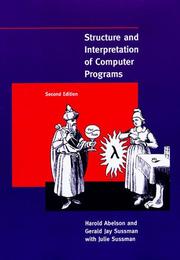
“This mirrors the "wizard" metaphor from the 1980 programming textbook SICP, where engineers cast incantations that execute tasks.”
Tools
by Google
“ChatGPT connected to GitHub, Notion, and Google Docs enables rapid performance review research and team status understanding.”
- CodexBy guest
by OpenAI
“At OpenAI, 95% of engineers use Codex daily, with AI writing nearly all initial code that engineers then review. Engineers using Codex open 70% more pull requests than those who don't.”
by Notion
“ChatGPT connected to GitHub, Notion, and Google Docs enables rapid performance review research and team status understanding.”
by OpenAI
“ChatGPT connected to GitHub, Notion, and Google Docs enables rapid performance review research and team status understanding.”
by GitHub
“ChatGPT connected to GitHub, Notion, and Google Docs enables rapid performance review research and team status understanding.”
More from Lenny's Podcast
We summarize every new episode. Want them in your inbox?
Inside the black box of AI: How AI models actually think | Emmanuel Ameisen (Anthropic)
Why every company now needs to think and operate like a lab team | Josh Woodward (Google Labs, Gemini, AI Studio)
OpenAI’s Head of ChatGPT: We’re entering a new era of AI (again) | Tibo Sottiaux
The grief, loneliness, and burnout sweeping through the tech industry right now | Molly Graham
90 minutes of unfiltered product advice from Snap and Discord’s product chief | Peter Sellis
Similar Episodes
Related episodes from other podcasts

Software Engineering Daily
Aug 13
Rebuilding the Cloud for AI Agent Code

The AI Breakdown
Aug 31
How to Navigate the Next Wave of AI Competition

Latent Space
Jul 28
Codex from 0 to 10M Users: Building ChatGPT Work — Akshay Nathan, OpenAI
Software Engineering Daily
Jul 14
AURA and Open-Source Agents for Production Operations

NVIDIA AI Podcast
May 13
Snap’s Secret to Processing 10 Petabytes a Day: GPU-Accelerated Spark | NVIDIA AI Podcast Ep. 298
Explore Related Topics
This podcast is featured in Best Product Management Podcasts (2026) — ranked and reviewed with AI summaries.
Read this week's Investing & Markets Podcast Insights — cross-podcast analysis updated weekly.
You're clearly into Lenny's Podcast.
Every Monday, we deliver AI summaries of the latest episodes from Lenny's Podcast and 192+ other podcasts. Free for one show.
Start My Monday DigestNo credit card · Unsubscribe anytime