Why A Negative P/E Happens and What to Use Instead
Episode
40 min
Read time
2 min
Topics
Investing, Fundraising & VC, Leadership
AI-Generated Summary
Key Takeaways
- ✓Negative P/E Diagnosis: A negative P/E always results from negative earnings, never a negative price. Before rejecting a stock, determine whether the core business operations are losing money or whether a one-time event — such as a write-down, legal settlement, or restructuring charge — temporarily distorted net income without reflecting true ongoing business performance.
- ✓Trailing vs. Forward P/E: Forward P/E relies on Wall Street analyst estimates, which are highly unreliable. Quantitative and algorithmic traders typically favor trailing P/E for this reason. When evaluating any company, treat forward P/E as a rough directional signal only, and weight trailing P/E or multi-year average earnings more heavily for valuation decisions.
- ✓One-Time Charge Evaluation Framework: When a company takes a large write-down — as Crocs did after overpaying for Hey Dude — assess whether management is being transparent, whether the core business still generates free cash flow, and whether this represents an isolated mistake or a recurring pattern of poor capital allocation decisions before exiting or holding the position.
- ✓Price-to-Sales as a Growth Proxy: For companies with negative earnings, price-to-sales serves as a viable alternative valuation metric. James O'Shaughnessy's quantitative research in *What Works on Wall Street*, covering multiple decades of market data, identified price-to-sales as a statistically meaningful predictor of returns across large stock universes, particularly for early-stage or hypergrowth companies.
- ✓Free Cash Flow Over Net Income: When net income is negative due to accounting noise, free cash flow provides a cleaner picture of business value. Examine operating margin and gross margin to identify whether profitability exists above the net income line, then build valuation estimates using free cash flow projections rather than earnings-based multiples like P/E or DCF.
What It Covers
Stephen Morris and Andrew Sather break down why a stock's P/E ratio turns negative, identifying three root causes — real operating losses, one-time accounting charges, and heavy reinvestment spending — then outline four alternative valuation tools investors can use when P/E becomes meaningless for unprofitable companies.
Key Questions Answered
- •Negative P/E Diagnosis: A negative P/E always results from negative earnings, never a negative price. Before rejecting a stock, determine whether the core business operations are losing money or whether a one-time event — such as a write-down, legal settlement, or restructuring charge — temporarily distorted net income without reflecting true ongoing business performance.
- •Trailing vs. Forward P/E: Forward P/E relies on Wall Street analyst estimates, which are highly unreliable. Quantitative and algorithmic traders typically favor trailing P/E for this reason. When evaluating any company, treat forward P/E as a rough directional signal only, and weight trailing P/E or multi-year average earnings more heavily for valuation decisions.
- •One-Time Charge Evaluation Framework: When a company takes a large write-down — as Crocs did after overpaying for Hey Dude — assess whether management is being transparent, whether the core business still generates free cash flow, and whether this represents an isolated mistake or a recurring pattern of poor capital allocation decisions before exiting or holding the position.
- •Price-to-Sales as a Growth Proxy: For companies with negative earnings, price-to-sales serves as a viable alternative valuation metric. James O'Shaughnessy's quantitative research in *What Works on Wall Street*, covering multiple decades of market data, identified price-to-sales as a statistically meaningful predictor of returns across large stock universes, particularly for early-stage or hypergrowth companies.
- •Free Cash Flow Over Net Income: When net income is negative due to accounting noise, free cash flow provides a cleaner picture of business value. Examine operating margin and gross margin to identify whether profitability exists above the net income line, then build valuation estimates using free cash flow projections rather than earnings-based multiples like P/E or DCF.
Notable Moment
Amazon currently presents the mirror image of a negative P/E problem — the company reports strong profits but generates negative free cash flow due to massive data center capital expenditure. This disconnect illustrates why no single metric tells the full story and why cross-referencing multiple valuation tools matters.
Episode Transcript
You've ever pulled up a stock and you saw that the PE was negative, we'll say it was 47.8. And you're like, wait. Is this cheap? Is it is this bad? What what what's going on here? You're not alone. And and negative PE doesn't really work as a valuation tool because the company is in in negative earnings. So today, Andrew and I are going to break down why a PE breaks, the main reasons it goes negative, and why you should use instead so you can evaluate an unprofitable company without guessing. So here we go. The other night, I'm online shopping for printer ink. Yes. I still use a printer. I know. And I'm getting ready to check out when I suddenly realized yet again, I cannot remember my stupid password. But that's when I noticed they've recently added at the top of the screen that purple shop pay button. One click my name, done. Address, done. Card info, done. Checkout, done. Honestly, it's one of the best things in online shopping right now. That button is Shopify. And if you're running an online business or thinking of starting one, Shopify makes the transaction just as easy on your side. They give you inventory tracking, payment processing, analytics, marketing, and much much more all in one place. No jumping between platforms. No chaos. And if you get stuck, they have twenty four hour support that genuinely is the best. See less carts go abandoned and more sales go with Shopify and their shop pay button. Sign up for your $1 per month trial at shopify.com/beginners. Go to shopify.com/beginners. That's shopify.com/beginners. This show is sponsored by Liquid Ivy. Summer is here, and let me tell you, I could not be more excited. From running down to the lake for a early morning fishing trip before work or running my favorite trails or even yard work, you name it, I just loved being outdoors when he heats up. But with that heat comes dehydration, and sometimes I feel like water just doesn't cut it. That's exactly why I started throwing LiquidIV's hydration multiplier sugar free in my bag every day. One stick, 16 ounces of water, and you're hydrating faster than water alone. And the best part is it holds up to four hours powered by their LIV HydroScience formula with electrolytes and essential vitamins. Science backed, clinically researched, and honestly, you can just feel it working. Currently, white peach and rainbow sherbet are my favorites. You just tear them open. You pour them in. Simple as that. You're done. Get moving with superior hydration from Liquid I V. Tear, pour, live more. Go to liquidiv.com and get 20% off your first purchase with code investing at checkout. That's 20% off your first purchase with code investing at liquidiv.com. You're tuned in you're tuned in to the investing for beginners podcast investing for beginners podcast, the show for the long term investor. We cut through the noise to focus …
Get the full transcript (6,918 words) + summary by email — free
One-time email with the complete transcript and AI summary of this episode. No account needed.
One email, no spam. We’ll also show you what SignalCast does.

You just read a 3-minute summary of a 37-minute episode.
Get Investing for Beginners summarized like this every Monday — plus up to 2 more podcasts, free.
Pick Your Podcasts — FreeKeep Reading
More from Investing for Beginners
AAR68 - Correcting for Financial Mistakes
Sep 22 · 47 min

The Jordan Harbinger Show
1370: Peter Zeihan | North American Solutions to a Breaking World Order
Aug 18
More from Investing for Beginners
What Is a Holding Company, And Should You Invest in One?
Sep 21 · 42 min

Huberman Lab
Essentials: Improve Flexibility with Research-Supported Stretching Protocols
Jun 18
Books, tools, and gear mentioned in this episode
SignalCast may earn commission on purchases via these links. As an Amazon Associate, SignalCast earns from qualifying purchases.
Books
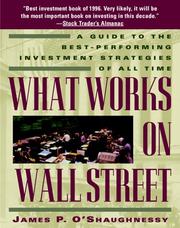 What Works on Wall StreetRecommended
by James O'Shaughnessy
“James O'Shaughnessy's quantitative research in *What Works on Wall Street*, covering multiple decades of market data, identified price-to-sales as a statistically meaningful predictor of returns across large stock universes, particularly for early-stage or hypergrowth companies.”
More from Investing for Beginners
We summarize every new episode. Want them in your inbox?
AAR68 - Correcting for Financial Mistakes
What Is a Holding Company, And Should You Invest in One?
Path to Confidence: The 3-Step Safety Net Every Investor Needs
AAR67 - Our Ratio Rulebook - Solid Financial Starting Points
Ian Cassel’s Rules for Profitable Small-Cap Investing
Similar Episodes
Related episodes from other podcasts

The Jordan Harbinger Show
Aug 18
1370: Peter Zeihan | North American Solutions to a Breaking World Order

Huberman Lab
Jun 18
Essentials: Improve Flexibility with Research-Supported Stretching Protocols
Huberman Lab
Apr 27
Male Roles, Obligations and Options for Building a Fulfilling Life | Scott Galloway

Rational Reminder
Feb 19
Episode 397: Hendrik Bessembinder - Constant Leverage & Measuring Investor Outcomes

The Sales Evangelist
Jul 4
5 Simple Things Top Producers Do That Average Sellers Hate! | Andrew Barbuto - 1912
Explore Related Topics
This podcast is featured in Best Investing Podcasts (2026) — ranked and reviewed with AI summaries.
Read this week's Investing & Markets Podcast Insights — cross-podcast analysis updated weekly.
You're clearly into Investing for Beginners.
Every Monday, we deliver AI summaries of the latest episodes from Investing for Beginners and 192+ other podcasts. Free for one show.
Start My Monday DigestNo credit card · Unsubscribe anytime