Warren Buffett & Sun Tzu: The Ancient Strategy for Avoiding Ruin with Tobias Carlisle
Episode
51 min
Read time
2 min
Topics
Career Growth, Investing, Fundraising & VC
AI-Generated Summary
Key Takeaways
- ✓Ergodicity and Ruin Avoidance: Buffett structures every investment to prevent total capital loss because one ruinous year erases decades of 30% annual returns, reducing geometric growth to zero despite impressive arithmetic averages throughout career.
- ✓General Re Defensive Masterclass: Buffett's 1998 General Re acquisition diluted Berkshire's overconcentrated Coca-Cola position from half of equity down while adding bonds that rallied during the 2000 crash, enabling reinvestment into cheap equities for 25 years.
- ✓Apple's Perfect Timing: Buffett waited until activists Carl Icahn and David Einhorn forced Apple's capital structure improvement through buybacks before deploying $40 billion, demonstrating extreme discipline to wait for perfection rather than swing at imperfect opportunities.
- ✓Via Negativa Character Analysis: Evaluate management by comparing actions to words rather than predicting smart moves—avoid companies where share-based compensation exceeds reasonable levels or insider actions contradict public statements to sidestep predictable failures.
What It Covers
Toby Carlisle connects Warren Buffett's investment philosophy to Sun Tzu's Art of War, emphasizing avoiding ruin over maximizing gains, defensive positioning, seeking overwhelming advantages, and timing investments with market cycles.
Key Questions Answered
- •Ergodicity and Ruin Avoidance: Buffett structures every investment to prevent total capital loss because one ruinous year erases decades of 30% annual returns, reducing geometric growth to zero despite impressive arithmetic averages throughout career.
- •General Re Defensive Masterclass: Buffett's 1998 General Re acquisition diluted Berkshire's overconcentrated Coca-Cola position from half of equity down while adding bonds that rallied during the 2000 crash, enabling reinvestment into cheap equities for 25 years.
- •Apple's Perfect Timing: Buffett waited until activists Carl Icahn and David Einhorn forced Apple's capital structure improvement through buybacks before deploying $40 billion, demonstrating extreme discipline to wait for perfection rather than swing at imperfect opportunities.
- •Via Negativa Character Analysis: Evaluate management by comparing actions to words rather than predicting smart moves—avoid companies where share-based compensation exceeds reasonable levels or insider actions contradict public statements to sidestep predictable failures.
Notable Moment
Buffett paid $400 million unwinding General Re's derivatives in benign 1998 conditions after calling them weapons of mass destruction, a decision vindicated when identical contracts destroyed major insurers during the 2007-2009 financial crisis.
Episode Transcript
2026 is the year you launch your business, the year you transform into an entrepreneur, founder, boss. One powerful move puts your future firmly in your hands, starting a business with Shopify. Maybe you've got an idea you can't shake. A craft everyone tells you to sell. A story you've already designed in your head. With Shopify, 2026 is when you finally make it happen. Shopify gives you everything you need to sell online and in person. Millions of entrepreneurs have already made this leap. From household names to first time business owners just getting started, Shopify gives you all the tools to easily build your dream store. Choose from hundreds of beautiful templates that you can customize to match your brand. Set up is fast with Shopify's built in AI tools that write product descriptions and headlines and help you edit product photos. Marketing is built in too. Create email and social campaigns that reach customers wherever they scroll. As you grow, Shopify grows with you. Handle more orders, expand to new markets, and do it all from the same dashboard. In 2026, stop waiting and start selling with Shopify. Sign up for your $1 per month trial and start selling today at shopify.com/beginners. Go to shopify.com/beginners. That's shopify.com/beginners. Here are your first this new year with Shopify by your side. The holidays mean more travel, more shopping, more time online, and more personal info in more places that could expose you more to identity theft. But LifeLock monitors millions of data points per second. If your identity is stolen, our US based restoration specialists will fix it guaranteed or your money back. Don't face drained accounts, fraudulent loans, or financial losses alone. Get more holiday fun and less holiday worry with LifeLock. Save up to 40% your first year. Visit lifelock.com/podcast. Terms apply. But that idea of ruin sort of permeates the whole thing that you and and there's some there's some game theory now that exists on this idea. And there's an author who's written a book called Ergodicity, Luca Delana. And he discusses this idea of ergodicity, which is basically this idea that if you have a a game in in the context of, like, a game theory game where you Love this podcast because it crushes your dreams of getting rich quick. They actually got me into reading stats for anything. You're tuned in to the investing for beginners podcast. Led by Andrew Sather and Dave Ahern. Step by step premium investing guidance for beginners. Your path to financial freedom starts now. Starts now. Alright, folks. Welcome to investing for beginners podcast. Today, we have a lot of fun. We have a great show for you. We have Toby Carlisle, who is the principal at Acquirer's Funds LLC and serves as their chief investment officer. He hosts one of my favorite podcasts with Jake Taylor, value after hours, must listen. And finally, he writes books, really good books, such as Acquirer's Multiple. And today's topic, …
Get the full transcript (8,818 words) + summary by email — free
One-time email with the complete transcript and AI summary of this episode. No account needed.
One email, no spam. We’ll also show you what SignalCast does.

You just read a 3-minute summary of a 48-minute episode.
Get Investing for Beginners summarized like this every Monday — plus up to 2 more podcasts, free.
Pick Your Podcasts — FreeKeep Reading
More from Investing for Beginners
The Language of Business, Part 1: Accounting Doesn't Have to Suck
Oct 22 · 45 min

The Meb Faber Show
Tobias Carlisle - Warren Buffett, Sun Tzu and The Ancient Art of Risk-Taking | #600
Oct 7
More from Investing for Beginners
AAR72 - Financial Tier List
Oct 20 · 50 min

We Study Billionaires
TIP764: The Art of Buffett w/ Tobias Carlisle
Oct 31
Books, tools, and gear mentioned in this episode
SignalCast may earn commission on purchases via these links. As an Amazon Associate, SignalCast earns from qualifying purchases.
Books
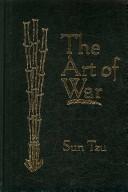
by Sun Tzu
“Toby Carlisle connects Warren Buffett's investment philosophy to Sun Tzu's Art of War, emphasizing avoiding ruin over maximizing gains, defensive positioning, seeking overwhelming advantages, and timing investments with market cycles.”
More from Investing for Beginners
We summarize every new episode. Want them in your inbox?
The Language of Business, Part 1: Accounting Doesn't Have to Suck
AAR72 - Financial Tier List
No Moat, No Problem? What HPE's Moonshot Teaches Value Investors
Path to Confidence Finale: The Habits That Build a Confident Investor
AAR71 - Are You a Financial Green Flag or Red Flag?
Similar Episodes
Related episodes from other podcasts

The Meb Faber Show
Oct 7
Tobias Carlisle - Warren Buffett, Sun Tzu and The Ancient Art of Risk-Taking | #600

We Study Billionaires
Oct 31
TIP764: The Art of Buffett w/ Tobias Carlisle
We Study Billionaires
Oct 3
TIP758: Current Market Conditions & Investment Opportunities w/ Derek Pilecki

The Founders Podcast
Feb 25
#380 Four Hundred Pages of Warren Buffett and Charlie Munger In Their Own Words

My First Million
Jun 16
How the Ex-Goldman CEO actually invests his own money
Explore Related Topics
This podcast is featured in Best Investing Podcasts (2026) — ranked and reviewed with AI summaries.
Read this week's Investing & Markets Podcast Insights — cross-podcast analysis updated weekly.
You're clearly into Investing for Beginners.
Every Monday, we deliver AI summaries of the latest episodes from Investing for Beginners and 192+ other podcasts. Free for one show.
Start My Monday DigestNo credit card · Unsubscribe anytime