The Intelligent Investor in 2026: Outdated or Timeless?
Episode
52 min
Read time
2 min
Topics
Productivity, Personal Finance, Investing
AI-Generated Summary
Key Takeaways
- ✓Investing vs Speculation: Investing requires analyzing business fundamentals through 10-K filings and understanding how companies operate and generate revenue. Speculation focuses solely on price movements without fundamental analysis, making it significantly harder and riskier for consistent returns.
- ✓Reading Requirements: Stock picking demands reading 100-page annual reports (10-Ks) available at sec.gov to understand business operations, risks, and financials. Investors unwilling to read these documents should consider index funds instead, which have created many millionaires through passive investing strategies.
- ✓Inflation Protection: Savings accounts earning 0.05% lose at least 2% annually to inflation, eroding purchasing power. Stocks historically return around 10% annually despite volatility, making them superior for long-term wealth preservation compared to bonds, CDs, or cash equivalents.
- ✓Margin of Safety: Purchase stocks significantly below intrinsic value estimates to protect capital if projections prove incorrect. For example, buying a company worth $100 at $70 provides a $30 buffer against valuation errors, combining quantitative analysis with qualitative business assessment.
What It Covers
Andrew Sather and Dave Ahern examine why Benjamin Graham's The Intelligent Investor remains relevant in 2026, covering core principles like investing versus speculation, margin of safety, Mr. Market concept, and inflation's impact on portfolios.
Key Questions Answered
- •Investing vs Speculation: Investing requires analyzing business fundamentals through 10-K filings and understanding how companies operate and generate revenue. Speculation focuses solely on price movements without fundamental analysis, making it significantly harder and riskier for consistent returns.
- •Reading Requirements: Stock picking demands reading 100-page annual reports (10-Ks) available at sec.gov to understand business operations, risks, and financials. Investors unwilling to read these documents should consider index funds instead, which have created many millionaires through passive investing strategies.
- •Inflation Protection: Savings accounts earning 0.05% lose at least 2% annually to inflation, eroding purchasing power. Stocks historically return around 10% annually despite volatility, making them superior for long-term wealth preservation compared to bonds, CDs, or cash equivalents.
- •Margin of Safety: Purchase stocks significantly below intrinsic value estimates to protect capital if projections prove incorrect. For example, buying a company worth $100 at $70 provides a $30 buffer against valuation errors, combining quantitative analysis with qualitative business assessment.
Notable Moment
Google dropped dramatically when sentiment turned negative on search competition, yet fundamentals remained unchanged with consistent revenue growth and cash flow. Buying during this pessimism at depressed prices proved profitable when the stock rose 70% within months.
No transcript yet — request it by email, free
We'll transcribe this episode on request and email you the full transcript and AI summary — usually within a day. No account needed.
One email, no spam. We’ll also show you what SignalCast does.

You just read a 3-minute summary of a 49-minute episode.
Get Investing for Beginners summarized like this every Monday — plus up to 2 more podcasts, free.
Pick Your Podcasts — FreeKeep Reading
More from Investing for Beginners
Path to Confidence: Stop Chasing the Market and Pick Your Lane
Sep 10 · 66 min

We Study Billionaires
TIP762: 10 Lessons From Investing Legends w/ Kyle Grieve
Oct 19
More from Investing for Beginners
AAR66 - Who Wants to Be a Millionaire?
Sep 8 · 60 min

Huberman Lab
How Mitochondria Control Your Metabolism | Dr. Jared Rutter
Sep 7
Books, tools, and gear mentioned in this episode
SignalCast may earn commission on purchases via these links. As an Amazon Associate, SignalCast earns from qualifying purchases.
Books
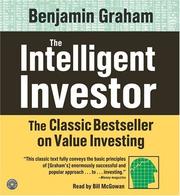 The Intelligent InvestorRecommended
by Benjamin Graham
“Andrew Sather and Dave Ahern examine why Benjamin Graham's The Intelligent Investor remains relevant in 2026, covering core principles like investing versus speculation, margin of safety, Mr. Market concept, and inflation's impact on portfolios.”
More from Investing for Beginners
We summarize every new episode. Want them in your inbox?
Path to Confidence: Stop Chasing the Market and Pick Your Lane
AAR66 - Who Wants to Be a Millionaire?
The First Metric Every Investor Must Check Before Buying
Is NVIDIA’s High-Margin Machine Sustainable?
AAR65 - Where Are People Wasting Money?
Similar Episodes
Related episodes from other podcasts

We Study Billionaires
Oct 19
TIP762: 10 Lessons From Investing Legends w/ Kyle Grieve

Huberman Lab
Sep 7
How Mitochondria Control Your Metabolism | Dr. Jared Rutter

WorkLife with Adam Grant
Aug 25
How to find a peer group that lifts you up with Bill Gurley

Odd Lots
Aug 20
Nick Bostrom on What Happens if AI Solves All of Our Problems
Huberman Lab
Aug 17
Neuroscience of Emotions & Tools for Improving Emotion Regulation | Dr. Ralph Adolphs
Explore Related Topics
This podcast is featured in Best Investing Podcasts (2026) — ranked and reviewed with AI summaries.
Read this week's Investing & Markets Podcast Insights — cross-podcast analysis updated weekly.
You're clearly into Investing for Beginners.
Every Monday, we deliver AI summaries of the latest episodes from Investing for Beginners and 192+ other podcasts. Free for one show.
Start My Monday DigestNo credit card · Unsubscribe anytime