3 Peter Lynch Principles That Can Make You a Better Investor
Episode
49 min
Read time
2 min
Topics
Productivity, Remote Work, Relationships
AI-Generated Summary
Key Takeaways
- ✓Rear-View Mirror Trap: Nike's direct-to-consumer strategy backfired when management swung too far from retail partners like Dick's Sporting Goods and Foot Locker, creating lose-lose scenarios. Revenue growth stalled over five years, combining with valuation compression to hurt shareholders. Past success doesn't guarantee future results, especially when business models shift dramatically without respecting existing distribution channels.
- ✓Turnaround Recognition: Microsoft traded flat or down for thirteen to fourteen years during Steve Ballmer's tenure despite five to ten percent revenue growth. After Satya Nadella took over in 2015, the company achieved fifteen to eighteen percent annual revenue growth at nearly four trillion dollar valuation. Nadella eliminated three competing internal divisions, acquired GitHub, and prioritized cloud computing to transform performance.
- ✓Dollar Cost Averaging Up: Buying more shares as stock prices rise contradicts value investing instincts but works when business fundamentals improve. Google presented this challenge when shares climbed from eighty-six dollars to one hundred ten dollars, requiring investors to separate ego anchoring from objective analysis. The stock subsequently doubled, rewarding those who overcame psychological barriers and focused on improving margins and ROIC.
- ✓Analyst Boredom Signals: Danaher and McKesson generate strong returns despite zero social media buzz or analyst excitement. Medical distribution and life sciences lack AI or crypto narratives that drive hype cycles. McKesson has operated over one hundred years as a steady cash cow, while Danaher's spinoff structure obscures true shareholder returns by removing revenue from consolidated financials.
- ✓Spinoff Return Complexity: Companies executing multiple spinoffs like Danaher and Constellation Software show artificially depressed performance in consolidated financials. Shareholders receive separate shares in spun entities like Topicus and Lumine, but stock charts don't reflect total returns. Analysts comparing year-over-year revenue miss that shareholders gained value through distributed ownership across multiple growing businesses rather than single entity appreciation.
What It Covers
Andrew Sather and Dave Ahearn examine three Peter Lynch investing principles from "Beating the Street": avoiding rear-view mirror investing, buying stocks you already own, and investing when analysts lose interest. They analyze Microsoft's turnaround under Satya Nadella, Google's valuation anchoring challenges, and boring winners like McKesson and Watsco.
Key Questions Answered
- •Rear-View Mirror Trap: Nike's direct-to-consumer strategy backfired when management swung too far from retail partners like Dick's Sporting Goods and Foot Locker, creating lose-lose scenarios. Revenue growth stalled over five years, combining with valuation compression to hurt shareholders. Past success doesn't guarantee future results, especially when business models shift dramatically without respecting existing distribution channels.
- •Turnaround Recognition: Microsoft traded flat or down for thirteen to fourteen years during Steve Ballmer's tenure despite five to ten percent revenue growth. After Satya Nadella took over in 2015, the company achieved fifteen to eighteen percent annual revenue growth at nearly four trillion dollar valuation. Nadella eliminated three competing internal divisions, acquired GitHub, and prioritized cloud computing to transform performance.
- •Dollar Cost Averaging Up: Buying more shares as stock prices rise contradicts value investing instincts but works when business fundamentals improve. Google presented this challenge when shares climbed from eighty-six dollars to one hundred ten dollars, requiring investors to separate ego anchoring from objective analysis. The stock subsequently doubled, rewarding those who overcame psychological barriers and focused on improving margins and ROIC.
- •Analyst Boredom Signals: Danaher and McKesson generate strong returns despite zero social media buzz or analyst excitement. Medical distribution and life sciences lack AI or crypto narratives that drive hype cycles. McKesson has operated over one hundred years as a steady cash cow, while Danaher's spinoff structure obscures true shareholder returns by removing revenue from consolidated financials.
- •Spinoff Return Complexity: Companies executing multiple spinoffs like Danaher and Constellation Software show artificially depressed performance in consolidated financials. Shareholders receive separate shares in spun entities like Topicus and Lumine, but stock charts don't reflect total returns. Analysts comparing year-over-year revenue miss that shareholders gained value through distributed ownership across multiple growing businesses rather than single entity appreciation.
Notable Moment
The hosts describe walking through malls and observing Foot Locker stores with only two employees staring at phones versus packed Dick's Sporting Goods locations. This ground-level observation validated their investment thesis about retail distribution shifts before it appeared in financial statements, demonstrating how physical store visits can confirm or challenge investment decisions.
Episode Transcript
Peter's principle 18. When even the analysts are bored, it's time to start buying. So this one might be one of my favorites here. And we can we can go through several companies, so I'd love to hear you throw one out and talk about that. I'll throw out a company that, has not, had hasn't performed as well as we'd hoped. But if you look at the historical returns and what we think will 2026 is the year you launch your business, the year you transform into an entrepreneur, founder, boss. One powerful move puts your future firmly in your hands, starting a business with Shopify. Maybe you've got an idea you can't shake, a craft everyone tells you to sell, a store you've already designed in your head. With Shopify 2026 is when you finally make it happen. Shopify gives you everything you need to sell online and in person. Millions of entrepreneurs have already made this leap, from all birds to first time business owners just getting started. Shopify gives you all the tools to easily build your dream store. Choose from hundreds of beautiful templates that you can customize to match your brand. Set up as fast with Shopify's built in AI tools that write product descriptions and headlines and help you edit product photos. Marketing is built in too. Create email and social campaigns that reach customers wherever they scroll. As you grow, Shopify grows with you. Handle more orders, expand to new markets, and do it all from the same dashboard. In 2026, stop waiting and start selling with Shopify. Sign up for your $1 per month trial and start selling today at shopify.com/beginners. Go to shopify dot com slash beginners. That's shopify.com/beginners. Here are your first this new year with Shopify by your side. This show is sponsored by Liquid I v. Want to know a counterintuitive investing truth? Taking breaks actually accelerates progress. I used to power through exhaustion, thinking more hours meant better analysis. Wrong. I'd missed crucial details in financial statements because my brain was fried. Now I prioritize recovery and hydration, and my work quality has never been better. That's why I use LiquidIV's hydration multiplier. Whether you're post workout, traveling, or just tackling a demanding day, proper hydration is nonnegotiable for peak performance. The formula is science backed with optimized ratio of electrolytes, essential vitamins, and clinically tested nutrients. I love how convenient it is. I keep packets in my carry on and desk drawer. Just tear, pour into 16 ounces of water, and you're good to go. Here's the key. One stick hydrates better than water alone. Powered by LIV HydroScience, you get three times the electrolytes of leading sports drinks and eight essential vitamins and nutrients. The lemon, lime, and passion fruit flavors are incredibly refreshing. And it's non GMO, vegan, gluten free, dairy free, and soy free. Rehydrate with better hydration from Liquid I V. Tear, pour, live more. Go to liquidiv.com and get 20% …
Get the full transcript (8,349 words) + summary by email — free
One-time email with the complete transcript and AI summary of this episode. No account needed.
One email, no spam. We’ll also show you what SignalCast does.

You just read a 3-minute summary of a 46-minute episode.
Get Investing for Beginners summarized like this every Monday — plus up to 2 more podcasts, free.
Pick Your Podcasts — FreeKeep Reading
More from Investing for Beginners
The Language of Business, Part 1: Accounting Doesn't Have to Suck
Oct 22 · 45 min

Everything Everywhere Daily
The Dark Origins of Fairy Tales, Part 2
Mar 25
More from Investing for Beginners
AAR72 - Financial Tier List
Oct 20 · 50 min

The Vergecast
Version History: Furby
Mar 8
Books, tools, and gear mentioned in this episode
SignalCast may earn commission on purchases via these links. As an Amazon Associate, SignalCast earns from qualifying purchases.
Books
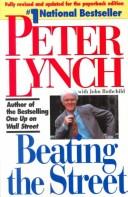 Beating the StreetRecommended
by Peter Lynch
“Andrew Sather and Dave Ahearn examine three Peter Lynch investing principles from "Beating the Street": avoiding rear-view mirror investing, buying stocks you already own, and investing when analysts lose interest.”
More from Investing for Beginners
We summarize every new episode. Want them in your inbox?
The Language of Business, Part 1: Accounting Doesn't Have to Suck
AAR72 - Financial Tier List
No Moat, No Problem? What HPE's Moonshot Teaches Value Investors
Path to Confidence Finale: The Habits That Build a Confident Investor
AAR71 - Are You a Financial Green Flag or Red Flag?
Similar Episodes
Related episodes from other podcasts

Everything Everywhere Daily
Mar 25
The Dark Origins of Fairy Tales, Part 2

The Vergecast
Mar 8
Version History: Furby

Moonshots with Peter Diamandis
Mar 7
Andrew Yang: UBI Before UHI, Solving Job Loss, and the Future of Work | #236
Moonshots with Peter Diamandis
Jan 13
Tony Robbins on Overcoming Job Loss, Purposelessness & The Coming AI Disruption | 222
Moonshots with Peter Diamandis
Dec 6
Unlocking AGI: How Life Changes for Everyone w/ Jack Hidary, Salim Ismail & Dave Blundin | EP #213
Explore Related Topics
This podcast is featured in Best Investing Podcasts (2026) — ranked and reviewed with AI summaries.
You're clearly into Investing for Beginners.
Every Monday, we deliver AI summaries of the latest episodes from Investing for Beginners and 192+ other podcasts. Free for one show.
Start My Monday DigestNo credit card · Unsubscribe anytime