The Arthashastra
Episode
56 min
Read time
2 min
Topics
Leadership, Sales & Revenue, Software Development
AI-Generated Summary
Key Takeaways
- ✓Bureaucratic Structure: The text prescribes a four-layer administrative pyramid beneath the king with exactly four advisers (optimal for diverse views while maintaining secrecy), ministers controlling specific sectors like mining and manufacturing, and department heads managing specialized areas including elephant husbandry.
- ✓Espionage Network: Kings deploy multiple spy categories including secret agents skilled in codes and magic, assassins from desperate countryside populations, poisoners described as callous and lazy, and female ascetics who move freely through society gathering intelligence while appearing pious and harmless.
- ✓Economic Control: The state directly manages salt production, liquor distribution, mining operations, and brothels (courtesans pay substantial taxes and transition to brothel management after losing beauty), creating major revenue streams while allowing private enterprise in other sectors to maintain economic balance.
- ✓Foreign Policy Framework: The manual provides logic trees for alliance formation based on relative power positions, instructs diplomatic envoys to gather intelligence while sowing dissent in rival courts, and emphasizes strategic timing over constant expansion to maintain long-term territorial stability.
What It Covers
The Arthashastra, an ancient Sanskrit manual for statecraft from around 300 BCE, provides detailed instructions on governance, economy, espionage, and foreign policy in early Indian society under the Mauryan Empire.
Key Questions Answered
- •Bureaucratic Structure: The text prescribes a four-layer administrative pyramid beneath the king with exactly four advisers (optimal for diverse views while maintaining secrecy), ministers controlling specific sectors like mining and manufacturing, and department heads managing specialized areas including elephant husbandry.
- •Espionage Network: Kings deploy multiple spy categories including secret agents skilled in codes and magic, assassins from desperate countryside populations, poisoners described as callous and lazy, and female ascetics who move freely through society gathering intelligence while appearing pious and harmless.
- •Economic Control: The state directly manages salt production, liquor distribution, mining operations, and brothels (courtesans pay substantial taxes and transition to brothel management after losing beauty), creating major revenue streams while allowing private enterprise in other sectors to maintain economic balance.
- •Foreign Policy Framework: The manual provides logic trees for alliance formation based on relative power positions, instructs diplomatic envoys to gather intelligence while sowing dissent in rival courts, and emphasizes strategic timing over constant expansion to maintain long-term territorial stability.
Notable Moment
The text warns that princes and crabs share one trait: both consume their progenitors. Kings must check under beds before visiting queens and test food for poison, as family members pose the greatest assassination threat.
Episode Transcript
This BBC podcast is supported by ads outside The UK. Stay in the game with Michigan Orthopedic Surgeons. Whether it's a sprained ankle on the soccer field, a broken bone during football practice, or a weekend pickup game injury, we've got you covered. Our fellowship trained surgeons and advanced practice providers deliver expert care for sports injuries. Same day walk in visits at our urgent ortho clinics in Royal Oak and Shelby Township with extended after hours and weekend availability. Visit our after hours urgent ortho clinics in Royal Oak and Shelby Township, or go to miortho.care to learn more. Spring has sprung, and that means summer is ready to bring the heat. At Thornton and Grooms, we're lowering the price of our comprehensive AC check. Now only $59 for a limited time so you can cool things down when life starts heating up. Trusted, guaranteed. Thornton and Grooms, schedule your service today. BBC Sounds. Music, radio, podcasts. Thanks for downloading this episode of In Our Time. There's a reading list to go with it on our website, and you can get news about our programs if you follow us on Twitter at BBC In Our Time. I hope you enjoy the programs. Hello. The ancient Indian Sanskrit text, the Ota Shastra, has been compared with the work of Machiavelli. Its origins are uncertain, but what is clear is it was designed to be part of a practical manual for statecraft. It tells a ruler how to govern his territory, how to achieve stability and prosperity, and how to conduct relations with other powers. In the process, it gives us an insight into the lives of people in South Asia more than two thousand years ago. Yet the text only came into the hands of Western scholars at the start of the twentieth century. With me to discuss the Athar Shastra and James Hegarty, professor of Sanskrit and Indian religion at Cardiff University, Devon Patel, associate professor of South Asia studies at the University of Pennsylvania, and Jessica Frasier, lecturer in the study of religion at the University of Oxford and fellow at the Oxford Centre for Hindu studies. Jessica, when was a Achashastra written? Do we know precisely? We don't know precisely, but we know the era that it came out of. So if we kind of cast our minds back to about 400 BC, we've got an India that's in the middle of what's sometimes known as the axial age. There are states coming to coalesce with urbanized centers in them and cities and courts which encourage kind of intellectual development. And in India, this is known as, particularly in North India, the the Mahajanapadas, these kind of great people centers. There are 16 of them. They make up a kind of a a tile work of different states. And yet all that changes in 03/2020 and it's this is gonna basically inspire the development of the text. In 03/2020, India's first really serious empire arises, the Mauryan …
Get the full transcript (10,838 words) + summary by email — free
One-time email with the complete transcript and AI summary of this episode. No account needed.
One email, no spam. We’ll also show you what SignalCast does.

You just read a 3-minute summary of a 53-minute episode.
Get In Our Time summarized like this every Monday — plus up to 2 more podcasts, free.
Pick Your Podcasts — FreeKeep Reading
More from In Our Time
In Our Time Returns for a New Series
Sep 7 · 2 min

Stuff You Should Know
Selects: Thrill to the Stunning Bicameral Mind Hypothesis
May 2
More from In Our Time
Archive: Empress Dowager Cixi
Sep 3 · 51 min

No Priors: Artificial Intelligence | Technology | Startups
Andrej Karpathy on Code Agents, AutoResearch, and the Loopy Era of AI
Mar 20
Books, tools, and gear mentioned in this episode
SignalCast may earn commission on purchases via these links. As an Amazon Associate, SignalCast earns from qualifying purchases.
Books
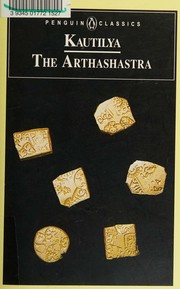
“The Arthashastra, an ancient Sanskrit manual for statecraft from around 300 BCE, provides detailed instructions on governance, economy, espionage, and foreign policy in early Indian society under the Mauryan Empire.”
More from In Our Time
We summarize every new episode. Want them in your inbox?
Similar Episodes
Related episodes from other podcasts

Stuff You Should Know
May 2
Selects: Thrill to the Stunning Bicameral Mind Hypothesis

No Priors: Artificial Intelligence | Technology | Startups
Mar 20
Andrej Karpathy on Code Agents, AutoResearch, and the Loopy Era of AI

Everything Everywhere Daily
Feb 8
The Late Bronze Age Collapse

Lex Fridman Podcast
Dec 12
#487 – Irving Finkel: Deciphering Secrets of Ancient Civilizations & Flood Myths
Explore Related Topics
This podcast is featured in Best History Podcasts (2026) — ranked and reviewed with AI summaries.
Read this week's Software Engineering Podcast Insights — cross-podcast analysis updated weekly.
You're clearly into In Our Time.
Every Monday, we deliver AI summaries of the latest episodes from In Our Time and 192+ other podcasts. Free for one show.
Start My Monday DigestNo credit card · Unsubscribe anytime