Rousseau on Education
Episode
51 min
Read time
2 min
Topics
Productivity, Health & Wellness, Philosophy & Wisdom
AI-Generated Summary
Key Takeaways
- ✓Negative Education Philosophy: Rousseau proposed tutors manipulate the child's environment while appearing absent, allowing natural learning through necessity and failure rather than direct instruction, creating independent rational agents by adolescence through experiential discovery.
- ✓Infant Care Revolution: Rousseau advocated mothers breastfeed their own children instead of using wet nurses, eliminate swaddling clothes that restricted movement, and allow children extensive physical play and outdoor exploration to develop naturally before age twelve.
- ✓Natural Man Versus Society: Rousseau distinguished between amour de soi (healthy self-preservation) and amour propre (toxic comparison with others), arguing civilization corrupts humans by creating competitive self-consciousness, jealousy, and dependence on others' opinions.
- ✓Gender Essentialism in Education: Sophie, Emile's female counterpart, receives minimal education focused on domestic skills and pleasing her future husband, reflecting Rousseau's belief that women's natural role centers on motherhood and supporting men intellectually.
What It Covers
Jean-Jacques Rousseau's 1762 treatise Emile revolutionized educational philosophy by arguing children learn best through direct experience rather than books, advocating natural development, physical freedom, and delayed formal instruction until age twelve or thirteen.
Key Questions Answered
- •Negative Education Philosophy: Rousseau proposed tutors manipulate the child's environment while appearing absent, allowing natural learning through necessity and failure rather than direct instruction, creating independent rational agents by adolescence through experiential discovery.
- •Infant Care Revolution: Rousseau advocated mothers breastfeed their own children instead of using wet nurses, eliminate swaddling clothes that restricted movement, and allow children extensive physical play and outdoor exploration to develop naturally before age twelve.
- •Natural Man Versus Society: Rousseau distinguished between amour de soi (healthy self-preservation) and amour propre (toxic comparison with others), arguing civilization corrupts humans by creating competitive self-consciousness, jealousy, and dependence on others' opinions.
- •Gender Essentialism in Education: Sophie, Emile's female counterpart, receives minimal education focused on domestic skills and pleasing her future husband, reflecting Rousseau's belief that women's natural role centers on motherhood and supporting men intellectually.
Notable Moment
Voltaire exposed that Rousseau abandoned all five of his own children to foundling hospitals where they likely died, devastating his reputation as an education authority and triggering paranoia that plagued him for life despite his theories on proper child-rearing.
Episode Transcript
This BBC podcast is supported by ads outside The UK. Ever find yourself in a time crunch? Maybe you forgot your favorite snacks for your movie night or need a last minute gift for a party. Don't worry. Prime Air has you covered. Prime Air is Amazon's ultra fast drone delivery service now available to eligible customers in the Detroit Metro area. Tens of thousands of items are now eligible for ultra fast drone delivery. Everyday essentials like batteries, headphones, over the counter medicines, last minute travel needs, those tempting snacks you're craving, and so much more can be delivered ASAP. When shopping, add eligible items to your cart. At the checkout, select drone delivery. Prime Air will take care of the rest. No need to rush to the store. Prime Air brings convenience where you need it, when you need it. Visit amazon.com/shopultrafast to place your first order and start enjoying the benefits of ultra fast drone delivery. Hey, Michigan. Your next adventure starts at Milnez Chevrolet. Whether you're after a dependable truck, a sleek SUV, or an eco friendly car, we've got exactly what you need and at prices you'll love. At Milnes, the price you see is the price you pay. No hidden fees. No surprises. Plus, we'll deliver your dream car right to your front door. Experience world class customer service from a team who truly cares about finding you the perfect ride. Don't wait. Swing by Milne's Chevrolet on M 21 in Imlay City or shop online at milne'schevy.com. Milne's Chevrolet, together let's drive. Stay in the game with Michigan orthopedic surgeons. Whether it's a sprained ankle on the soccer field, a broken bone during practice, or a weekend pickup game injury, we've got you covered. Our fellowship trained surgeons and advanced practice providers deliver expert care for sports injuries. Same day walk in visits at our urgent ortho clinics in Royal Oak and Shelby Township with extended after hours hours and weekend availability. Visit our after hours urgent ortho clinics in Royal Oak and Shelby Township, or go to miortho.care to learn more. BBC Sounds. Music, radio, podcasts. Thanks for downloading this episode of In Our Time. There's a reading list to go with it on our website, and you can get news about our programs if you follow us on Twitter at BBC In Our Time. I hope you enjoy the programs. Hello. In 1762, Jean Jacques Rousseau wrote Emile, All on Education, which he considered his greatest work. Emile is partly a novel, partly a treatise on how to make children immune from the corruption of seesawid of civilization, mainly by letting them work things out for themselves rather than telling them what to do. Only then would they learn self respect and free themselves from the self consciousness which he found throughout society and which led inevitably he thought to unhappiness. Quote, man is born free, but everywhere he is in chains, he wrote his most famous sentence. We need to …
Get the full transcript (9,743 words) + summary by email — free
One-time email with the complete transcript and AI summary of this episode. No account needed.
One email, no spam. We’ll also show you what SignalCast does.

You just read a 3-minute summary of a 48-minute episode.
Get In Our Time summarized like this every Monday — plus up to 2 more podcasts, free.
Pick Your Podcasts — FreeKeep Reading
More from In Our Time
In Our Time Returns for a New Series
Sep 7 · 2 min

Up First (NPR)
BRICS Summit in India, Amazon Air Plane Crash, Federal Film Tax Bill
Sep 12
More from In Our Time
Archive: Empress Dowager Cixi
Sep 3 · 51 min

20VC (20 Minute VC)
20VC: 7 Predictions for How AI Changes the World: Labour, Engineering, Social Media, GrokBots Buying Cybercabs and more with Matteo Franceschetti, Co-Founder @ Eight Sleep
Sep 12
Books, tools, and gear mentioned in this episode
SignalCast may earn commission on purchases via these links. As an Amazon Associate, SignalCast earns from qualifying purchases.
Books
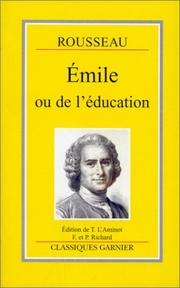 EmileBy guest
by Jean-Jacques Rousseau
“Jean-Jacques Rousseau's 1762 treatise Emile revolutionized educational philosophy by arguing children learn best through direct experience rather than books, advocating natural development, physical freedom, and delayed formal instruction until age twelve or thirteen.”
More from In Our Time
We summarize every new episode. Want them in your inbox?
Similar Episodes
Related episodes from other podcasts

Up First (NPR)
Sep 12
BRICS Summit in India, Amazon Air Plane Crash, Federal Film Tax Bill

20VC (20 Minute VC)
Sep 12
20VC: 7 Predictions for How AI Changes the World: Labour, Engineering, Social Media, GrokBots Buying Cybercabs and more with Matteo Franceschetti, Co-Founder @ Eight Sleep

This Week in Startups
Sep 11
The Pentagon Wants Equity in AI Startups | E2336

All-In with Chamath, Jason, Sacks & Friedberg
Sep 11
AI Kills Everybody or Doomer Psyop? OpenAI's Math Breakthrough, Nike's $200B Collapse

Masters in Business
Sep 11
Finding Stability in Investing: Masters in Business with Seth Bernstein
Explore Related Topics
This podcast is featured in Best History Podcasts (2026) — ranked and reviewed with AI summaries.
Read this week's Health & Longevity Podcast Insights — cross-podcast analysis updated weekly.
You're clearly into In Our Time.
Every Monday, we deliver AI summaries of the latest episodes from In Our Time and 192+ other podcasts. Free for one show.
Start My Monday DigestNo credit card · Unsubscribe anytime