Rawls' Theory of Justice
Episode
60 min
Read time
2 min
Topics
Productivity, Personal Finance, Design & UX
AI-Generated Summary
Key Takeaways
- ✓The Difference Principle: Rawls argues economic inequalities are only justified if they maximally benefit society's worst-off members, not merely help everyone somewhat. This radical standard requires designing institutions where the lowest-paid workers achieve the highest possible position, fundamentally rejecting utilitarian cost-benefit analysis that permits sacrificing minorities for aggregate gains.
- ✓Veil of Ignorance Method: Design social institutions by imagining you don't know your future position in society—your race, gender, wealth, or abilities. This thought experiment removes bias from justice deliberations. Rawls suggests designing society as if your enemy assigns your place, forcing you to make the worst position as good as possible for self-protection.
- ✓Fair Value of Political Liberties: Formal voting rights prove insufficient for justice. Rawls demands equal political influence regardless of wealth, requiring inheritance taxation and campaign finance limits to prevent intergenerational advantage accumulation. Citizens with similar motivation and ability must have roughly equal prospects of influencing political outcomes, not just equal ballot access.
- ✓Property-Owning Democracy: Rawls rejects both Soviet command economies and American-style welfare capitalism. He advocates dispersing wealth ownership broadly before market activity begins, rather than redistributing after the fact. This structural approach prevents wealth concentration across generations while maintaining individual economic freedom and market mechanisms for resource allocation.
- ✓Reflective Equilibrium Justification: Moral principles gain legitimacy through achieving coherence between specific judgments, mid-level principles, and general theories—not through appeals to religious truth or abstract foundations. This method allows diverse citizens to reach agreement on justice by adjusting beliefs at different levels until they form a consistent, mutually acceptable framework.
What It Covers
John Rawls' Theory of Justice (1971) revolutionized political philosophy by proposing that a just society must arrange inequalities to benefit the least advantaged, using the veil of ignorance thought experiment to determine fair principles.
Key Questions Answered
- •The Difference Principle: Rawls argues economic inequalities are only justified if they maximally benefit society's worst-off members, not merely help everyone somewhat. This radical standard requires designing institutions where the lowest-paid workers achieve the highest possible position, fundamentally rejecting utilitarian cost-benefit analysis that permits sacrificing minorities for aggregate gains.
- •Veil of Ignorance Method: Design social institutions by imagining you don't know your future position in society—your race, gender, wealth, or abilities. This thought experiment removes bias from justice deliberations. Rawls suggests designing society as if your enemy assigns your place, forcing you to make the worst position as good as possible for self-protection.
- •Fair Value of Political Liberties: Formal voting rights prove insufficient for justice. Rawls demands equal political influence regardless of wealth, requiring inheritance taxation and campaign finance limits to prevent intergenerational advantage accumulation. Citizens with similar motivation and ability must have roughly equal prospects of influencing political outcomes, not just equal ballot access.
- •Property-Owning Democracy: Rawls rejects both Soviet command economies and American-style welfare capitalism. He advocates dispersing wealth ownership broadly before market activity begins, rather than redistributing after the fact. This structural approach prevents wealth concentration across generations while maintaining individual economic freedom and market mechanisms for resource allocation.
- •Reflective Equilibrium Justification: Moral principles gain legitimacy through achieving coherence between specific judgments, mid-level principles, and general theories—not through appeals to religious truth or abstract foundations. This method allows diverse citizens to reach agreement on justice by adjusting beliefs at different levels until they form a consistent, mutually acceptable framework.
Notable Moment
Rawls lost two younger brothers in childhood to infections they contracted from him, creating an early awareness of arbitrary luck's role in life outcomes. This formative tragedy shaped his conviction that justice must counteract morally arbitrary advantages and disadvantages.
Episode Transcript
This BBC podcast is supported by ads outside The UK. This is Eva Longoria from Hungry for History with Eva Longoria and Maite Gomez Rejon. Like the song says, it's the most wonderful time of the year and also a wonderfully busy one. All that merriment can weigh down even Santa's sleigh, so keep it wonderful by keeping yourself wonderful with a crisp cold Coca Cola. Pause for fizzy joy. Look out for yourself and then look out for everyone else. And together, we'll make this season as wonderful as it's meant to be. Enjoy a Coca Cola. Refresh your holidays. Stay in the game with Michigan orthopedic surgeons. Whether it's a sprained ankle on the soccer field, a broken bone during football practice, or a weekend pickup game injury, we've got you covered. Our fellowship trained surgeons and advanced practice providers deliver expert care for sports injuries. Same day walk in visits at our urgent ortho clinics in Royal Oak and Shelby Township with extended after hours and weekend availability. Visit our after hours urgent ortho clinics in Royal Oak and Shelby Township or go to miortho.care to learn more. BBC Sounds. Music, radio, podcasts. Thanks for downloading this episode of In Our Time. There's a reading list to go with it on our website, and you can get news about our programs if you follow us on Twitter at BBC In Our Time. I hope you enjoy the program. Hello. A Theory of Justice by John Rawls has been called the most influential book in twentieth century political philosophy. Rawls, 1921 to 2002, drew on his own experience in World War two and saw the chance in its aftermath to build a new society founded on personal liberty and fair equality of opportunity. And while in that just society there could be inequalities, Rawls' radical idea was that those inequalities must be of the greatest advantage, not to the richest, but to the worst off. With me to discuss Rawls' theory of justice are Fabianne Peter, professor of philosophy at the University of Warwick, Martin O'Neill, professor of political philosophy at the University of York, and Jonathan Wolf, the Alfred Landlicher professor of values and public policy at the Brabatnik School of Government, University of Oxford, and fellow Wolfson College. Let's start with you, Martin. Can you give us some brief, notes about his background, his youth? Sure. So, Rawls was born in 1921 in Baltimore, Maryland to quite an affluent family. His father was a, quite a successful lawyer. He was one of five boys, and I suppose that perhaps the most notable incident of his childhood was that two of his younger brothers died in childhood, from infections that they'd actually contracted from rules himself. So it seems as if he with this formative experience very early in his life, he had this sense of the sheer arbitrariness of of good or bad luck, and the way that so many features of our lives really just …
Get the full transcript (10,673 words) + summary by email — free
One-time email with the complete transcript and AI summary of this episode. No account needed.
One email, no spam. We’ll also show you what SignalCast does.

You just read a 3-minute summary of a 57-minute episode.
Get In Our Time summarized like this every Monday — plus up to 2 more podcasts, free.
Pick Your Podcasts — FreeKeep Reading


Books, tools, and gear mentioned in this episode
SignalCast may earn commission on purchases via these links. As an Amazon Associate, SignalCast earns from qualifying purchases.
Books
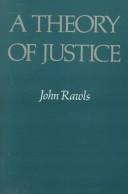 Theory of JusticeBy guest
by John Rawls
“John Rawls' Theory of Justice (1971) revolutionized political philosophy by proposing that a just society must arrange inequalities to benefit the least advantaged, using the veil of ignorance thought experiment to determine fair principles.”
More from In Our Time
We summarize every new episode. Want them in your inbox?
Similar Episodes
Related episodes from other podcasts

Stuff You Should Know
Sep 3
Social Identity Theory: Your Group Rules, Others Drool

The Joe Rogan Experience
Sep 1
#2548 - Brian Simpson

Pivot
Aug 28
Meta’s Massive Settlement, Bill Gates’ AI Warning, and Remembering Dolly Parton

Invest Like the Best with Patrick O'Shaughnessy
Aug 18
Ben Thompson on Big Tech, China, and the AI Boom Running Out of Money - [Invest Like the Best, EP.487]

Everything Everywhere Daily
Aug 17
John Dickinson: The Reluctant Revolutionary
Explore Related Topics
This podcast is featured in Best History Podcasts (2026) — ranked and reviewed with AI summaries.
You're clearly into In Our Time.
Every Monday, we deliver AI summaries of the latest episodes from In Our Time and 192+ other podcasts. Free for one show.
Start My Monday DigestNo credit card · Unsubscribe anytime