The Double-Edged Sword of AI: Progress, Control, and Human Agency Explored | Replit CEO Amjad Massad X Impact Theory W/ Tom Bilyeu
Episode
60 min
Read time
3 min
Topics
Career Growth, Health & Wellness, Personal Finance
AI-Generated Summary
Key Takeaways
- ✓Technology and the Power Process: Ted Kaczynski identified how technology removes natural human challenges—learning to hunt, building shelter, raising families—that create meaning through struggle. When society makes life too easy, people develop pathological behaviors including depression and what he termed social activism as surrogate meaning. This framework applies to AI, which could either rob humans of purpose or create new challenges worth pursuing depending on implementation.
- ✓Centralization vs Decentralization Cycles: Technology oscillates between centralizing and decentralizing forces, as documented in Tim Wu's The Master Switch. Radio started decentralized with ham operators before government regulation centralized control. AI simultaneously enables mass surveillance for authoritarian control while empowering individual entrepreneurs to build million-dollar businesses solo. The outcome depends on which force society amplifies through regulation, culture, and market dynamics.
- ✓The 2% Change Threshold: Only 2% of adults fundamentally change after age 17-18, based on extensive hiring experience with formerly incarcerated workers at Quest Nutrition. Despite intensive support and opportunity, 98% of people remain fixed in their patterns, capabilities, and responses. This suggests human adaptability has strict biological limits, making education and intervention far less effective than commonly believed for addressing societal problems or economic inequality.
- ✓Intelligence as Overrated Factor: The laptop class running society consists of 110 IQ midwits, not 150 IQ geniuses like Einstein or Feynman. Success requires diverse capabilities beyond pure intelligence—social skills, intuition about technological trends, charisma, and spiritual understanding. Everyday people without elite education sensed economic injustice and manufacturing outsourcing, driving political movements despite lacking vocabulary to articulate complex economic theory intellectually.
- ✓Entrepreneurship Boom Through AI: AI enables individuals to generate millions in revenue without raising capital or hiring teams, creating unprecedented micro-entrepreneurship. Replit's platform demonstrates this shift, allowing solo developers to build software businesses previously requiring venture funding and Silicon Valley presence. This represents genuine power decentralization, letting people escape jobs they hate to pursue passionate projects in specialized areas with minimal resources.
What It Covers
Replit CEO Amjad Masad examines AI's dual nature with Tom Bilyeu, exploring Ted Kaczynski's manifesto on technology and human purpose, the iron law of oligarchy, and whether AI centralizes or decentralizes power. They debate human agency, intelligence distribution, the 2% change rate in adults, and how entrepreneurship through AI tools could counterbalance elite control mechanisms.
Key Questions Answered
- •Technology and the Power Process: Ted Kaczynski identified how technology removes natural human challenges—learning to hunt, building shelter, raising families—that create meaning through struggle. When society makes life too easy, people develop pathological behaviors including depression and what he termed social activism as surrogate meaning. This framework applies to AI, which could either rob humans of purpose or create new challenges worth pursuing depending on implementation.
- •Centralization vs Decentralization Cycles: Technology oscillates between centralizing and decentralizing forces, as documented in Tim Wu's The Master Switch. Radio started decentralized with ham operators before government regulation centralized control. AI simultaneously enables mass surveillance for authoritarian control while empowering individual entrepreneurs to build million-dollar businesses solo. The outcome depends on which force society amplifies through regulation, culture, and market dynamics.
- •The 2% Change Threshold: Only 2% of adults fundamentally change after age 17-18, based on extensive hiring experience with formerly incarcerated workers at Quest Nutrition. Despite intensive support and opportunity, 98% of people remain fixed in their patterns, capabilities, and responses. This suggests human adaptability has strict biological limits, making education and intervention far less effective than commonly believed for addressing societal problems or economic inequality.
- •Intelligence as Overrated Factor: The laptop class running society consists of 110 IQ midwits, not 150 IQ geniuses like Einstein or Feynman. Success requires diverse capabilities beyond pure intelligence—social skills, intuition about technological trends, charisma, and spiritual understanding. Everyday people without elite education sensed economic injustice and manufacturing outsourcing, driving political movements despite lacking vocabulary to articulate complex economic theory intellectually.
- •Entrepreneurship Boom Through AI: AI enables individuals to generate millions in revenue without raising capital or hiring teams, creating unprecedented micro-entrepreneurship. Replit's platform demonstrates this shift, allowing solo developers to build software businesses previously requiring venture funding and Silicon Valley presence. This represents genuine power decentralization, letting people escape jobs they hate to pursue passionate projects in specialized areas with minimal resources.
- •Economic Complexity as Control Mechanism: Keynesian economics was intentionally made impenetrable to prevent public understanding, while Austrian economics and concepts like the gold standard or Bitcoin standard remain simple. The 1913 decision to establish a central bank enabled systematic wealth extraction through inflation, which people vote for despite harming themselves because they lack time, interest, or capacity to understand monetary policy's true mechanisms and consequences.
Notable Moment
Masad reveals Replit achieved zero economic success from its 2009 inception until 2024—fifteen years of persistence before revenue suddenly exploded when AI adoption aligned with their vision. He emphasizes that most people quit, making sustained daily effort toward a predicted future direction the ultimate entrepreneurial superpower, even when financial validation takes over a decade to materialize.
Episode Transcript
Welcome back to part two of this incredible conversation. Without further ado, here we go. What do you think the Unabomber got right in his manifesto that teaches us something about how we should engage with AI? So maybe some background. Unabomber, manifesto was written by this guy who's actually a mathematician. His name is Ted Kaczynski. And, for all intents and purposes, like, he's obviously did really bad stuff. We should say that. Did terrorism. But he wrote this manifesto that I think is is worth reading and it is a reflection, and introspection on technology and its role in human society. It's called the Industrial Revolution and its Consequences. And it starts with the Industrial Revolution and its consequences have been a disaster for the human race. One of the strongest opening sentences you can find in any book or piece of writing. He talks about how technology can rob us from this natural thing to us that he calls the power process. So he says, humans are made, are built, evolved, whatever you think of, to to have certain life phases and certain challenges and to be able to overcome them. So you start as a child, you learn how to walk, you know, you crawl around, you learn how to walk, and you learn how to eat and do all the basic stuff. And then, you know, as hunter gatherers, say ancestral humans, they would learn how to hunt. And they'll do well in hunting. They'll have enough resources to be able to go get married and get a hut or whatever they used to live in. Get a hut. The cost of huts these days. Down payment on a hut. I got my, you know, slab of meat, for down payments. But, and, and and then you you have children and then they have children and you age out and you become the the wise, you know, grandfather and then and then you pass away. And he says that that's that's so essential to us is his his view. Technology increasingly is making our lives so easy that we, you know, society becomes pathological in many ways. And he calls that, depression. He calls it actually social activism. You might call it woke today as like he actually has like an entire section on social activism being like a symptom of people just not having to struggle and having to overcome. Because they are looking for a surrogate for meaning and purpose? They're looking for a surrogate of meaning and purpose or they're taking out some kind of rage against society because of that lack of meaning and purpose. And, and his view is that, you know, these technologies have become a replacement for the power process, and that that's causing humanity overall to be just net unhappy, worse off because of technology. Now, you know, I don't agree obviously don't agree with with with the conclusion of that, but it's important to So you …
Get the full transcript (10,231 words) + summary by email — free
One-time email with the complete transcript and AI summary of this episode. No account needed.
One email, no spam. We’ll also show you what SignalCast does.

You just read a 3-minute summary of a 57-minute episode.
Get Impact Theory summarized like this every Monday — plus up to 2 more podcasts, free.
Pick Your Podcasts — FreeKeep Reading
More from Impact Theory
The Rise of Coding Agents, Functional AGI, and the Skills Gen Z Needs Now | Replit CEO Amjad Massad x Impact Theory With Tom Bilyeu
Feb 5 · 58 min

a16z Podcast
Beyond the God Model | Alex Atallah & Amjad Masad
Oct 3
More from Impact Theory
3 Million Epstein Files Drop: What The Elite Don’t Want You to Know | The Tom Bilyeu Show
Feb 4 · 80 min
a16z Podcast
Amjad Masad on Rethinking College for the AI Era
Sep 23
Books, tools, and gear mentioned in this episode
SignalCast may earn commission on purchases via these links. As an Amazon Associate, SignalCast earns from qualifying purchases.
Books
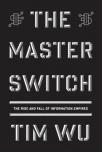 The Master SwitchRecommended
by Tim Wu
“Technology oscillates between centralizing and decentralizing forces, as documented in Tim Wu's The Master Switch. Radio started decentralized with ham operators before government regulation centralized control.”
Tools
- ReplitBy guest
by Replit
“Replit's platform demonstrates this shift, allowing solo developers to build software businesses previously requiring venture funding and Silicon Valley presence. This represents genuine power decentralization.”
More from Impact Theory
We summarize every new episode. Want them in your inbox?
The Rise of Coding Agents, Functional AGI, and the Skills Gen Z Needs Now | Replit CEO Amjad Massad x Impact Theory With Tom Bilyeu
3 Million Epstein Files Drop: What The Elite Don’t Want You to Know | The Tom Bilyeu Show
Fiat, Force, and Fallout: How Today’s Financial Wars Will Reshape Your Future | Tom's Deepdive
FBI Fulton County Raid, Fed Loses Control, Don Lemon Arrest, and Revolution Talk Unpacked | Tom Bilyeu Show Live
Trade Wars, Student Debt, and the K-Shaped Economy: Navigating Financial Turbulence Today | Morgan Housel On Impact Theory w/ Tom Bilyeu Pt. 2
Similar Episodes
Related episodes from other podcasts

a16z Podcast
Oct 3
Beyond the God Model | Alex Atallah & Amjad Masad
a16z Podcast
Sep 23
Amjad Masad on Rethinking College for the AI Era
a16z Podcast
Jul 17
Amjad Masad on Going Direct, Building Replit, and the Future of Software

My First Million
May 7
How Replit Agent made $1M on day one (then $250M in a year)

20VC (20 Minute VC)
Apr 25
20Product: Replit CEO on Why Coding Models Are Plateauing | Why the SaaS Apocalypse is Justified: Will Incumbents Be Replaced? | Why IDEs Are Dead and Do PMs Survive the Next 3-5 Years with Amjad Masad
Explore Related Topics
This podcast is featured in Best Mindset Podcasts (2026) — ranked and reviewed with AI summaries.
Read this week's Health & Longevity Podcast Insights — cross-podcast analysis updated weekly.
You're clearly into Impact Theory.
Every Monday, we deliver AI summaries of the latest episodes from Impact Theory and 192+ other podcasts. Free for one show.
Start My Monday DigestNo credit card · Unsubscribe anytime