NVIDIA: Jensen Huang. From near collapse to becoming the world’s biggest company
Episode
67 min
Read time
3 min
Topics
Productivity, Health & Wellness, Investing
AI-Generated Summary
Key Takeaways
- ✓Pivot or die — cancel the wrong contract early: When NVIDIA's first chip (NV1) used the wrong texture-mapping algorithm and was incompatible with Microsoft's DirectX, Huang flew to Sega's CEO and negotiated converting the remaining $5M contract into a company investment rather than finishing a fundamentally flawed product. Cutting losses immediately and redirecting resources — even at the cost of two and a half years of work — saved the company from a dead-end architecture.
- ✓Use your existing distribution to carry a new platform: NVIDIA embedded CUDA into every GeForce gaming GPU sold, accepting worse gross margins for years to build install base. The logic: developers only write software for platforms with large user bases, and large user bases only form around platforms with software. By piggybacking CUDA on GeForce, NVIDIA seeded millions of machines with the technology before a single commercial AI application existed.
- ✓Emulate before fabricating to survive cash constraints: With only months of runway left in 1997, NVIDIA spent half its remaining cash on a secondhand chip emulator to validate the Riva 128 design before sending it to TSMC for fabrication. This eliminated the standard two-year iterate-and-fix cycle, compressing it to one shot. The chip worked well enough to ship, proving that constrained resources can force process innovation that healthy companies never attempt.
- ✓Disruption follows Clayton Christensen's "good enough" threshold: Huang credits reading The Innovator's Dilemma as a framework he applied repeatedly. Each NVIDIA product — from Riva 128 to the first AI-focused GPU — entered markets looking underpowered but crossed the "good enough" threshold to displace incumbents. The actionable principle: stop optimizing for perfection and ship when the product is sufficient to disrupt, because over-serving existing customers signals vulnerability to a cheaper, simpler alternative.
- ✓Evangelize a platform through universities before commercial markets exist: During the CUDA years (roughly 2006–2012), NVIDIA flew teams worldwide to pitch CUDA at universities, targeting researchers who had no budget but would publish papers demonstrating GPU-accelerated computing. This created a pipeline of trained developers who later moved into industry. Seeding academic communities with free tools and direct education is a replicable strategy for platforms that are technically ready but commercially premature.
What It Covers
Jensen Huang, cofounder and CEO of NVIDIA, traces the company's 33-year path from near-bankruptcy in 1993 to becoming the world's most valuable company. The episode covers three near-death experiences, the decade-long CUDA bet that nobody believed in, and how GPU architecture became the foundation powering the global AI revolution.
Key Questions Answered
- •Pivot or die — cancel the wrong contract early: When NVIDIA's first chip (NV1) used the wrong texture-mapping algorithm and was incompatible with Microsoft's DirectX, Huang flew to Sega's CEO and negotiated converting the remaining $5M contract into a company investment rather than finishing a fundamentally flawed product. Cutting losses immediately and redirecting resources — even at the cost of two and a half years of work — saved the company from a dead-end architecture.
- •Use your existing distribution to carry a new platform: NVIDIA embedded CUDA into every GeForce gaming GPU sold, accepting worse gross margins for years to build install base. The logic: developers only write software for platforms with large user bases, and large user bases only form around platforms with software. By piggybacking CUDA on GeForce, NVIDIA seeded millions of machines with the technology before a single commercial AI application existed.
- •Emulate before fabricating to survive cash constraints: With only months of runway left in 1997, NVIDIA spent half its remaining cash on a secondhand chip emulator to validate the Riva 128 design before sending it to TSMC for fabrication. This eliminated the standard two-year iterate-and-fix cycle, compressing it to one shot. The chip worked well enough to ship, proving that constrained resources can force process innovation that healthy companies never attempt.
- •Disruption follows Clayton Christensen's "good enough" threshold: Huang credits reading The Innovator's Dilemma as a framework he applied repeatedly. Each NVIDIA product — from Riva 128 to the first AI-focused GPU — entered markets looking underpowered but crossed the "good enough" threshold to displace incumbents. The actionable principle: stop optimizing for perfection and ship when the product is sufficient to disrupt, because over-serving existing customers signals vulnerability to a cheaper, simpler alternative.
- •Evangelize a platform through universities before commercial markets exist: During the CUDA years (roughly 2006–2012), NVIDIA flew teams worldwide to pitch CUDA at universities, targeting researchers who had no budget but would publish papers demonstrating GPU-accelerated computing. This created a pipeline of trained developers who later moved into industry. Seeding academic communities with free tools and direct education is a replicable strategy for platforms that are technically ready but commercially premature.
- •Separate task from purpose when assessing AI's job impact: Huang uses radiology as a concrete case: AI now reads scans faster and more accurately than humans, yet radiologist demand has increased because lower scan costs expanded patient volume. The framework distinguishes between a job's task (reading scans) and its purpose (diagnosing disease). Before concluding AI eliminates a role, map whether automation reduces cost enough to expand the total market, which historically increases rather than decreases human employment.
Notable Moment
When asked if he would build NVIDIA again knowing the full cost, Huang said no — without hesitation. He argued most founders answering yes are being dishonest, because they conflate the outcome with the process. The actual experience involved years of humiliation, layoffs, and financial embarrassment that he actively works to forget in order to keep moving forward.
Episode Transcript
This message is brought to you by Apple Card. Apple Card is designed with your iPhone in mind, making it easy to get started and even easier to use. Apple Card is a no fee credit card you can apply for right from the Wallet app on your iPhone. Apple Card has no annual fee, no late fees, and no foreign transaction fees. No fees, period. Every credit card should be this easy. Get started in the Wallet app app today. Subject to credit approval, variable APRs for Apple Card range from 17.49% to 27.74 based on credit worthiness. Rates as of 01/01/2026. Existing customers can view their variable APR in the Wallet app or at card.apple.com. Apple Card issued by Goldman Sachs Bank USA, Salt Lake City branch. Terms and more at applecard.com. When I meet a founder or someone pitches me an idea, one of the very first things I do is pull up their website. A great website is essential for any modern business. I'm not telling you anything you don't already know because it builds trust, it build credibility and it generates leads. And unlike social media, a website provides complete ownership. But if updates to your.com take too long or feel harder than they should be, Framer is the shortcut you've been looking for. Framer is a website builder that turns .coms from a formality into a tool for growth. Helping thousands of businesses from early stage startups to fortune five hundreds build better websites faster. Whether you wanna launch a new site, test a few landing pages or migrate your full.com, Framer has programs for every size of business to make going from idea to live site as easy as possible. Learn how you can get more out of your .com from a framer specialist or get started building for free today at framer.com/built for 30% off a Framer Pro annual plan. That's framer.com/built for 30% off. Framer.com/built. Rules and restrictions may apply. Work can be a little weird. I've had plenty of those moments early in my career and honestly, even later. I remember stretches where I wasn't totally sure what the next step was supposed to be. And that's the thing. Work isn't always a straight line. And that's where LinkedIn comes in. LinkedIn helps you tap into ideas and insights from people who've been where you are. Connect with others in your field. Grow your network and access tools that can actually help you find the right next step. Whether you're just getting started, thinking about a change or trying to accelerate where you are, LinkedIn is built to support you at every stage because LinkedIn is the network that works for you. Visit linkedin.com/hibt to learn more. We've sort of have the outlines of all of the troughs, and there were a lot of troughs. Yeah. And I'm trying to even imagine, like, quarterly earning calls in 2007 with your stock prices in the toilet, and you're putting all this …
Get the full transcript (12,039 words) + summary by email — free
One-time email with the complete transcript and AI summary of this episode. No account needed.
One email, no spam. We’ll also show you what SignalCast does.

You just read a 3-minute summary of a 64-minute episode.
Get How I Built This summarized like this every Monday — plus up to 2 more podcasts, free.
Pick Your Podcasts — FreeKeep Reading
More from How I Built This
Advice Line with Scott Tannen of Boll & Branch and Jamie Siminoff of Ring (2025)
Oct 1 · 43 min

All-In with Chamath, Jason, Sacks & Friedberg
Jensen Huang LIVE: Nvidia's Future, Physical AI, Rise of the Agent, Inference Explosion, AI PR Crisis
Mar 19
More from How I Built This
Seventh Generation: Alan Newman and Jeffrey Hollender. A Partnership that Flourished—until it Failed. (2021)
Sep 28 · 91 min

20VC (20 Minute VC)
20VC: Jensen Huang Declares AGI Has Arrived | GPT Astra and Fable 5.1 Accelerate the Model Race | Tesla Launches Cybercabs | Index Pulls Out of Town & Anthropic Pulls From Descartes Acquisition
Sep 10
Books, tools, and gear mentioned in this episode
SignalCast may earn commission on purchases via these links. As an Amazon Associate, SignalCast earns from qualifying purchases.
Books
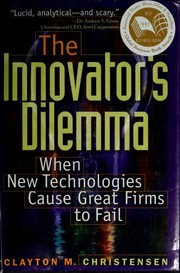 The Innovator's DilemmaRecommended
by Clayton Christensen
“Huang credits reading The Innovator's Dilemma as a framework he applied repeatedly. Each NVIDIA product — from Riva 128 to the first AI-focused GPU — entered markets looking underpowered but crossed the "good enough" threshold to displace incumbents.”
More from How I Built This
We summarize every new episode. Want them in your inbox?
Advice Line with Scott Tannen of Boll & Branch and Jamie Siminoff of Ring (2025)
Seventh Generation: Alan Newman and Jeffrey Hollender. A Partnership that Flourished—until it Failed. (2021)
Advice Line with Danny Meyer of Shake Shack
Banza: Brian Rudolph. The Chickpea Pasta That Nearly Turned to Mush
Advice Line with Michelle Wahler of Beyond Yoga
Similar Episodes
Related episodes from other podcasts

All-In with Chamath, Jason, Sacks & Friedberg
Mar 19
Jensen Huang LIVE: Nvidia's Future, Physical AI, Rise of the Agent, Inference Explosion, AI PR Crisis

20VC (20 Minute VC)
Sep 10
20VC: Jensen Huang Declares AGI Has Arrived | GPT Astra and Fable 5.1 Accelerate the Model Race | Tesla Launches Cybercabs | Index Pulls Out of Town & Anthropic Pulls From Descartes Acquisition
20VC (20 Minute VC)
Jul 18
20VC: $5BN in Revenue, 7 to 7,000 Employees in 9 Months, 206,000 Tests in a Single Day: The Craziest Story in Startups: Curative with Fred Turner

The Long Run with Luke Timmerman
Jun 30
Ep204: Troy Wilson on Precision Cancer Drugs and Combos

Startups For the Rest of Us
Jun 30
Episode 839 | The Journey Growing Help Scout to $35M ARR
Explore Related Topics
This podcast is featured in Best Business Podcasts (2026) — ranked and reviewed with AI summaries.
Read this week's Health & Longevity Podcast Insights — cross-podcast analysis updated weekly.
You're clearly into How I Built This.
Every Monday, we deliver AI summaries of the latest episodes from How I Built This and 192+ other podcasts. Free for one show.
Start My Monday DigestNo credit card · Unsubscribe anytime