



NVIDIA: Jensen Huang. From near collapse to becoming the world’s biggest company
How I Built ThisAI Summary
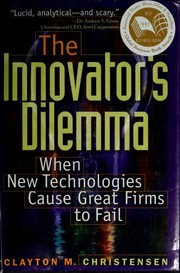
→ WHAT IT COVERS Jensen Huang, cofounder and CEO of NVIDIA, traces the company's 33-year path from near-bankruptcy in 1993 to becoming the world's most valuable company. The episode covers three near-death experiences, the decade-long CUDA bet that nobody believed in, and how GPU architecture became the foundation powering the global AI revolution. → KEY INSIGHTS - **Pivot or die — cancel the wrong contract early:** When NVIDIA's first chip (NV1) used the wrong texture-mapping algorithm and was incompatible with Microsoft's DirectX, Huang flew to Sega's CEO and negotiated converting the remaining $5M contract into a company investment rather than finishing a fundamentally flawed product. Cutting losses immediately and redirecting resources — even at the cost of two and a half years of work — saved the company from a dead-end architecture. - **Use your existing distribution to carry a new platform:** NVIDIA embedded CUDA into every GeForce gaming GPU sold, accepting worse gross margins for years to build install base. The logic: developers only write software for platforms with large user bases, and large user bases only form around platforms with software. By piggybacking CUDA on GeForce, NVIDIA seeded millions of machines with the technology before a single commercial AI application existed. - **Emulate before fabricating to survive cash constraints:** With only months of runway left in 1997, NVIDIA spent half its remaining cash on a secondhand chip emulator to validate the Riva 128 design before sending it to TSMC for fabrication. This eliminated the standard two-year iterate-and-fix cycle, compressing it to one shot. The chip worked well enough to ship, proving that constrained resources can force process innovation that healthy companies never attempt. - **Disruption follows Clayton Christensen's "good enough" threshold:** Huang credits reading The Innovator's Dilemma as a framework he applied repeatedly. Each NVIDIA product — from Riva 128 to the first AI-focused GPU — entered markets looking underpowered but crossed the "good enough" threshold to displace incumbents. The actionable principle: stop optimizing for perfection and ship when the product is sufficient to disrupt, because over-serving existing customers signals vulnerability to a cheaper, simpler alternative. - **Evangelize a platform through universities before commercial markets exist:** During the CUDA years (roughly 2006–2012), NVIDIA flew teams worldwide to pitch CUDA at universities, targeting researchers who had no budget but would publish papers demonstrating GPU-accelerated computing. This created a pipeline of trained developers who later moved into industry. Seeding academic communities with free tools and direct education is a replicable strategy for platforms that are technically ready but commercially premature. - **Separate task from purpose when assessing AI's job impact:** Huang uses radiology as a concrete case: AI now reads scans faster and more accurately than humans, yet radiologist demand has increased because lower scan costs expanded patient volume. The framework distinguishes between a job's task (reading scans) and its purpose (diagnosing disease). Before concluding AI eliminates a role, map whether automation reduces cost enough to expand the total market, which historically increases rather than decreases human employment. → NOTABLE MOMENT When asked if he would build NVIDIA again knowing the full cost, Huang said no — without hesitation. He argued most founders answering yes are being dishonest, because they conflate the outcome with the process. The actual experience involved years of humiliation, layoffs, and financial embarrassment that he actively works to forget in order to keep moving forward. 💼 SPONSORS [{"name": "Apple Card", "url": "https://applecard.com"}, {"name": "Framer", "url": "https://framer.com/built"}, {"name": "LinkedIn", "url": "https://linkedin.com/hibt"}] 🏷️ GPU Architecture, CUDA Platform, AI Infrastructure, Founder Resilience, Disruptive Innovation, Semiconductor Industry


