Jensen Huang: The Personal Cost of Building NVIDIA (April 2026)
Episode
71 min
Read time
3 min
Topics
Investing, Startups, Leadership
AI-Generated Summary
Key Takeaways
- ✓Pivot decisively when architecture is wrong: When NVIDIA's NV1 chip failed due to incompatible texture-mapping algorithms in 1995, Huang canceled a $12M Sega contract rather than waste two more years finishing flawed work. He then negotiated to convert the remaining $5M contract balance into equity investment, preserving enough capital to restart with the correct architecture — a move that saved the company from certain collapse.
- ✓Use your mass-market product to subsidize platform distribution: NVIDIA embedded CUDA into every GeForce gaming GPU for roughly 25 years, accepting compressed gross margins to achieve ubiquitous installation. This strategy solved the chicken-and-egg problem of platform adoption: developers only build for large installed bases, so Huang used millions of teenage gamers to unknowingly distribute a supercomputing platform to every PC on earth before a killer application existed.
- ✓When capital is critically constrained, eliminate iteration cycles entirely: In 1997, with only months of runway remaining, Huang spent half of NVIDIA's remaining cash on a single hardware emulator to test the Riva 128 chip before fabrication. This eliminated the standard two-year design-test-revise cycle, compressing it to one shot at TSMC. The chip worked well enough to ship, generating revenue that kept the company alive.
- ✓Identify disruption through the Innovator's Dilemma framework: Huang credits Clayton Christensen's book as a core strategic lens. The key application: technology that initially appears toyish or "good enough" consistently disrupts established markets. Huang applied this repeatedly — affordable consumer GPUs disrupting Silicon Graphics workstations, then CUDA-enabled GPUs disrupting CPU-based supercomputing clusters, then AI training chips disrupting traditional data center architectures.
- ✓Manage leadership credibility through consistency, not style: Huang argues that demanding, confrontational leadership remains effective when three conditions hold: standards are applied uniformly every time, criticism ends completely once the moment passes, and employees understand the leader genuinely wants their success. Style is irrelevant; what employees track is whether values are consistent and whether they feel safe after difficult feedback sessions.
What It Covers
Jensen Huang, co-founder and former CEO of NVIDIA, traces the company's path from near-bankruptcy in 1995 to becoming the world's most valuable company. He covers three decades of existential crises, the decade-long CUDA bet that nobody believed in, and the personal sacrifices required to build a generational technology company.
Key Questions Answered
- •Pivot decisively when architecture is wrong: When NVIDIA's NV1 chip failed due to incompatible texture-mapping algorithms in 1995, Huang canceled a $12M Sega contract rather than waste two more years finishing flawed work. He then negotiated to convert the remaining $5M contract balance into equity investment, preserving enough capital to restart with the correct architecture — a move that saved the company from certain collapse.
- •Use your mass-market product to subsidize platform distribution: NVIDIA embedded CUDA into every GeForce gaming GPU for roughly 25 years, accepting compressed gross margins to achieve ubiquitous installation. This strategy solved the chicken-and-egg problem of platform adoption: developers only build for large installed bases, so Huang used millions of teenage gamers to unknowingly distribute a supercomputing platform to every PC on earth before a killer application existed.
- •When capital is critically constrained, eliminate iteration cycles entirely: In 1997, with only months of runway remaining, Huang spent half of NVIDIA's remaining cash on a single hardware emulator to test the Riva 128 chip before fabrication. This eliminated the standard two-year design-test-revise cycle, compressing it to one shot at TSMC. The chip worked well enough to ship, generating revenue that kept the company alive.
- •Identify disruption through the Innovator's Dilemma framework: Huang credits Clayton Christensen's book as a core strategic lens. The key application: technology that initially appears toyish or "good enough" consistently disrupts established markets. Huang applied this repeatedly — affordable consumer GPUs disrupting Silicon Graphics workstations, then CUDA-enabled GPUs disrupting CPU-based supercomputing clusters, then AI training chips disrupting traditional data center architectures.
- •Manage leadership credibility through consistency, not style: Huang argues that demanding, confrontational leadership remains effective when three conditions hold: standards are applied uniformly every time, criticism ends completely once the moment passes, and employees understand the leader genuinely wants their success. Style is irrelevant; what employees track is whether values are consistent and whether they feel safe after difficult feedback sessions.
- •Reframe AI job displacement using purpose versus task distinction: Huang distinguishes between a job's task and its purpose. Radiology's task — reading scans — is now AI-assisted, but its purpose — diagnosing disease — expanded demand. Cheaper, faster scanning increased patient volume, requiring more radiologists. The actionable implication: evaluate AI's impact on a profession's core purpose, not just its current tasks, before advising students or making workforce decisions.
Notable Moment
When asked directly whether he would build NVIDIA again knowing the full cost, Huang rejected the standard founder narrative. He argued that most people answer dishonestly by imagining the outcome, not the process. Knowing the actual duration, humiliation, layoffs, and sustained financial pressure in advance, his answer was an unambiguous no.
Episode Transcript
A couple months ago in April, I sat down with Jensen Huang, the co founder and now former CEO of NVIDIA. We're bringing that episode back today because obviously Jensen has been in the news a lot recently. This is a challenging time for him and for Nvidia, for his family. And to be clear, this interview doesn't touch any of that. What you will hear though, I hope, is a fuller picture of who Jensen Huang is. He talks about his upbringing, his family life, his demanding approach to leadership, what he sacrificed to build Nvidia, and much more. And if you wanna see the video version of this conversation, you can do that on our new YouTube channel. Just search how I built this on YouTube or tap the link in the episode description. Alright. Here's my full conversation with Jensen Huang from April 2026. We've sort of have the outlines of all of the troughs, and there were a lot of troughs. Yeah. And I'm trying to even imagine quarterly earning calls in 2007 when your stock price is in the toilet and you're putting God, all I've this tell you, it's embarrassing. It was embarrassing. It was humiliating. Your employees are probably embarrassed for you. In fact, you know, right now, it is really quite hard for me to resurface those feelings. And the reason for that is I spent all of my time, all of my life trying to forget yesterday. Right. What do they teach athletes? Forget the last point. Yeah. It's about forgetting. Welcome to how I built this, a show about innovators, entrepreneurs, idealists, and the stories behind the movements they built. I'm Guy Raz, and on the show today, how Jensen Huang went from making graphics chips for gamers to powering the AI revolution and building the biggest company in the world. The most successful business owners don't do it all themselves, they delegate. Upwork lets you build a team of highly skilled specialists for every function your business needs, so you can focus on what you do best and let experts handle the rest. Upwork gives your business fast access to highly skilled specialists with deep expertise. So you can fill critical skill gaps, launch projects faster, and scale support up or down without committing to full time head count. With Business Plus, you can access the top 1% of talent on Upwork. AI powered shortlisting delivers a curated shortlist of top freelancers matched to your goals in under six hours. No endless searching required. Thousands of growing businesses already trust Upwork to hire highly skilled freelance professionals for everything from one off projects to ongoing support. With over a 170,000 freelancers holding five star ratings, you can hire with the confidence that comes from hiring someone with a verified track record. It's free to sign up and posting a job is easy. Visit upwork.com right now and post your job for free. That's upwork.com to connect with top talent …
Get the full transcript (12,849 words) + summary by email — free
One-time email with the complete transcript and AI summary of this episode. No account needed.
One email, no spam. We’ll also show you what SignalCast does.

You just read a 3-minute summary of a 68-minute episode.
Get How I Built This summarized like this every Monday — plus up to 2 more podcasts, free.
Pick Your Podcasts — FreeKeep Reading
More from How I Built This
Good Culture: How Jesse Merrill Made Cottage Cheese Cool
Nov 16 · 78 min

20VC (20 Minute VC)
20VC: Will Jensen Return to NVIDIA | Anthropic Set for Largest IPO of All Time | Kalshi, Mercor & Fractile: Mega-Rounds Continue
Nov 19
More from How I Built This
Panera: Ron Shaich. The Big Bet That Changed Fast Food (2018)
Nov 12 · 40 min

The Diary of a CEO
Ex-CIA Officer: Trump Knew About The China Spy And Didn't Care! | John Kiriakou & Aliia Roza
Nov 16
Books, tools, and gear mentioned in this episode
SignalCast may earn commission on purchases via these links. As an Amazon Associate, SignalCast earns from qualifying purchases.
Books
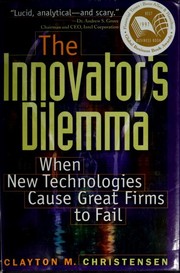 The Innovator's DilemmaRecommended
by Clayton Christensen
“Huang credits Clayton Christensen's book as a core strategic lens. The key application: technology that initially appears toyish or 'good enough' consistently disrupts established markets.”
More from How I Built This
We summarize every new episode. Want them in your inbox?
Good Culture: How Jesse Merrill Made Cottage Cheese Cool
Panera: Ron Shaich. The Big Bet That Changed Fast Food (2018)
Dr. Squatch: Jack Haldrup. From a Closet Full of Soap to a $1.5 Billion Brand
Dell Computers: Michael Dell. The College Dropout Who Took on IBM (2018)
Airbnb CEO Brian Chesky: “I Was a Great Founder and a Terrible CEO”
Similar Episodes
Related episodes from other podcasts

20VC (20 Minute VC)
Nov 19
20VC: Will Jensen Return to NVIDIA | Anthropic Set for Largest IPO of All Time | Kalshi, Mercor & Fractile: Mega-Rounds Continue

The Diary of a CEO
Nov 16
Ex-CIA Officer: Trump Knew About The China Spy And Didn't Care! | John Kiriakou & Aliia Roza

Odd Lots
Nov 14
How Wall Street Is Bracing For the Post-Jensen Huang Nvidia Era

The Vergecast
Nov 13
What's really at stake in the Jensen Huang saga

The AI Breakdown
Nov 12
Jensen Huang Is Out. Everything in AI Is Now Up for Grabs.
Explore Related Topics
This podcast is featured in Best Business Podcasts (2026) — ranked and reviewed with AI summaries.
Read this week's Investing & Markets Podcast Insights — cross-podcast analysis updated weekly.
You're clearly into How I Built This.
Every Monday, we deliver AI summaries of the latest episodes from How I Built This and 192+ other podcasts. Free for one show.
Start My Monday DigestNo credit card · Unsubscribe anytime