Assuming the Best About Others is Hard—But Necessary
Episode
29 min
Read time
2 min
Topics
Career Growth, Relationships, Leadership
AI-Generated Summary
Key Takeaways
- ✓Accountable Positivity Framework: Rather than naive optimism, Qaisi's approach starts with provisional positive intent, then verifies it through direct conversation. The sequence: pause, replace judgment with curiosity, ask yourself if you've committed the same behavior, then check with the other person using neutral "what" questions instead of accusatory "why" questions to avoid triggering defensiveness.
- ✓Fundamental Attribution Error at Work: Humans judge others by their actions but judge themselves by their intentions — the core bias undermining workplace relationships. The practical correction is asking, "Have I done this same thing myself?" before reacting. Most of the time the answer is yes, which reframes a colleague's missed email or forgotten meeting invite as understandable rather than malicious.
- ✓Realistic Optimism — Short, Specific, Impersonal: When a team member makes an error, frame it as short-term (not a permanent pattern), specific (limited to this task, not all capabilities), and impersonal (caused by circumstances like overwork, not character flaws). This framing preserves accountability while preventing one mistake from permanently damaging your assessment of someone's overall competence and potential.
- ✓Replacing "Why" with "What" in Difficult Conversations: Swapping why-framed questions for what-framed questions measurably reduces defensiveness. "Why did you do that?" signals judgment; "What were the reasons that led you to this?" signals curiosity. This single linguistic shift opens dialogue rather than closing it, making it easier to surface valid context before deciding whether accountability action is warranted.
- ✓Forgiveness as Self-Interest, Not Absolution: Qaisi cites Fred Luskin's framework: forgiveness is not reconciliation or excusing behavior — it is releasing yourself from ongoing suffering. A coaching client spent 18 years mentally replaying a toxic boss's behavior. Forgiving that boss was reframed as reclaiming mental space, not condoning past actions, making it a practical tool rather than a moral concession.
What It Covers
Trinity University professor Amar Qaisi presents research on the "positive intent mindset" — a leadership framework built on provisionally assuming good intentions in others. The approach combines realistic optimism with accountability, countering evolutionary negativity bias and the fundamental attribution error to improve trust, collaboration, and personal well-being at work.
Key Questions Answered
- •Accountable Positivity Framework: Rather than naive optimism, Qaisi's approach starts with provisional positive intent, then verifies it through direct conversation. The sequence: pause, replace judgment with curiosity, ask yourself if you've committed the same behavior, then check with the other person using neutral "what" questions instead of accusatory "why" questions to avoid triggering defensiveness.
- •Fundamental Attribution Error at Work: Humans judge others by their actions but judge themselves by their intentions — the core bias undermining workplace relationships. The practical correction is asking, "Have I done this same thing myself?" before reacting. Most of the time the answer is yes, which reframes a colleague's missed email or forgotten meeting invite as understandable rather than malicious.
- •Realistic Optimism — Short, Specific, Impersonal: When a team member makes an error, frame it as short-term (not a permanent pattern), specific (limited to this task, not all capabilities), and impersonal (caused by circumstances like overwork, not character flaws). This framing preserves accountability while preventing one mistake from permanently damaging your assessment of someone's overall competence and potential.
- •Replacing "Why" with "What" in Difficult Conversations: Swapping why-framed questions for what-framed questions measurably reduces defensiveness. "Why did you do that?" signals judgment; "What were the reasons that led you to this?" signals curiosity. This single linguistic shift opens dialogue rather than closing it, making it easier to surface valid context before deciding whether accountability action is warranted.
- •Forgiveness as Self-Interest, Not Absolution: Qaisi cites Fred Luskin's framework: forgiveness is not reconciliation or excusing behavior — it is releasing yourself from ongoing suffering. A coaching client spent 18 years mentally replaying a toxic boss's behavior. Forgiving that boss was reframed as reclaiming mental space, not condoning past actions, making it a practical tool rather than a moral concession.
Notable Moment
Qaisi describes a mac-and-cheese restaurant owner who eliminated chronic lateness not by docking pay — which failed — but by requiring late employees to personally apologize to both teammates and waiting customers. Connecting the behavior to its human impact on others produced a significant, lasting reduction in tardiness.
Episode Transcript
Deal is not just another payroll platform. It's one your team might actually enjoy. HR, IT, and payroll together finally. Built in house, built for peace of mind. Visit deel.com/hbr. By 2030, finance could harness hindsight, insight, and foresight to elevate your function from necessary cost center to value creator. Explore Deloitte's future of finance publication to shape your team's impact. Visit deloitte.com/us/futureoffinance. I'm Alison Beard. And I'm Adi Ignatius, and this is the HBR IdeaCast. Adi, today, let's talk about how to get along with people who make our lives harder, whose views conflict with our own, who we can't seem to find common ground with, who maybe we don't even really like or respect. Okay. This one's gonna get us in trouble, but okay. No. Don't worry. It's still very much a conversation about good management because it's about getting in the right headspace to overcome all of these challenges at work, build better relationships and foster more productive collaboration. Oh, okay. Phew. I was actually worried where you were gonna go with that. So our guest today is Trinity University professor Amar Kaisi, and he's going to explain why more of us need to adopt a positive intent mindset, assuming that the people around us, bosses, peers, employees, clients, suppliers, competitors, all the stakeholders, have good intentions even when they make mistakes or they don't behave the way we think they should. Alright. So I think we've all heard the old joke about what happens when you assume not safe for work. I I don't know. I you know, I I'm not sure organizations really benefit from constant positivity to avoid conflict, but tell me more. Okay. So, Kaisi would agree that you don't want to be so upbeat all the time that you ignore bad behavior or let people off the hook for it. But he argues that there's a way to adopt this mindset and improve teamwork, negotiations, all your workplace interactions, while still insisting on accountability. He's gonna share both research on how this can help you and your team, and then also practical advice for making it work. He's the author of The Positive Intent Mindset, Exceptional Leadership Through Trust and Accountability. And here's our conversation. So we are living in a really divisive time. There's lots of negativity in the headlines and on social media. How do you see that affecting the way people feel and behave in the workplace right now? We do live in a very negative, a very divisive world right now. You know, it's made worse by social media, cable news, and all of that. And employees, I mean, they can't help but bring some of that negativity with them to work. And as a result, they start assuming negative intentions about their coworkers. They start feeling that everyone has a hidden agenda. And because of that, we're seeing that employee engagement suffers. We see that collaboration diminishes and trust is reduced. So, all of that makes people …
Get the full transcript (5,317 words) + summary by email — free
One-time email with the complete transcript and AI summary of this episode. No account needed.
One email, no spam. We’ll also show you what SignalCast does.

You just read a 3-minute summary of a 26-minute episode.
Get HBR IdeaCast summarized like this every Monday — plus up to 2 more podcasts, free.
Pick Your Podcasts — FreeKeep Reading
More from HBR IdeaCast
When You Feel Envy, Turn It Into Something Productive
Oct 20 · 29 min

The Jordan Harbinger Show
1400: Leslie John | The Underrated Power of Oversharing
Oct 20
More from HBR IdeaCast
Why Great Teams Don’t Need to Like Each Other
Oct 13 · 32 min

Huberman Lab
Eating for Better Sleep & Foods that Improve Metabolic Health | Dr. Marie-Pierre St-Onge
Jun 8
Books, tools, and gear mentioned in this episode
SignalCast may earn commission on purchases via these links. As an Amazon Associate, SignalCast earns from qualifying purchases.
Books
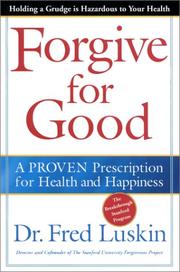
by Fred Luskin
“Qaisi cites Fred Luskin's framework: forgiveness is not reconciliation or excusing behavior — it is releasing yourself from ongoing suffering.”
More from HBR IdeaCast
We summarize every new episode. Want them in your inbox?
When You Feel Envy, Turn It Into Something Productive
Why Great Teams Don’t Need to Like Each Other
How AI Is Changing Strategy: Rethinking What Your Business Is Designed to Do
Optimism Is Now an Essential Leadership Skill
How AI Is Changing Innovation: Why Speed Alone Isn’t a Strategy
Similar Episodes
Related episodes from other podcasts

The Jordan Harbinger Show
Oct 20
1400: Leslie John | The Underrated Power of Oversharing

Huberman Lab
Jun 8
Eating for Better Sleep & Foods that Improve Metabolic Health | Dr. Marie-Pierre St-Onge

Modern Wisdom
Sep 24
Democrats vs Republicans: Who Is Actually More Violent? - Robert Pape #1154

Odd Lots
Aug 14
A Historic El Niño Is Coming That Could Cost the World Trillions

10% Happier with Dan Harris
Aug 14
The Science of Journaling: How 15 Minutes of Writing Can Free Up Your Brain, Improve Your Health, and Make You a Better Friend | Dr. James Pennebaker
Explore Related Topics
This podcast is featured in Best Business Podcasts (2026) — ranked and reviewed with AI summaries.
You're clearly into HBR IdeaCast.
Every Monday, we deliver AI summaries of the latest episodes from HBR IdeaCast and 192+ other podcasts. Free for one show.
Start My Monday DigestNo credit card · Unsubscribe anytime