Was Adam Smith Really a Right-Winger? (Update)
Episode
68 min
Read time
3 min
Topics
Productivity, Personal Finance, Investing
AI-Generated Summary
Key Takeaways
- ✓The Invisible Hand Misreading: Smith used the phrase "invisible hand" exactly once in The Wealth of Nations, in a narrow argument about domestic versus foreign investment preferences. Chicago School economists, particularly Friedman and Stigler, expanded it into a universal claim that markets self-correct without intervention — a meaning Smith never intended. Readers should consult the original passage in Book IV before citing this concept in policy arguments.
- ✓Das Adam Smith Problem — Resolved: 19th-century German scholars argued Smith contradicted himself between The Theory of Moral Sentiments (1759) and The Wealth of Nations (1776). Modern Smith scholars, including Dennis Rasmussen at Syracuse, consider this a false conflict. Self-interest in Wealth of Nations describes human behavior, not a moral endorsement of greed, while sympathy in Moral Sentiments doesn't require altruism — both frameworks coexist without contradiction.
- ✓Chicago School's Selective Reading: Friedman and Stigler built free-market ideology by extracting individualism, self-interest, and the invisible hand from Smith while discarding his warnings about wealthy merchants colluding against public interest, his support for public education in Book V, and his concern that commercial society produces harmful inequality. Engaging with Smith's full corpus, especially Book V, reveals a substantially more nuanced policy framework than the Chicago interpretation suggests.
- ✓Smith's Actual Concern for Labor: Smith's central measure of national wealth was not elite asset accumulation but the ease with which ordinary working people could access life's necessities. He explicitly warned that wealthy manufacturers routinely lobbied governments to create monopolies that raised prices for common goods. This labor-centered framework means Smith's work can legitimately support progressive economic arguments, though the political left has largely ceded his authority to conservatives.
- ✓Privatization's Unintended Consequences: UK privatization under Thatcher, inspired partly by Adam Smith Institute policy papers, sold public utilities — rail, water, gas, electricity — without attaching public-interest conditions. Economist Mariana Mazzucato notes assets were often sold to foreign state entities including Chinese and French government-owned firms, producing expensive, non-green, inaccessible services. Smith himself warned against value extraction by private monopolies, suggesting conditionality in privatization deals aligns more closely with his actual views.
What It Covers
Freakonomics Radio examines how Adam Smith, an 18th-century Scottish moral philosopher, was transformed into the patron saint of free-market capitalism primarily through University of Chicago economists Milton Friedman and George Stigler, who selectively emphasized concepts like the invisible hand while ignoring Smith's deep concern for worker welfare, government's role in education, and warnings against corporate monopolies.
Key Questions Answered
- •The Invisible Hand Misreading: Smith used the phrase "invisible hand" exactly once in The Wealth of Nations, in a narrow argument about domestic versus foreign investment preferences. Chicago School economists, particularly Friedman and Stigler, expanded it into a universal claim that markets self-correct without intervention — a meaning Smith never intended. Readers should consult the original passage in Book IV before citing this concept in policy arguments.
- •Das Adam Smith Problem — Resolved: 19th-century German scholars argued Smith contradicted himself between The Theory of Moral Sentiments (1759) and The Wealth of Nations (1776). Modern Smith scholars, including Dennis Rasmussen at Syracuse, consider this a false conflict. Self-interest in Wealth of Nations describes human behavior, not a moral endorsement of greed, while sympathy in Moral Sentiments doesn't require altruism — both frameworks coexist without contradiction.
- •Chicago School's Selective Reading: Friedman and Stigler built free-market ideology by extracting individualism, self-interest, and the invisible hand from Smith while discarding his warnings about wealthy merchants colluding against public interest, his support for public education in Book V, and his concern that commercial society produces harmful inequality. Engaging with Smith's full corpus, especially Book V, reveals a substantially more nuanced policy framework than the Chicago interpretation suggests.
- •Smith's Actual Concern for Labor: Smith's central measure of national wealth was not elite asset accumulation but the ease with which ordinary working people could access life's necessities. He explicitly warned that wealthy manufacturers routinely lobbied governments to create monopolies that raised prices for common goods. This labor-centered framework means Smith's work can legitimately support progressive economic arguments, though the political left has largely ceded his authority to conservatives.
- •Privatization's Unintended Consequences: UK privatization under Thatcher, inspired partly by Adam Smith Institute policy papers, sold public utilities — rail, water, gas, electricity — without attaching public-interest conditions. Economist Mariana Mazzucato notes assets were often sold to foreign state entities including Chinese and French government-owned firms, producing expensive, non-green, inaccessible services. Smith himself warned against value extraction by private monopolies, suggesting conditionality in privatization deals aligns more closely with his actual views.
- •Theory of Moral Sentiments as Practical Guide: Smith argued humans desire not just praise but genuine praiseworthiness — the internal standard of being worthy of respect regardless of external recognition. Economist Russ Roberts, a University of Chicago PhD, credits reading Moral Sentiments with reorienting his thinking away from pure utility maximization toward questions of character and virtue. Roberts recommends pushing through the difficult opening pages, as Smith's framework for understanding human motivation remains practically applicable to personal and professional decision-making.
Notable Moment
The director of the Adam Smith Institute, Eamon Butler, openly advises against actually reading The Wealth of Nations, calling it 900 pages of largely unreadable 18th-century prose including a 90-page digression on silver prices — a striking admission from the leader of an institution built entirely around Smith's intellectual legacy.

You just read a 3-minute summary of a 65-minute episode.
Get Freakonomics Radio summarized like this every Monday — plus up to 2 more podcasts, free.
Pick Your Podcasts — FreeKeep Reading
More from Freakonomics Radio
687. Are Prediction Markets the Best Forecasting Tool Ever — or Just Another Casino?
Sep 18 · 48 min

Stuff You Should Know
Selects: Blacksmiths? You got that right!
Sep 5
More from Freakonomics Radio
How to Be a Double Unicorn, with John Urschel | Better in Person
Sep 16 · 32 min

Everything Everywhere Daily
The Wealth of Nations
Jul 3
Books, tools, and gear mentioned in this episode
SignalCast may earn commission on purchases via these links. As an Amazon Associate, SignalCast earns from qualifying purchases.
Books
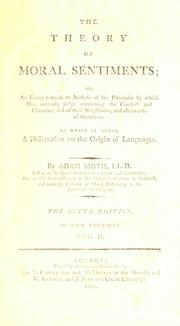 The Theory of Moral SentimentsRecommended
by Adam Smith
“Economist Russ Roberts, a University of Chicago PhD, credits reading Moral Sentiments with reorienting his thinking away from pure utility maximization toward questions of character and virtue. Roberts recommends pushing through the difficult opening pages, as Smith's framework for understanding human motivation remains practically applicable to personal and professional decision-making.”
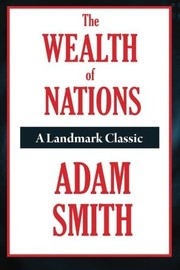
by Adam Smith
“Smith used the phrase "invisible hand" exactly once in The Wealth of Nations, in a narrow argument about domestic versus foreign investment preferences.”
More from Freakonomics Radio
We summarize every new episode. Want them in your inbox?
687. Are Prediction Markets the Best Forecasting Tool Ever — or Just Another Casino?
How to Be a Double Unicorn, with John Urschel | Better in Person
686. Why Is It So Hard to Find an NFL Quarterback?
Amazon Was Supposed to Kill the Bookstore. James Daunt Had Other Plans | Better in Person
685. How to Survive the A.I. Shock
Similar Episodes
Related episodes from other podcasts


Explore Related Topics
This podcast is featured in Best Finance Podcasts (2026) — ranked and reviewed with AI summaries.
Read this week's Investing & Markets Podcast Insights — cross-podcast analysis updated weekly.
You're clearly into Freakonomics Radio.
Every Monday, we deliver AI summaries of the latest episodes from Freakonomics Radio and 192+ other podcasts. Free for one show.
Start My Monday DigestNo credit card · Unsubscribe anytime