673. What Is Money?
Episode
54 min
Read time
2 min
Topics
Health & Wellness, Personal Finance, Relationships
AI-Generated Summary
Key Takeaways
- ✓Money as social infrastructure: Adam Smith's core argument, which Lang sets to music, frames money not as inherently valuable but as a token representing human labor exchanged through trade. Recognizing money as a social construct rather than an end in itself reframes economic relationships as fundamentally human connections — a perspective Lang argues modern discourse consistently loses.
- ✓Artistic democratization strategy: Lang co-founded Bang on a Can in the late 1980s with composers Julia Wolf and Michael Gordon, running 12-hour contemporary music marathons with alcohol served deliberately to lower barriers. The tactic expanded audiences by removing the intimidation of formal concert settings, demonstrating that environment and accessibility shape who engages with experimental art.
- ✓Composing for longevity over premiere pressure: Lang manages performance anxiety by mentally framing every new piece as one that will be performed thousands of times. This removes pressure from any single performance, allowing him to treat premieres as first drafts — he plans revisions between the New York Philharmonic premiere and a subsequent Aspen Music Festival performance.
- ✓Community-building through participatory music: Lang's *Crowd Out* project recruited 1,000 non-auditioned community members to perform together, requiring only a few rehearsals. The design was deliberate: easy enough for non-musicians but complex enough to require collaboration, forcing neighbors to meet and depend on each other — a replicable model for using performance as civic infrastructure.
- ✓Literature as economic commentary: Lang identifies that canonical Western literature — Dickens, Zola, Trollope, Jane Eyre — consistently centers characters in financial crisis. He uses this pattern structurally, weaving Frederick Douglass's essay on wealth inequality and Eugene V. Debs's 1918 court speech into the oratorio to surface voices Adam Smith's original framework systematically excluded.
What It Covers
Composer David Lang discusses creating *The Wealth of Nations*, a new oratorio for the New York Philharmonic conducted by Gustavo Dudamel, drawing on Adam Smith's 1776 text alongside writings from Frederick Douglass, Eugene V. Debs, and Emerson to explore money, labor, trade, and moral commerce in contemporary America.
Key Questions Answered
- •Money as social infrastructure: Adam Smith's core argument, which Lang sets to music, frames money not as inherently valuable but as a token representing human labor exchanged through trade. Recognizing money as a social construct rather than an end in itself reframes economic relationships as fundamentally human connections — a perspective Lang argues modern discourse consistently loses.
- •Artistic democratization strategy: Lang co-founded Bang on a Can in the late 1980s with composers Julia Wolf and Michael Gordon, running 12-hour contemporary music marathons with alcohol served deliberately to lower barriers. The tactic expanded audiences by removing the intimidation of formal concert settings, demonstrating that environment and accessibility shape who engages with experimental art.
- •Composing for longevity over premiere pressure: Lang manages performance anxiety by mentally framing every new piece as one that will be performed thousands of times. This removes pressure from any single performance, allowing him to treat premieres as first drafts — he plans revisions between the New York Philharmonic premiere and a subsequent Aspen Music Festival performance.
- •Community-building through participatory music: Lang's *Crowd Out* project recruited 1,000 non-auditioned community members to perform together, requiring only a few rehearsals. The design was deliberate: easy enough for non-musicians but complex enough to require collaboration, forcing neighbors to meet and depend on each other — a replicable model for using performance as civic infrastructure.
- •Literature as economic commentary: Lang identifies that canonical Western literature — Dickens, Zola, Trollope, Jane Eyre — consistently centers characters in financial crisis. He uses this pattern structurally, weaving Frederick Douglass's essay on wealth inequality and Eugene V. Debs's 1918 court speech into the oratorio to surface voices Adam Smith's original framework systematically excluded.
Notable Moment
Lang recounts his mother attending a Cleveland Orchestra performance of his work when he was around 27, and rather than offering the long-awaited parental approval, she tearfully suggested he still had time to pursue medical school — prompting him to ban his parents from concerts for a period.
Episode Transcript
This message is brought to you by Apple Card. Apple Card is a no fee credit card that you can apply for right from the Wallet app on your iPhone. Get started in the Wallet app today. Subject to credit approval, variable APRs for Apple Card range from 17.49% to 27.74% based on creditworthiness. Rates as of 01/01/2026. Existing customers can view their variable APR in the Wallet app or at card.apple.com. Apple Card issued by Goldman Sachs Bank USA, Salt Lake City branch. Terms and more at applecard.com. What if this magical feeling could follow you everywhere? I'm From vacations at Disneyland Resort Let's go. In Hawaii and beyond. Learn more at disneyvacationclub.com. This is a timeshare solicitation, and our author registration requirements haven't been met. Some benefits require additional eligibility. You can park your mingle Hey there. It's Steven Dubner. We recently made a three part series about an almost 300 year old oratorio that still has a grip on a lot of people today, handles Messiah. During our reporting, we spent some time with the New York Philharmonic as they rehearsed and performed Messiah. One day, our producer Zach Lipinski heard about a future Philharmonic oratorio called The Wealth of Nations. You may recognize that title. It is a book published in 1776 by the Scotsman Adam Smith, who is widely seen as the father of modern economics, and some people consider The Wealth of Nations a sacred text of capitalism. This new Wealth of Nations oratorio was apparently inspired by Messiah, a musical story using artfully rearranged text from historical sources. Here is the weird thing. We once made a three part series about Adam Smith too. So hearing about an Adam Smith Wealth of Nations Messiah mashup felt like one of those moments where your AI feeds you something a little too spot on. This would be a world premiere conducted by the Venezuelan born superstar Gustavo Dudamel, and the composer was named David Lang. Maybe you have heard of David Lang, but I hadn't. So I asked my HomePod to play some David Lang, and here's what came out. Just your mouth. Just your love. Just your anointing voice. Just your This is a piece called Just. The lyrics are drawn from Song of Songs, a book of love poems in the Hebrew Bible. This music mesmerized me. I wanted to know more about the person who could write something like that. Turns out that David Lang, in the small world of contemporary classical music, is a big deal. He has won a Pulitzer Prize and a Grammy. He teaches composition at Yale. I found an online lecture where Lang was talking about his composing career. He was so interesting and disarming and well read that I immediately wanted to hear this new Wealth of Nations but it didn't exist yet. So I decided to follow the process as Lang finished writing the piece and as it made its way to the New York …
Get the full transcript (9,431 words) + summary by email — free
One-time email with the complete transcript and AI summary of this episode. No account needed.
One email, no spam. We’ll also show you what SignalCast does.

You just read a 3-minute summary of a 51-minute episode.
Get Freakonomics Radio summarized like this every Monday — plus up to 2 more podcasts, free.
Pick Your Podcasts — FreeKeep Reading
More from Freakonomics Radio
686. Why Is It So Hard to Find an NFL Quarterback?
Sep 11 · 58 min

The Diary of a CEO
Top White House Advisor: The US Empire Is DYING And Socialism Is Coming Next! | David Friedberg
Aug 31
More from Freakonomics Radio
Amazon Was Supposed to Kill the Bookstore. James Daunt Had Other Plans | Better in Person
Sep 9 · 32 min

The Jordan Harbinger Show
1373: Sonja Lyubomirsky | Five Mindsets to Get You More of What Matters
Aug 25
Books, tools, and gear mentioned in this episode
SignalCast may earn commission on purchases via these links. As an Amazon Associate, SignalCast earns from qualifying purchases.
Books
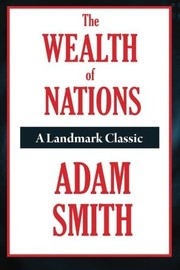
by Adam Smith
“Composer David Lang discusses creating *The Wealth of Nations*, a new oratorio for the New York Philharmonic conducted by Gustavo Dudamel, drawing on Adam Smith's 1776 text alongside writings from Frederick Douglass, Eugene V. Debs, and Emerson to explore money, labor, trade, and moral commerce in contemporary America.”
other
- The Wealth of Nations (Oratorio)By guest
by David Lang
“Composer David Lang discusses creating *The Wealth of Nations*, a new oratorio for the New York Philharmonic conducted by Gustavo Dudamel, drawing on Adam Smith's 1776 text alongside writings from Frederick Douglass, Eugene V. Debs, and Emerson to explore money, labor, trade, and moral commerce in contemporary America.”
- Crowd OutBy guest
by David Lang
“Lang's *Crowd Out* project recruited 1,000 non-auditioned community members to perform together, requiring only a few rehearsals.”
company
- Bang on a CanBy guest
“Lang co-founded Bang on a Can in the late 1980s with composers Julia Wolf and Michael Gordon, running 12-hour contemporary music marathons with alcohol served deliberately to lower barriers.”
More from Freakonomics Radio
We summarize every new episode. Want them in your inbox?
686. Why Is It So Hard to Find an NFL Quarterback?
Amazon Was Supposed to Kill the Bookstore. James Daunt Had Other Plans | Better in Person
685. How to Survive the A.I. Shock
How to Run an Institution in an Anti-Institution Era | Better in Person
How to Return Stolen Art (Update)
Similar Episodes
Related episodes from other podcasts

The Diary of a CEO
Aug 31
Top White House Advisor: The US Empire Is DYING And Socialism Is Coming Next! | David Friedberg

The Jordan Harbinger Show
Aug 25
1373: Sonja Lyubomirsky | Five Mindsets to Get You More of What Matters

The Founders Podcast
Aug 16
#429 Bob Dylan's Autobiography
The Jordan Harbinger Show
Aug 4
1364: Dr. Max Butterfield | Challenging Viral Dating Myths with Science

The Prof G Pod
Jul 27
How Much Money Is Enough? Plus, Why AI Won’t Replace Financial Advisors — with Jack Raines
Explore Related Topics
This podcast is featured in Best Finance Podcasts (2026) — ranked and reviewed with AI summaries.
Read this week's Health & Longevity Podcast Insights — cross-podcast analysis updated weekly.
You're clearly into Freakonomics Radio.
Every Monday, we deliver AI summaries of the latest episodes from Freakonomics Radio and 192+ other podcasts. Free for one show.
Start My Monday DigestNo credit card · Unsubscribe anytime