All You Need Is Nudge (Update)
Episode
57 min
Read time
2 min
Topics
Career Growth, Health & Wellness, Fundraising & VC
AI-Generated Summary
Key Takeaways
- ✓Libertarian Paternalism Framework: Thaler coined this term to describe nudging that alters behavior predictably without forbidding options or changing economic incentives significantly. Putting fruit at eye level in cafeterias counts as a nudge; banning junk food does not. The intervention must be easy and cheap to avoid, making it fundamentally different from taxes, fines, subsidies, bans, or mandates while still guiding better choices.
- ✓Organ Donation Misconception: Countries with presumed consent for organ donation show nearly universal non-opt-out rates, but this does not translate to actual organ harvesting. Most countries practice soft presumed consent, still consulting families before proceeding. The famous chart showing high donor rates in Austria versus low rates in the US misleads people about policy effectiveness, as opt-in status rarely determines actual organ recovery in practice.
- ✓Save More Tomorrow Retirement Strategy: This auto-escalation program increases retirement contributions by one to two percentage points with each salary raise until reaching ten to twelve percent savings. It leverages future self-control, loss aversion, and nominal thinking about raises. The approach tripled saving rates in three years without forcing anyone, demonstrating how combining multiple behavioral insights creates more effective solutions than single interventions.
- ✓Climate Change as Public Goods Problem: Bill Nordhaus proposes climate clubs where countries collectively punish non-compliant members with tariffs, similar to public goods game experiments where punishment costs punishers one dollar but removes two dollars from free riders. Sweden demonstrates viability with a one hundred thirty dollar per metric ton carbon tax since nineteen ninety-one, achieving eighty-three percent GDP growth while reducing emissions twenty-seven percent.
- ✓Sludge Reduction Imperative: The US government imposes eleven billion annual paperwork hours on citizens, creating barriers that block people from permits, licenses, healthcare, and benefits. Sludge makes processes unnecessarily difficult through massive forms, incompetent design like finish buttons that require returning to press submit, and curse of knowledge where designers cannot imagine user confusion. Smart disclosure and portability laws reduce friction in banking and telecommunications.
What It Covers
Economist Richard Thaler discusses the updated final edition of his book Nudge, explaining how choice architecture and behavioral economics can improve decisions without mandates. He covers organ donation misconceptions, climate change solutions, retirement savings innovations like Save More Tomorrow, the problem of sludge in systems, and why incrementalism beats revolutionary thinking for solving complex problems.
Key Questions Answered
- •Libertarian Paternalism Framework: Thaler coined this term to describe nudging that alters behavior predictably without forbidding options or changing economic incentives significantly. Putting fruit at eye level in cafeterias counts as a nudge; banning junk food does not. The intervention must be easy and cheap to avoid, making it fundamentally different from taxes, fines, subsidies, bans, or mandates while still guiding better choices.
- •Organ Donation Misconception: Countries with presumed consent for organ donation show nearly universal non-opt-out rates, but this does not translate to actual organ harvesting. Most countries practice soft presumed consent, still consulting families before proceeding. The famous chart showing high donor rates in Austria versus low rates in the US misleads people about policy effectiveness, as opt-in status rarely determines actual organ recovery in practice.
- •Save More Tomorrow Retirement Strategy: This auto-escalation program increases retirement contributions by one to two percentage points with each salary raise until reaching ten to twelve percent savings. It leverages future self-control, loss aversion, and nominal thinking about raises. The approach tripled saving rates in three years without forcing anyone, demonstrating how combining multiple behavioral insights creates more effective solutions than single interventions.
- •Climate Change as Public Goods Problem: Bill Nordhaus proposes climate clubs where countries collectively punish non-compliant members with tariffs, similar to public goods game experiments where punishment costs punishers one dollar but removes two dollars from free riders. Sweden demonstrates viability with a one hundred thirty dollar per metric ton carbon tax since nineteen ninety-one, achieving eighty-three percent GDP growth while reducing emissions twenty-seven percent.
- •Sludge Reduction Imperative: The US government imposes eleven billion annual paperwork hours on citizens, creating barriers that block people from permits, licenses, healthcare, and benefits. Sludge makes processes unnecessarily difficult through massive forms, incompetent design like finish buttons that require returning to press submit, and curse of knowledge where designers cannot imagine user confusion. Smart disclosure and portability laws reduce friction in banking and telecommunications.
Notable Moment
Thaler reveals that when presenting research showing tripled retirement savings rates without coercion, a University of Chicago colleague accused him of paternalism, equivalent to being called a child molester or communist in that environment. He improvised the term libertarian paternalism as a joke, combining two negatives to create something positive, which annoyed libertarians and became the foundation for the entire nudge movement.
Episode Transcript
Hey there. It's Stephen Dubner. One thing I love is going through the Freakonomics Radio archive and resurfacing some of our favorite episodes and some of our favorite people like Richard Thaler. The episode you're about to hear was first published in 2021. We've updated facts and figures as necessary. I hope you enjoy it. And if not, you can blame Thaler. I know we're talking about nudge, but I also know that you like what you like, and you don't like what you don't like. And you can be a little, no offense, you can be a little tetchy sometimes. Touchy? You call me touchy? No. No. No. Not touchy. Techy. What? But I don't even know what word you're saying. Sensitive? We could go with sensitive, but maybe the best word to describe the man on the other microphone today is cranky, at least situationally cranky. He's pleasant enough most of the time, but in certain circumstances, he becomes a bit of a crank apotamus, especially when something isn't working the way it's supposed to. Like when you go to pay your taxes or get a mortgage and you're suddenly tossed into a quagmire of fine print and red tape. Or think about navigating the health care system or managing your retirement savings. There's so much low hanging fruit because so many things are done so stupidly. I should probably tell you the name of this situationally cranky man. It's Richard Thaler. He is an economics professor at the University of Chicago. For years, he collaborated with the pioneering psychologists, Danny Kahneman and Amos Tversky, helping create what has come to be called behavioral economics. Kahneman was awarded a Nobel Prize in 2002. It would have been shared with Tversky had he not died young. Thaler would go on to win his own Nobel Prize in 2017. Back in 2008, Thaler published a book called Nudge, Improving Decisions About Health, Wealth, and Happiness. It was co authored with the legal scholar Cass Sunstein. Nudge proved to be phenomenally popular. I think something like 2,000,000 people have read Nudge around the world. It's also been an influential book as governments and other institutions rushed to set up so called nudge units. They use the tools of behavioral economics to get people to consume less energy, to save more for retirement, to pay their taxes on time, and pay more attention to their health. The latest count is that there are over 400 such units around the world. So somebody thinks that they are useful. That number has now grown to over 600. Nudge theory is built around a relatively simple concept. Yeah. The phrase that I like best is choice architecture. And choice architecture means what to you exactly? It's creating the environment in which people choose. And who is or is not a choice architect? Are we all choice architects or only some members of the elite, the choice architects? I mean, if you think about, you're the …
Get the full transcript (7,912 words) + summary by email — free
One-time email with the complete transcript and AI summary of this episode. No account needed.
One email, no spam. We’ll also show you what SignalCast does.

You just read a 3-minute summary of a 54-minute episode.
Get Freakonomics Radio summarized like this every Monday — plus up to 2 more podcasts, free.
Pick Your Podcasts — FreeKeep Reading
More from Freakonomics Radio
692. What Will A.I. Do to (and for) Human Creativity?
Oct 23 · 59 min

Masters in Business
How Investors Fall Into Bias Traps with Economists Richard Thaler & Alex Imas
Jan 16
More from Freakonomics Radio
Are Private Equity Firms Plundering the U.S. Economy? (Update)
Oct 21 · 48 min

The Tim Ferriss Show
#830: Nick Kokonas and Richard Thaler, Nobel Prize Laureate — Realistic Economics, Avoiding The Winner’s Curse, Using Temptation Bundling, and Going Against the Establishment
Oct 10
Books, tools, and gear mentioned in this episode
SignalCast may earn commission on purchases via these links. As an Amazon Associate, SignalCast earns from qualifying purchases.
Books
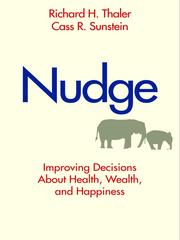
by Richard Thaler
“Economist Richard Thaler discusses the updated final edition of his book Nudge, explaining how choice architecture and behavioral economics can improve decisions without mandates.”
More from Freakonomics Radio
We summarize every new episode. Want them in your inbox?
692. What Will A.I. Do to (and for) Human Creativity?
Are Private Equity Firms Plundering the U.S. Economy? (Update)
691. Is This What a “Good Billionaire” Looks Like?
690. It’s Show Business, Baby!
689. Here’s Why Your Hamburger Just Got So Pricey
Similar Episodes
Related episodes from other podcasts

Masters in Business
Jan 16
How Investors Fall Into Bias Traps with Economists Richard Thaler & Alex Imas

The Tim Ferriss Show
Oct 10
#830: Nick Kokonas and Richard Thaler, Nobel Prize Laureate — Realistic Economics, Avoiding The Winner’s Curse, Using Temptation Bundling, and Going Against the Establishment

10% Happier with Dan Harris
Oct 19
A Stoic Mantra For Your Sh*ttiest Moments (And Other Ancient Wisdom That Holds Up) | Jonathan Haidt

Planet Money
Jul 3
How to win a penalty shootout (with game theory)

The Indicator
Jun 25
AI is pumping out books. Are they any good?
Explore Related Topics
This podcast is featured in Best Finance Podcasts (2026) — ranked and reviewed with AI summaries.
Read this week's Health & Longevity Podcast Insights — cross-podcast analysis updated weekly.
You're clearly into Freakonomics Radio.
Every Monday, we deliver AI summaries of the latest episodes from Freakonomics Radio and 192+ other podcasts. Free for one show.
Start My Monday DigestNo credit card · Unsubscribe anytime