679. Why Does Vanderbilt Keep Winning?
Episode
64 min
Read time
3 min
Topics
Personal Finance, Relationships, Leadership
AI-Generated Summary
Key Takeaways
- ✓Institutional Neutrality as Crisis Prevention: Universities that pre-established clear operating principles before October 7, 2023 weathered campus divisions far better than those improvising responses. Diermeier's framework — rooted in the University of Chicago's 1967 Kalven Report — holds that university leaders, deans, and department chairs should not take positions on political or policy issues unless those issues directly threaten the university's core academic function.
- ✓Endowment Tax Negotiation Strategy: When the House Ways and Means Committee proposed a 22% endowment tax, Diermeier traveled to Washington every other week alongside peer presidents to reframe endowments as accumulated philanthropic intent rather than institutional wealth. The result: the final legislation reduced the tax bands from four to two, with the maximum rate dropping from 22% to 8% — a concrete outcome from sustained relationship-building over confrontational public resistance.
- ✓Ideological Monoculture Diagnosis: A Claremont study using large language models to analyze criminal justice syllabi found that 94% assigned Michelle Alexander's "The New Jim Crow" without any accompanying critical scholarship. Diermeier uses this data point to argue that the problem is not the inclusion of provocative texts but the systematic exclusion of counterarguments — a distinction university leaders must address to rebuild public trust across the political spectrum.
- ✓Three-Pillar Institutional Framework: Vanderbilt operates on three explicit principles: open forums allowing student groups to invite any speaker without administrative approval (a policy dating to 1967, when Stokely Carmichael, Strom Thurmond, and Allen Ginsberg all appeared simultaneously), institutional neutrality restraining leadership from political positioning, and a civil discourse culture embedded through ongoing student programming rather than policy alone.
- ✓Satellite Campus Strategy — Ecosystem Integration: Vanderbilt is simultaneously building four campuses: a quantum engineering campus in Chattanooga (leveraging the city's fiber optics network and quantum test bed), a New York City Chelsea campus housing 100 students per semester for media and finance exposure, a West Palm Beach campus targeting defense tech and clean energy with roughly 1,000 students, and a San Francisco campus still in planning. Each targets a distinct innovation ecosystem rather than replicating Nashville programming.
What It Covers
Vanderbilt Chancellor Daniel Diermeier explains how the university navigated campus protests, federal funding pressures, and the Trump administration's assault on higher education by committing to three institutional principles: free speech forums, institutional neutrality on political issues, and civil discourse culture — a framework developed decades before current crises emerged.
Key Questions Answered
- •Institutional Neutrality as Crisis Prevention: Universities that pre-established clear operating principles before October 7, 2023 weathered campus divisions far better than those improvising responses. Diermeier's framework — rooted in the University of Chicago's 1967 Kalven Report — holds that university leaders, deans, and department chairs should not take positions on political or policy issues unless those issues directly threaten the university's core academic function.
- •Endowment Tax Negotiation Strategy: When the House Ways and Means Committee proposed a 22% endowment tax, Diermeier traveled to Washington every other week alongside peer presidents to reframe endowments as accumulated philanthropic intent rather than institutional wealth. The result: the final legislation reduced the tax bands from four to two, with the maximum rate dropping from 22% to 8% — a concrete outcome from sustained relationship-building over confrontational public resistance.
- •Ideological Monoculture Diagnosis: A Claremont study using large language models to analyze criminal justice syllabi found that 94% assigned Michelle Alexander's "The New Jim Crow" without any accompanying critical scholarship. Diermeier uses this data point to argue that the problem is not the inclusion of provocative texts but the systematic exclusion of counterarguments — a distinction university leaders must address to rebuild public trust across the political spectrum.
- •Three-Pillar Institutional Framework: Vanderbilt operates on three explicit principles: open forums allowing student groups to invite any speaker without administrative approval (a policy dating to 1967, when Stokely Carmichael, Strom Thurmond, and Allen Ginsberg all appeared simultaneously), institutional neutrality restraining leadership from political positioning, and a civil discourse culture embedded through ongoing student programming rather than policy alone.
- •Satellite Campus Strategy — Ecosystem Integration: Vanderbilt is simultaneously building four campuses: a quantum engineering campus in Chattanooga (leveraging the city's fiber optics network and quantum test bed), a New York City Chelsea campus housing 100 students per semester for media and finance exposure, a West Palm Beach campus targeting defense tech and clean energy with roughly 1,000 students, and a San Francisco campus still in planning. Each targets a distinct innovation ecosystem rather than replicating Nashville programming.
- •Research Funding Reality Check: NIH funding ultimately increased by approximately $300 million in final appropriations despite initial fears of deep cuts, and NSF funding declined only marginally. The real threat Diermeier identifies is not current cuts but prolonged uncertainty causing personnel bottlenecks at NIH and reduced ability to attract international graduate students and postdocs — the talent pipeline he considers more strategically critical than any single funding cycle.
Notable Moment
Growing up in West Berlin, Diermeier regularly crossed into East Berlin as a teenager out of sheer curiosity about Marxist-Leninist ideology. He describes watching the same border guards who had intimidated travelers for years cheerfully posing for Polaroid photos the day the Brandenburg Gate opened — a formative lesson that institutions shape behavior more than individuals do.
Episode Transcript
Freakonomics Radio sponsored by Lowe's. Get your home ready inside and out with Lowe's July 4 deals event. Save up to 45% off select major appliances plus an additional 25% off when bundling select major appliances and save $80 on a select Char Broil Performance Series gas grill, now $299. Shop Lowe's July 4, deals vent valid through July 8 while supplies last. Selection varies by location. See lowes.com for more details. Freakonomics Radio is sponsored by Amica. You know what they say, if you wanna go fast, go alone. If you wanna go far, go together. So go with Amica and get coverage from a mutual insurer that's built for their customers, one that looks after what's important to you together. Auto, home, life, and more, coverage that fits your unique needs. Amica helps you protect what matters most. Visit amica.com and get a quote today. I am 988. I am for anyone, anywhere who needs to talk. I am a safe, caring space where you can be heard. I am the trained nine eight eight staffers who actually want to help. I am the grateful friends and family of someone who called and found hope. I am 988. I am a free, available anytime place to turn, and I am for you, the 988 If you need to talk, call or text 988 or use the chat function at nine eight eight lifeline dot o r g. Hey there. It's Steven Dubner. Before today's episode, a quick announcement. We are about to launch a new project, a video show that we've been working on for a while. You could think of it as an indie TV talk show on YouTube. We are very excited about it, and and we're looking for Freakonomics Radio listeners who wanna prescreen episodes and share their feedback. We will select a 100 people to take an early look. If you are interested in being an extension of our production crew, please go to the link in the show notes and sign up. We will have a lot more to say very soon about this new show. And now here is today's episode of Freakonomics Radio. Right now is a hard time to lead just about any institution, and leading a university is particularly hard. You've got your campus protests, your financial pressures, including federal funding cuts. You've got legal pressure from the Trump administration, which contends that universities have become captured by left wing ideologies. And it's not like the American people are rushing to support you. According to Gallup surveys, public trust in higher education is near a historic low. A lot of university leaders have crumbled under all this pressure. Many have been pushed out. But some campus leaders are, let's put it bluntly, they're winning. Over the next two episodes, we will talk to two of these winners. First up. My name is Daniel D'Amaira. I'm the chancellor of Vanderbilt University. Vanderbilt is a major research university in Nashville, Tennessee …
Get the full transcript (11,933 words) + summary by email — free
One-time email with the complete transcript and AI summary of this episode. No account needed.
One email, no spam. We’ll also show you what SignalCast does.

You just read a 3-minute summary of a 61-minute episode.
Get Freakonomics Radio summarized like this every Monday — plus up to 2 more podcasts, free.
Pick Your Podcasts — FreeKeep Reading
More from Freakonomics Radio
687. Are Prediction Markets the Best Forecasting Tool Ever — or Just Another Casino?
Sep 18 · 48 min

20VC (20 Minute VC)
20VC: How LPs Allocate to Venture in 2026: What They Want, What They Do Not Want | Why Fund Multiple Does Not Matter Without a Timeline | Why Velocity of Cashback is the Most Important Thing with David Morehead, CIO @ Baylor
Sep 14
More from Freakonomics Radio
How to Be a Double Unicorn, with John Urschel | Better in Person
Sep 16 · 32 min

Huberman Lab
Essentials: Genes & the Inheritance of Memories Across Generations | Dr. Oded Rechavi
Sep 10
Books, tools, and gear mentioned in this episode
SignalCast may earn commission on purchases via these links. As an Amazon Associate, SignalCast earns from qualifying purchases.
Books
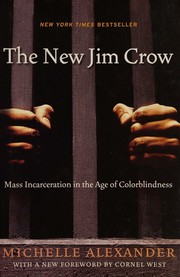
by Michelle Alexander
“A Claremont study using large language models to analyze criminal justice syllabi found that 94% assigned Michelle Alexander's "The New Jim Crow" without any accompanying critical scholarship.”
other
by University of Chicago
“Diermeier's framework — rooted in the University of Chicago's 1967 Kalven Report — holds that university leaders, deans, and department chairs should not take positions on political or policy issues unless those issues directly threaten the university's core academic function.”
More from Freakonomics Radio
We summarize every new episode. Want them in your inbox?
687. Are Prediction Markets the Best Forecasting Tool Ever — or Just Another Casino?
How to Be a Double Unicorn, with John Urschel | Better in Person
686. Why Is It So Hard to Find an NFL Quarterback?
Amazon Was Supposed to Kill the Bookstore. James Daunt Had Other Plans | Better in Person
685. How to Survive the A.I. Shock
Similar Episodes
Related episodes from other podcasts

20VC (20 Minute VC)
Sep 14
20VC: How LPs Allocate to Venture in 2026: What They Want, What They Do Not Want | Why Fund Multiple Does Not Matter Without a Timeline | Why Velocity of Cashback is the Most Important Thing with David Morehead, CIO @ Baylor

Huberman Lab
Sep 10
Essentials: Genes & the Inheritance of Memories Across Generations | Dr. Oded Rechavi
Huberman Lab
Sep 7
How Mitochondria Control Your Metabolism | Dr. Jared Rutter

a16z Podcast
Sep 1
Daniel Litt: The Mathematician's Guide to AI

10% Happier with Dan Harris
Aug 14
The Science of Journaling: How 15 Minutes of Writing Can Free Up Your Brain, Improve Your Health, and Make You a Better Friend | Dr. James Pennebaker
Explore Related Topics
This podcast is featured in Best Finance Podcasts (2026) — ranked and reviewed with AI summaries.
You're clearly into Freakonomics Radio.
Every Monday, we deliver AI summaries of the latest episodes from Freakonomics Radio and 192+ other podcasts. Free for one show.
Start My Monday DigestNo credit card · Unsubscribe anytime