How Gary Gulman Turned Depression Into Comedy Gold | Better in Person
Episode
47 min
Read time
2 min
Topics
Career Growth, Productivity, Health & Wellness
AI-Generated Summary
Key Takeaways
- ✓Depression's cognitive impact: Psychiatrists describe severe depression as "faux dementia" — patients struggle to form, retain, and retrieve memories and words. Gulman lost significant memories during his 2015–2017 episode. Recognizing this as a neurological symptom rather than a character flaw can reduce self-blame and help sufferers seek appropriate clinical treatment sooner.
- ✓Relapse prevention protocol: Gulman maintains seven years of uninterrupted mental health through five non-negotiable daily practices: exercise every day (basketball outdoors above 40°F), consistent sleep, regular medication, ongoing therapy, and accepting social invitations. He credits having health insurance and savings to cover hospitalization as the structural foundation that made this protocol finally sustainable.
- ✓Monetizing specificity: Emerson's principle from *Self-Reliance* — "the specific is universal" — underpins Gulman's creative strategy. The more granular and personal the material, the broader its resonance. His HBO special functions simultaneously as stand-up, documentary, biography, and mental health public service announcement, a hybrid format pitched by manager Brian Stern and produced with Judd Apatow.
- ✓Confidence recovery framework: When losing confidence mid-project, Gulman deliberately recalls a previous project where he nearly quit but finished successfully. He also treats feeling "over your head" as a positive signal — evidence of stretching beyond comfort zones rather than proof of incompetence. He applied this during 36 off-Broadway performances of his one-person show.
- ✓Pomodoro method for memorization: To memorize a full one-person show, Gulman combined timed Pomodoro work sessions with written repetition and a personal mnemonic narrative — a private backstage story connecting each joke to the next. This dual-layer system (performance logic plus memory logic) allowed him to retain a 90-minute script without a director or scene partner running lines.
What It Covers
Comedian Gary Gulman speaks with Stephen Dubner about navigating cyclical major depression across two decades of his comedy career, how hospitalization in 2015–2017 led to his HBO special *The Great Depression*, and the specific daily disciplines that have maintained seven consecutive years of mental health stability.
Key Questions Answered
- •Depression's cognitive impact: Psychiatrists describe severe depression as "faux dementia" — patients struggle to form, retain, and retrieve memories and words. Gulman lost significant memories during his 2015–2017 episode. Recognizing this as a neurological symptom rather than a character flaw can reduce self-blame and help sufferers seek appropriate clinical treatment sooner.
- •Relapse prevention protocol: Gulman maintains seven years of uninterrupted mental health through five non-negotiable daily practices: exercise every day (basketball outdoors above 40°F), consistent sleep, regular medication, ongoing therapy, and accepting social invitations. He credits having health insurance and savings to cover hospitalization as the structural foundation that made this protocol finally sustainable.
- •Monetizing specificity: Emerson's principle from *Self-Reliance* — "the specific is universal" — underpins Gulman's creative strategy. The more granular and personal the material, the broader its resonance. His HBO special functions simultaneously as stand-up, documentary, biography, and mental health public service announcement, a hybrid format pitched by manager Brian Stern and produced with Judd Apatow.
- •Confidence recovery framework: When losing confidence mid-project, Gulman deliberately recalls a previous project where he nearly quit but finished successfully. He also treats feeling "over your head" as a positive signal — evidence of stretching beyond comfort zones rather than proof of incompetence. He applied this during 36 off-Broadway performances of his one-person show.
- •Pomodoro method for memorization: To memorize a full one-person show, Gulman combined timed Pomodoro work sessions with written repetition and a personal mnemonic narrative — a private backstage story connecting each joke to the next. This dual-layer system (performance logic plus memory logic) allowed him to retain a 90-minute script without a director or scene partner running lines.
Notable Moment
While hospitalized in a psychiatric ward wearing grip-soled socks, Gulman was recognized by a fellow patient who asked whether he was Gary Gulman or whether the patient himself was hallucinating. Gulman describes this as simultaneously the lowest point of his life and a moment that delivered a genuine dopamine boost.
Episode Transcript
This episode of Better in Person is presented by ChatGPT. Put ChatGPT to work on your most ambitious ideas and projects. Download the new ChatGPT desktop app today. Hey there. Steven Dubner. This is the third episode of a new video interview show we're making called Better In Person. Today's guest is the comedian Gary Goleman. You are going to love him. I guarantee. If you want the full video experience, go to the Freakonomics YouTube channel. It looks good on your phone, but it looks great on a bigger screen. You can also watch it on Apple Podcasts. Just search for better in person, but we also made this audio version for the Freakonomics feed in case you don't wanna be distracted by the video. We aim to please. As always, thanks for listening, and now thanks for watching too. What do you have to understand about show business is the hyperbole is at such a high level that if they love you, it means they don't wanna work with you, but but they think you're pretty good. If they're obsessed with you, then they'd like to work with you, but if this fails, it's all over. You'll never hear from them again. And then I don't know what the next level will be. I want to I want to chop you up in a Cuisinart and drink you like a smoothie, and that will mean that that they would like to make your project. This is Better in Person with Stephen Dubner and Gary Goleman. You gotta choose one word to describe the comedian Gary Goldman. It might be kind, which is not a word you associate with comedians very often. He's also tall, six foot six, which helps make him good at basketball. Back. He's also smart. He enunciates beautifully. He's got an amazing vocabulary, and he wrote a really nice memoir called Misfit, Growing Up Awkward in the eighties. And, yes, he is wickedly funny. Consider his first HBO special, The Great Depression. I still see a therapist. I I believe I broke him on Monday. Yeah. I was leaving his office, and I was shutting the door, and I heard him go A show about one man's depression should not be funny, but this one is, and it's also deeply human. Goldman's honesty makes his fans love him even more, and now I also love Gary Gullman. I mean it. That's not hyperbole. So I make this, podcast, Freakonomics Radio, which is very research intensive. And my producers for this show have been telling me that I need to back off, that I get over prepared, and I get a little paralyzed. So for you, I've done zero. Okay. I know your first name is Gary. No. It's not like you're an accountant, understand. I I was I was an accountant. That was what I studied in in college, so my profession is accountant. But then but then I've I've taken this this side gig …
Get the full transcript (7,701 words) + summary by email — free
One-time email with the complete transcript and AI summary of this episode. No account needed.
One email, no spam. We’ll also show you what SignalCast does.

You just read a 3-minute summary of a 44-minute episode.
Get Freakonomics Radio summarized like this every Monday — plus up to 2 more podcasts, free.
Pick Your Podcasts — FreeKeep Reading
More from Freakonomics Radio
What Now? with Trevor Noah | Michael Che: The Unspoken Rules of Comedy
Nov 4 · 10 min

The Joe Rogan Experience
#2570 - Mystery Boys
Oct 23
More from Freakonomics Radio
693. What’s Our Job as Humans Anymore?
Oct 30 · 57 min

The Daily (NYT)
Chris Rock Has Been Thinking About Forgiveness
Oct 3
Books, tools, and gear mentioned in this episode
SignalCast may earn commission on purchases via these links. As an Amazon Associate, SignalCast earns from qualifying purchases.
Books
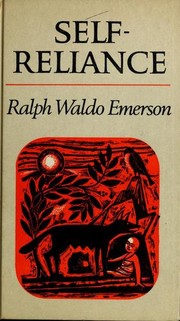
by Ralph Waldo Emerson
“Emerson's principle from *Self-Reliance* — 'the specific is universal' — underpins Gulman's creative strategy”
Products
“hospitalization in 2015–2017 led to his HBO special *The Great Depression*”
More from Freakonomics Radio
We summarize every new episode. Want them in your inbox?
What Now? with Trevor Noah | Michael Che: The Unspoken Rules of Comedy
693. What’s Our Job as Humans Anymore?
692. What Will A.I. Do to (and for) Human Creativity?
Are Private Equity Firms Plundering the U.S. Economy? (Update)
691. Is This What a “Good Billionaire” Looks Like?
Similar Episodes
Related episodes from other podcasts

The Joe Rogan Experience
Oct 23
#2570 - Mystery Boys

The Daily (NYT)
Oct 3
Chris Rock Has Been Thinking About Forgiveness
The Joe Rogan Experience
Sep 23
#2557 - Yakov Smirnoff

10% Happier with Dan Harris
Sep 18
Comedian Josh Johnson On: Handling News Cycle Anxiety, His Insane Work Ethic, and Why AI is BS

Investing for Beginners
Sep 3
Is NVIDIA’s High-Margin Machine Sustainable?
Explore Related Topics
This podcast is featured in Best Finance Podcasts (2026) — ranked and reviewed with AI summaries.
Read this week's Health & Longevity Podcast Insights — cross-podcast analysis updated weekly.
You're clearly into Freakonomics Radio.
Every Monday, we deliver AI summaries of the latest episodes from Freakonomics Radio and 192+ other podcasts. Free for one show.
Start My Monday DigestNo credit card · Unsubscribe anytime