The History of Whaling (Encore)
Episode
15 min
Read time
2 min
Topics
Productivity, Health & Wellness, Sales & Revenue
AI-Generated Summary
Key Takeaways
- ✓Industrial peak and collapse: Commercial whaling reached its apex in the 1930s with over 15,000 whales killed annually, yet the industry's own efficiency destroyed it — whale reproduction cycles couldn't sustain harvests, triggering population crashes of 70–90% across multiple species within decades.
- ✓Petroleum as the disruptor: The 1859 Pennsylvania petroleum discovery ended whale oil's dominance faster than any regulation. Kerosene replaced whale oil for lighting, steel replaced baleen in corsets, and plastics replaced remaining whale byproducts — demonstrating how resource industries collapse when cheaper substitutes emerge simultaneously.
- ✓Conservation moratorium outcomes: The 1986 IWC commercial whaling ban produced measurable recovery: humpback populations rebounded strongly in the South Atlantic and North Pacific, California blue whale numbers rose steadily, and fin and Southern right whales grew — though North Atlantic right whales remain critically endangered from ship strikes.
- ✓Modern whaling's economic irrelevance: Norway holds an annual quota of 1,000–1,200 minke whales but harvests only half due to low demand. Japan limits hunting to territorial waters at roughly 300 whales yearly. Whale watching now generates more revenue than whale hunting across all remaining whaling nations.
What It Covers
Whaling evolved from 6,000 BC indigenous subsistence hunting into a 19th-century industrial backbone, collapsed due to petroleum's 1859 discovery, and nearly drove multiple species extinct before a 1986 IWC moratorium enabled partial population recovery.
Key Questions Answered
- •Industrial peak and collapse: Commercial whaling reached its apex in the 1930s with over 15,000 whales killed annually, yet the industry's own efficiency destroyed it — whale reproduction cycles couldn't sustain harvests, triggering population crashes of 70–90% across multiple species within decades.
- •Petroleum as the disruptor: The 1859 Pennsylvania petroleum discovery ended whale oil's dominance faster than any regulation. Kerosene replaced whale oil for lighting, steel replaced baleen in corsets, and plastics replaced remaining whale byproducts — demonstrating how resource industries collapse when cheaper substitutes emerge simultaneously.
- •Conservation moratorium outcomes: The 1986 IWC commercial whaling ban produced measurable recovery: humpback populations rebounded strongly in the South Atlantic and North Pacific, California blue whale numbers rose steadily, and fin and Southern right whales grew — though North Atlantic right whales remain critically endangered from ship strikes.
- •Modern whaling's economic irrelevance: Norway holds an annual quota of 1,000–1,200 minke whales but harvests only half due to low demand. Japan limits hunting to territorial waters at roughly 300 whales yearly. Whale watching now generates more revenue than whale hunting across all remaining whaling nations.
Notable Moment
After a sperm whale sank the Essex in 1820, all 20 crew members escaped but only 8 survived 90 days adrift — resorting to cannibalism and drawing lots to determine who would be sacrificed, directly inspiring Moby Dick.
Episode Transcript
The following is an encore presentation of Everything Everywhere Daily. Whaling is something that humans have engaged in for thousands of years. For most of that time, indigenous peoples conducted it on a small scale for subsistence purposes. Over time, whaling became commercialized. The annual whale harvest exploded and whaling became a cornerstone of the early industrial revolution. Alas, it couldn't last forever. Learn more about whaling, its rise and its fall on this episode of Everything Everywhere Daily. This episode is sponsored by Quince. If I can paraphrase Game of Thrones, autumn is coming. That means cooler temperatures and taking stuff out of your closet that you might have put away for summer. For me, it means getting out my Quince sweaters that I wear almost every day and the blankets I got from Quince that I'll sometimes use while writing episodes on my couch. Quince focuses on high quality wardrobe stables made with premium materials like 100% Mongolian cashmere, organic cotton, and merino wool. These styles are timeless, versatile, and designed to become the dependable pieces that you reach for every day. And everything at Quint's is priced 50 to 80% less than similar brands. They work directly with ethical factories and cut out the middlemen so you're paying for high quality, not brand markup. Find your next fall favorites at Quince. Download the Quince app for app exclusive offers or go to quince.com/daily. Get free shipping on your order and three hundred sixty five day returns. Now available in Canada and The UK too. That's quince.com/daily. This episode is sponsored by Square. About twenty five years ago, I had a business that did point of sale transactions. We had to get a cash register, a separate system for credit card transactions, and it was all a real pain. Today, starting a business that accepts payments is much easier largely thanks to Square. You've probably seen Square terminals many times even if you didn't know it. Square brings payments, point of sale, inventory, staffing, online sales together in one place. Easy to use tools help simplify the day to day running of a business. And not only does Square make your business easier to run, but sellers who use Square software see 9% higher sales on average. If you're starting a business or running one that deserves better tools, Square helps you sell, manage, and grow without slowing down. Right now, can get up to $200 off Square hardware at square.com/go-daily. That's square.com/go/daily. Run your business smarter with Square. Get started today. There's not a whole lot of whaling anymore in the world today, but there was a time when it was a very big deal. During the nineteenth century, it was arguably one of the most important industries in the world. Coastal communities have hunted whales for thousands of years before commercial whaling emerged. Archaeological evidence suggests that whaling may have existed as early as 6,000 BC. The earliest evidence of whaling comes from petroglyphs of whale …
Get the full transcript (2,641 words) + summary by email — free
One-time email with the complete transcript and AI summary of this episode. No account needed.
One email, no spam. We’ll also show you what SignalCast does.

You just read a 3-minute summary of a 12-minute episode.
Get Everything Everywhere Daily summarized like this every Monday — plus up to 2 more podcasts, free.
Pick Your Podcasts — FreeKeep Reading
More from Everything Everywhere Daily
The Never-Ending Voyager Missions (Encore)
Sep 20 · 15 min

Stuff You Should Know
Selects: Blacksmiths? You got that right!
Sep 5
More from Everything Everywhere Daily
The Rise and Fall of Vaudeville
Sep 19 · 15 min

a16z Podcast
Ben Horowitz and Travis Kalanick on Building Again
Aug 14
Books, tools, and gear mentioned in this episode
SignalCast may earn commission on purchases via these links. As an Amazon Associate, SignalCast earns from qualifying purchases.
Books
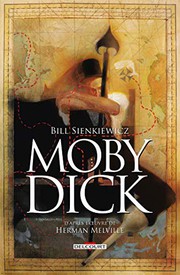
“After a sperm whale sank the Essex in 1820, all 20 crew members escaped but only 8 survived 90 days adrift — resorting to cannibalism and drawing lots to determine who would be sacrificed, directly inspiring Moby Dick.”
More from Everything Everywhere Daily
We summarize every new episode. Want them in your inbox?
Similar Episodes
Related episodes from other podcasts

Stuff You Should Know
Sep 5
Selects: Blacksmiths? You got that right!

a16z Podcast
Aug 14
Ben Horowitz and Travis Kalanick on Building Again

The Jordan Harbinger Show
Jun 18
1346: David Maimon | Going Undercover in the Fraud Underworld

Freakonomics Radio
Jun 10
This Is Your Brain on Pollution (Update)

Odd Lots
May 30
How the Invention of Rope Gave Us Modern Civilization
Explore Related Topics
This podcast is featured in Best History Podcasts (2026) — ranked and reviewed with AI summaries.
Read this week's Health & Longevity Podcast Insights — cross-podcast analysis updated weekly.
You're clearly into Everything Everywhere Daily.
Every Monday, we deliver AI summaries of the latest episodes from Everything Everywhere Daily and 192+ other podcasts. Free for one show.
Start My Monday DigestNo credit card · Unsubscribe anytime