The History of Science Fiction
Episode
15 min
Read time
2 min
Topics
Career Growth, Software Development, Product & Tech Trends
AI-Generated Summary
Key Takeaways
- ✓Genre Definition Challenge: Science fiction builds imagined worlds on speculative extensions of science and natural laws, while fantasy relies on supernatural forces outside scientific explanation. Star Wars faces classification debates because its technology lacks scientific grounding and includes elements like midichlorians, placing it closer to fantasy despite space-based settings.
- ✓First True Science Fiction: Mary Shelley's Frankenstein, published in 1818 when she was only 18 years old, marks the first universally accepted science fiction novel. Unlike earlier works using supernatural explanations, Shelley grounded Victor Frankenstein's creation in scientific inquiry and galvanism debates, establishing themes of scientific hubris and technological consequences that define modern science fiction.
- ✓Hard vs Soft Science Fiction: Jules Verne established hard science fiction by extrapolating from existing nineteenth-century technology with meticulous research, making his Nautilus submarine operate on recognizable engineering principles. H.G. Wells took a different approach, postulating radical scientific breakthroughs like time travel to examine social Darwinism, class divisions, and political questions through speculative scenarios.
- ✓Real-World Technology Impact: Science fiction functions as prior art in patent disputes and examination procedures, requiring only public disclosure of ideas in sufficient detail for skilled practitioners to recognize them. Many scientists and engineers credit early science fiction exposure with sparking their careers, making abstract technological risks concrete through narratives that illustrate human consequences before capabilities exist.
What It Covers
Science fiction evolved from ancient speculative tales to a distinct literary genre that shapes technology development. The episode traces its origins from Lucian's second-century moon voyage through Mary Shelley's Frankenstein to modern cyberpunk, examining how speculative fiction influences real-world innovation and scientific careers.
Key Questions Answered
- •Genre Definition Challenge: Science fiction builds imagined worlds on speculative extensions of science and natural laws, while fantasy relies on supernatural forces outside scientific explanation. Star Wars faces classification debates because its technology lacks scientific grounding and includes elements like midichlorians, placing it closer to fantasy despite space-based settings.
- •First True Science Fiction: Mary Shelley's Frankenstein, published in 1818 when she was only 18 years old, marks the first universally accepted science fiction novel. Unlike earlier works using supernatural explanations, Shelley grounded Victor Frankenstein's creation in scientific inquiry and galvanism debates, establishing themes of scientific hubris and technological consequences that define modern science fiction.
- •Hard vs Soft Science Fiction: Jules Verne established hard science fiction by extrapolating from existing nineteenth-century technology with meticulous research, making his Nautilus submarine operate on recognizable engineering principles. H.G. Wells took a different approach, postulating radical scientific breakthroughs like time travel to examine social Darwinism, class divisions, and political questions through speculative scenarios.
- •Real-World Technology Impact: Science fiction functions as prior art in patent disputes and examination procedures, requiring only public disclosure of ideas in sufficient detail for skilled practitioners to recognize them. Many scientists and engineers credit early science fiction exposure with sparking their careers, making abstract technological risks concrete through narratives that illustrate human consequences before capabilities exist.
Notable Moment
Johannes Kepler's 1608 work Somnium represents the first attempt to ground imaginative storytelling in rigorous astronomical science. The renowned astronomer added extensive footnotes explaining scientific principles underlying his lunar journey narrative, addressing practical challenges like human survival during space travel using contemporary astronomical knowledge.
Episode Transcript
One of the most popular genres of literature, film and television is science fiction. Science fiction is relatively new and by its very nature is always evolving and reinventing itself. Also, unlike other genres, science fiction isn't just about storytelling. It's about generating ideas that have an actual impact on the world we live in. Learn more about the history of science fiction and how it's impacted the world on this episode of Everything Everywhere Daily. This episode is sponsored by Quince. For months, I have been telling you about the high quality products at great prices at Quince, but I wanna share with you a recent experience I had with them. I recently purchased a new laptop bag from Quince. I ordered it online and waited for it to arrive, but it never showed up. It turns out the postal service lost it. Not Quince's fault, but I went to their website to report it. I was able to contact a live customer service agent via chat. They confirmed the issue and had a new bag sent to me immediately. The entire process took about a minute. No hoops to jump through and no waiting. Quince works directly with top factories and cuts out the middleman, so you're not paying for brand markup, just quality clothing. And they also happen to have amazing customer service. Refresh your wardrobe with Quince. Go to quince.com/daily for free shipping on your order and three hundred sixty five day returns, now available in Canada too. That's quince.com/daily. Free shipping and three hundred sixty five day returns. Quince.com/daily. This episode is sponsored by Mint Mobile. Everybody knows someone who insists on doing things the hard way. There's a friend who keeps paying for a subscription they forgot they had or the one refusing to update their phone just because it still works. Mint Mobile exists purely to fix that problem. You get the same coverage, same speed, just without the inflated price tag. That's why I recommend Mint Mobile. For a limited time, get 50% off three, six, or twelve month plans of unlimited premium wireless. Ready to stop paying more than you have to? New customers can make the switch today, and for a limited time, get unlimited premium wireless for just $15 a month. Switch now at mintmobile.com/eed. That's mintmobile.com/eed. Upfront payment of $45 for three months, $90 for six months, or a $180 for twelve month plan required, $15 a month equivalent. Taxes and fees extra. Initial plan term only. Over 50 gigabytes may slow when network is busy. Capable device required. Availability, speed, and coverage varies. Additional terms apply. See mintmobile.com. All of you know what science fiction is, and you can easily identify it if you see it. However, actually defining it can be a bit trickier. Science fiction is a storytelling genre concerned with imagined futures, alternative worlds, or transformed presence that arise from speculative changes in science, technology, or the systematic application of rational inquiry. That definition …
Get the full transcript (2,518 words) + summary by email — free
One-time email with the complete transcript and AI summary of this episode. No account needed.
One email, no spam. We’ll also show you what SignalCast does.

You just read a 3-minute summary of a 12-minute episode.
Get Everything Everywhere Daily summarized like this every Monday — plus up to 2 more podcasts, free.
Pick Your Podcasts — FreeKeep Reading


Books, tools, and gear mentioned in this episode
SignalCast may earn commission on purchases via these links. As an Amazon Associate, SignalCast earns from qualifying purchases.
Books

by Mary Shelley
“Mary Shelley's Frankenstein, published in 1818 when she was only 18 years old, marks the first universally accepted science fiction novel.”
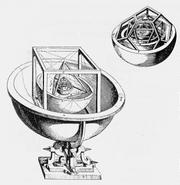
by Johannes Kepler
“Johannes Kepler's 1608 work Somnium represents the first attempt to ground imaginative storytelling in rigorous astronomical science.”
More from Everything Everywhere Daily
We summarize every new episode. Want them in your inbox?
Similar Episodes
Related episodes from other podcasts

Throughline
Jan 1
Winter Book Club: Octavia Butler’s Visionary Fiction

The Joe Rogan Experience
Oct 7
#2562 - Dan McClellan

Huberman Lab
Oct 5
Bringing Extinct Species Back to Life | Dr. Beth Shapiro
Huberman Lab
Sep 24
Essentials: Optimal Protocols to Build Strength & Grow Muscles | Dr. Andy Galpin

Stuff You Should Know
Sep 18
SYSK Gets Weird Playlist: Dragons: As Real as Mermaids
Explore Related Topics
This podcast is featured in Best History Podcasts (2026) — ranked and reviewed with AI summaries.
Read this week's Software Engineering Podcast Insights — cross-podcast analysis updated weekly.
You're clearly into Everything Everywhere Daily.
Every Monday, we deliver AI summaries of the latest episodes from Everything Everywhere Daily and 192+ other podcasts. Free for one show.
Start My Monday DigestNo credit card · Unsubscribe anytime