The Greatest Oscar Snubs
Episode
13 min
Read time
2 min
Topics
Relationships, Psychology & Behavior, Science & Discovery
AI-Generated Summary
Key Takeaways
- ✓Industry Politics Over Merit: External power can override artistic quality in awards voting. William Randolph Hearst leveraged his Hollywood connections to pressure Academy members against Citizen Kane in 1941, costing what became the most critically acclaimed film in history its Best Picture win.
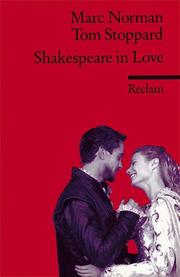
- ✓Aggressive Campaigning Wins Oscars: Harvey Weinstein's 1999 Shakespeare in Love campaign pioneered modern awards strategy — mailing DVDs to every Academy member, buying trade publication ads, and subtly undermining Saving Private Ryan's reputation — producing seven wins despite widespread consensus that Ryan was the superior film.
- ✓Genre Bias Systematically Excludes Groundbreaking Films: The Academy historically penalizes horror, science fiction, and experimental filmmaking. Stanley Kubrick's 2001: A Space Odyssey received zero Best Picture nomination in 1968 yet ranks first among directors in the 2022 Sight and Sound poll, cinema's most prestigious critical survey.
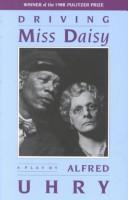
- ✓Hindsight Reveals Consistent Pattern: Winning films frequently fade from cultural memory while snubbed films gain stature. Driving Miss Daisy beat five 1990 nominees — including Do the Right Thing, which wasn't nominated — yet all five nominated films now carry stronger critical legacies than the winner.
What It Covers
Everything Everywhere Daily examines eight decades of Academy Award Best Picture misjudgments, identifying specific films like Citizen Kane, Vertigo, and 2001: A Space Odyssey that lost to or were excluded from consideration against objectively weaker winners.
Key Questions Answered
- •Industry Politics Over Merit: External power can override artistic quality in awards voting. William Randolph Hearst leveraged his Hollywood connections to pressure Academy members against Citizen Kane in 1941, costing what became the most critically acclaimed film in history its Best Picture win.
- •Aggressive Campaigning Wins Oscars: Harvey Weinstein's 1999 Shakespeare in Love campaign pioneered modern awards strategy — mailing DVDs to every Academy member, buying trade publication ads, and subtly undermining Saving Private Ryan's reputation — producing seven wins despite widespread consensus that Ryan was the superior film.
- •Genre Bias Systematically Excludes Groundbreaking Films: The Academy historically penalizes horror, science fiction, and experimental filmmaking. Stanley Kubrick's 2001: A Space Odyssey received zero Best Picture nomination in 1968 yet ranks first among directors in the 2022 Sight and Sound poll, cinema's most prestigious critical survey.
- •Hindsight Reveals Consistent Pattern: Winning films frequently fade from cultural memory while snubbed films gain stature. Driving Miss Daisy beat five 1990 nominees — including Do the Right Thing, which wasn't nominated — yet all five nominated films now carry stronger critical legacies than the winner.
Notable Moment
Gigi, a 1958 film now rated 6.6 on IMDb and widely criticized for depicting the grooming of a teenage girl, won nine Oscars — then a record — while Alfred Hitchcock's Vertigo received zero nominations that same year.
Episode Transcript
Every year, the Academy of Motion Picture Arts and Sciences hosts the biggest celebration of movies and movie making, the Oscars. Thousands of members vote in multiple categories to honor the best films and performances of the previous year. And in many years, they get it completely and totally wrong. Learn more about the biggest Oscar snubs and the times the Academy completely blew it on this episode of Everything Everywhere Daily. This episode is sponsored by Audible. It's time to believe in the Hail Mary. If you love big ideas, high stakes science, and stories that keep you leaning forward, now is the perfect moment to experience Project Hail Mary, the beloved adventure by Andy Weir now on the path to becoming a major motion picture. In this gripping science based thriller, humanity's survival rests on one man. Rylan Grace wakes up alone light years from Earth on a desperate last chance mission to save the planet from extinction. He has no memory, no backup, and no margin for error. The audiobook is brought vividly to life by fan favorite narrator Ray Porter, whose performance delivers humor, heart, and pulse pounding tension in every chapter. Part scientific mystery, part dazzling interstellar journey, Project Hail Mary is a story of discovery, speculation, and survival that you won't forget. Listen to the audiobook now on Audible before the movie starring Ryan Gosling hits theaters on March 20. Project Hail Mary. Listen, watch, save the world. Listen now at audible.com/hailmary. This episode is sponsored by Mint Mobile. Spring is finally around the corner, which means spring cleaning, and and it's also a good time to get rid of your unnecessary subscriptions and expensive mobile contracts. Mint Mobile is here to rescue you with premium wireless plans starting at $15 a month. All plans include high speed data and unlimited talk and text on the nation's largest five g network. Bring your own phone and number, activate with eSIM in minutes, and start saving immediately. No long term contracts and no hassle. That's why I've been telling people to switch to Mint Mobile. If you like your money, Mint Mobile is for you. Shop plans at mintmobile.com/eed. That's mintmobile.com/eed. Upfront payment of $45 for three month five gigabyte plan required equivalent to $15 a month. New customer offer for first three months only, then full price plan options available. Taxes and fees extra. See Mint Mobile for details. The Academy Awards are the world's premier event for the recognition of films and filmmaking. Millions of people around the world tune in for the televised event to see who won and to gawked celebrities. In a previous episode, I covered the history of the Academy Awards. In this episode, I want to focus on the times when the Academy got it wrong and sometimes totally blew it. Just to limit the discussion, I'm only going to focus on the best pitcher category. There have been bad calls across every category, but I need to …
Get the full transcript (2,439 words) + summary by email — free
One-time email with the complete transcript and AI summary of this episode. No account needed.
One email, no spam. We’ll also show you what SignalCast does.

You just read a 3-minute summary of a 10-minute episode.
Get Everything Everywhere Daily summarized like this every Monday — plus up to 2 more podcasts, free.
Pick Your Podcasts — FreeKeep Reading
More from Everything Everywhere Daily
Ivan the Terrible
Sep 12 · 16 min

The Daily (NYT)
Oscars 2026: Who Will Win, and Who Should Win?
Mar 8
More from Everything Everywhere Daily
The Immovable Ladder of Jerusalem
Sep 11 · 15 min

The Model Health Show
Combine These Two Exercises to Burn Fat, Boost Strength, & Increase Your Longevity - With Michael Easter
Jan 21
Books, tools, and gear mentioned in this episode
SignalCast may earn commission on purchases via these links. As an Amazon Associate, SignalCast earns from qualifying purchases.
Books
“Driving Miss Daisy beat five 1990 nominees — including Do the Right Thing, which wasn't nominated”
“Driving Miss Daisy beat five 1990 nominees — including Do the Right Thing, which wasn't nominated”
“identifying specific films like Citizen Kane, Vertigo, and 2001: A Space Odyssey that lost to or were excluded from consideration against objectively weaker winners”
“Harvey Weinstein's 1999 Shakespeare in Love campaign pioneered modern awards strategy”
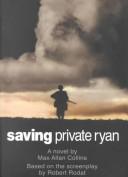
“mailing DVDs to every Academy member, buying trade publication ads, and subtly undermining Saving Private Ryan's reputation”
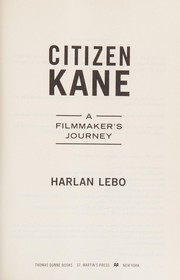
“identifying specific films like Citizen Kane, Vertigo, and 2001: A Space Odyssey that lost to or were excluded from consideration against objectively weaker winners”

“Stanley Kubrick's 2001: A Space Odyssey received zero Best Picture nomination in 1968 yet ranks first among directors in the 2022 Sight and Sound poll”
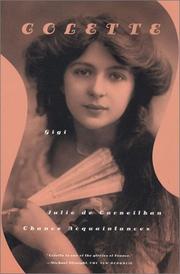
“Gigi, a 1958 film now rated 6.6 on IMDb and widely criticized for depicting the grooming of a teenage girl, won nine Oscars”
More from Everything Everywhere Daily
We summarize every new episode. Want them in your inbox?
Similar Episodes
Related episodes from other podcasts

The Daily (NYT)
Mar 8
Oscars 2026: Who Will Win, and Who Should Win?

The Model Health Show
Jan 21
Combine These Two Exercises to Burn Fat, Boost Strength, & Increase Your Longevity - With Michael Easter

Software Engineering Daily
Sep 8
SED News: The NVIDIA-Hugging Face Deal, China’s Proxy Economy, the Open Weight Surge

The Jordan Harbinger Show
Sep 1
1376: Sean Hemeon | The Good Little Drug Lord

TED Radio Hour
Jul 31
Addiction, motherhood and Jesus with writer Anne Lamott
Explore Related Topics
This podcast is featured in Best History Podcasts (2026) — ranked and reviewed with AI summaries.
You're clearly into Everything Everywhere Daily.
Every Monday, we deliver AI summaries of the latest episodes from Everything Everywhere Daily and 192+ other podcasts. Free for one show.
Start My Monday DigestNo credit card · Unsubscribe anytime