Mosquitoes
Episode
16 min
Read time
2 min
Topics
Productivity, Sales & Revenue, Software Development
AI-Generated Summary
Key Takeaways
- ✓Disease vector identification: Only female mosquitoes bite humans, driven by protein needs for egg production. The immune reaction to saliva proteins—not the puncture itself—causes itching and swelling via histamine release. Understanding this mechanism enabled targeted control strategies rather than broad environmental interventions.
- ✓Historical turning point: Ronald Ross's 1897 India research proved mosquitoes transmit malaria parasites, while Carlos Finley's 1881 yellow fever hypothesis was later validated by Walter Reed's commission. These discoveries directly enabled William Gorgas to eliminate yellow fever from the Panama Canal Zone through systematic drainage and larvicide programs.
- ✓DDT's rise and fall: Paul Müller discovered DDT's insecticidal properties in 1939, and WWII forces deployed it widely against malaria and typhus. However, its persistence in food chains caused predatory bird eggshell thinning, prompting Rachel Carson's 1962 Silent Spring and subsequent agricultural bans across many countries.
- ✓Modern resistance challenge: Mosquitoes evolve insecticide resistance rapidly due to short reproductive cycles. Even 99% population reduction rebounds within months. Current control combines source reduction, biological larvicide BTI, selective adult spraying, sterile male release programs, and experimental gene drives that could theoretically eliminate female mosquitoes within a region.
What It Covers
Mosquitoes, belonging to over 3,500 species across three key genera—Anopheles, Aedes, and Culex—have shaped human history through disease transmission, influencing wars, settlement patterns, and major engineering projects across millennia.
Key Questions Answered
- •Disease vector identification: Only female mosquitoes bite humans, driven by protein needs for egg production. The immune reaction to saliva proteins—not the puncture itself—causes itching and swelling via histamine release. Understanding this mechanism enabled targeted control strategies rather than broad environmental interventions.
- •Historical turning point: Ronald Ross's 1897 India research proved mosquitoes transmit malaria parasites, while Carlos Finley's 1881 yellow fever hypothesis was later validated by Walter Reed's commission. These discoveries directly enabled William Gorgas to eliminate yellow fever from the Panama Canal Zone through systematic drainage and larvicide programs.
- •DDT's rise and fall: Paul Müller discovered DDT's insecticidal properties in 1939, and WWII forces deployed it widely against malaria and typhus. However, its persistence in food chains caused predatory bird eggshell thinning, prompting Rachel Carson's 1962 Silent Spring and subsequent agricultural bans across many countries.
- •Modern resistance challenge: Mosquitoes evolve insecticide resistance rapidly due to short reproductive cycles. Even 99% population reduction rebounds within months. Current control combines source reduction, biological larvicide BTI, selective adult spraying, sterile male release programs, and experimental gene drives that could theoretically eliminate female mosquitoes within a region.
Notable Moment
Napoleon's attempt to suppress the Haitian Revolution failed largely because mosquito-borne disease killed far more French soldiers than combat did—a pattern repeated across centuries of military campaigns in tropical environments.
Episode Transcript
Throughout human history, a tiny insect has influenced wars, shaped settlement patterns, halted major engineering projects, and caused more deaths than any other animal. For most of history, no one understood why these creatures were so dangerous or even that they were the things responsible for spreading disease. Eventually, we learned to fight back, but our efforts were middling at best. Learn more about mosquitoes, how they became one of humanity's greatest biological enemies, and how we learned to fight them on this episode of Everything Everywhere Daily. This episode is sponsored by Square. About twenty five years ago, I had a business that did point of sale transactions. We had to get a cash register, a separate system for credit card transactions, and it was all a real pain. Today, starting a business that accepts payments is much easier largely thanks to Square. You've probably seen Square terminals many times even if you didn't know it. Square brings payments, point of sale, inventory, staffing, online sales together in one place. Easy to use tools help simplify the day to day running of a business. And not only does Square make your business easier to run, but sellers who use Square software see 9% higher sales on average. If you're starting a business or running one that deserves better tools, Square helps you sell, manage, and grow without slowing down. Right now you can get up to $200 off Square hardware at square.com/go-daily. That's square.com/go/daily. Run your business smarter with Square. Get started today. This episode is sponsored by Quince. If I can paraphrase Game of Thrones, autumn is coming. That means cooler temperatures and taking stuff out of your closet that you might have put away for summer. For me, it means getting out my Quince sweaters that I wear almost every day and the blankets I got from Quince that I'll sometimes use while writing episodes on my couch. Quince focuses on high quality wardrobe stables made with premium materials like 100% Mongolian cashmere, organic cotton, and merino wool. These styles are timeless, versatile, and designed to become the dependable pieces that you reach for every day. And everything at Quint's is priced 50 to 80% less than similar brands. They work directly with ethical factories and cut out the middlemen so you're paying for high quality, not brand markup. Find your next fall favorites at Quince. Download the Quince app for app exclusive offers or go to quince.com/daily. Get free shipping on your order and 365 day returns. Now available in Canada and The UK too. That's quince.com/daily. The deadliest animal in history hasn't been sharks, tigers, or venomous snakes. It's been the tiny mosquito. Mosquitoes seldom kill directly. Their lethality comes from their role as disease vectors. Mosquitoes can be found almost everywhere on earth from the tropics to the Arctic. Some species are remarkably cold tolerant and survive harsh winters as eggs, larvae, or dormant adults. Yet others thrive in tropical climates. Biologically, mosquitoes are …
Get the full transcript (2,339 words) + summary by email — free
One-time email with the complete transcript and AI summary of this episode. No account needed.
One email, no spam. We’ll also show you what SignalCast does.

You just read a 3-minute summary of a 13-minute episode.
Get Everything Everywhere Daily summarized like this every Monday — plus up to 2 more podcasts, free.
Pick Your Podcasts — FreeKeep Reading


Books, tools, and gear mentioned in this episode
SignalCast may earn commission on purchases via these links. As an Amazon Associate, SignalCast earns from qualifying purchases.
Books
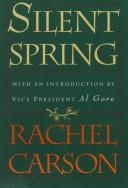 Silent SpringBy guest
by Rachel Carson
“DDT's persistence in food chains caused predatory bird eggshell thinning, prompting Rachel Carson's 1962 Silent Spring and subsequent agricultural bans across many countries.”
More from Everything Everywhere Daily
We summarize every new episode. Want them in your inbox?
Similar Episodes
Related episodes from other podcasts

a16z Podcast
Sep 13
World Models, Robotics, and the Future of 3D AI

The Founders Podcast
Aug 31
#431 How Henry Singleton Worked

The Joe Rogan Experience
Aug 25
#2545 - Jesse Michels

The Prof G Pod
Jul 8
The Fed's Next Move, and How Couples Should Actually Handle Money

The Jordan Harbinger Show
Jun 14
1344: Avocados | Skeptical Sunday
Explore Related Topics
This podcast is featured in Best History Podcasts (2026) — ranked and reviewed with AI summaries.
Read this week's Software Engineering Podcast Insights — cross-podcast analysis updated weekly.
You're clearly into Everything Everywhere Daily.
Every Monday, we deliver AI summaries of the latest episodes from Everything Everywhere Daily and 192+ other podcasts. Free for one show.
Start My Monday DigestNo credit card · Unsubscribe anytime