Quiara Alegría Hudes
Episode
61 min
Read time
3 min
Topics
Relationships, Psychology & Behavior, Philosophy & Wisdom
AI-Generated Summary
Key Takeaways
- ✓Reading as survival: During a period of full-time caregiving that left Hudes feeling deadened and zombie-like, reading books about outcast women saved her sense of self. Works like Sula by Toni Morrison, The Door by Magda Szabó, and Autobiography of My Mother by Jamaica Kincaid featured women who loved themselves unconditionally despite being hated, showing Hudes she still had an inner life worth preserving during her darkest period.
- ✓Gendered enlightenment: Hudes conceived The White Hot in high school after reading Siddhartha, recognizing that spiritual journeys are gendered privileges. Prince Siddhartha could abandon domestic responsibilities to find life's meaning, but the women in Hudes's Puerto Rican family could not leave dishes or childcare duties. This inequality inspired her to write a female protagonist who walks out the door on her own pilgrimage, regardless of cost.
- ✓Fiction's darker honesty: Switching from memoir to fiction allowed Hudes to write with unprecedented darkness and freedom. After reading about morally complex female characters who committed unthinkable acts, she stopped asking for permission and being polite. Fiction enabled her to explore contradicting emotions as a woman, mother, daughter, and intellectual without the constraints of writing from life, making The White Hot her most honest work.
- ✓Performing pleasant femininity: Through years of auditions, Hudes observed hundreds of young Latina actors sharing one common trait: asking permission before taking up space, making auditioners comfortable rather than claiming their power. This pattern of performing pleasant femininity to avoid offending others mirrored Hudes's own tendencies. She created protagonist April Soto specifically to not care about likability or making people comfortable, breaking this gendered cycle.
- ✓The broom as inheritance: April flees when she sees her mother grab a broom to clean up after her daughter's tantrum, recognizing this moment as her daughter's future. The broom represents generations of women inheriting domestic servitude and self-erasure. April's departure aims to show her daughter that this inheritance is not inevitable, that women can choose different paths even at devastating cost to themselves and others.
What It Covers
Pulitzer Prize-winning playwright Quiara Alegría Hudes discusses her debut novel The White Hot, which explores a mother who abandons her daughter to pursue self-discovery. Hudes examines rage, motherhood, freedom, and the gendered nature of spiritual journeys, drawing inspiration from Siddhartha, Toni Morrison, and her own experiences as caretaker and mother.
Key Questions Answered
- •Reading as survival: During a period of full-time caregiving that left Hudes feeling deadened and zombie-like, reading books about outcast women saved her sense of self. Works like Sula by Toni Morrison, The Door by Magda Szabó, and Autobiography of My Mother by Jamaica Kincaid featured women who loved themselves unconditionally despite being hated, showing Hudes she still had an inner life worth preserving during her darkest period.
- •Gendered enlightenment: Hudes conceived The White Hot in high school after reading Siddhartha, recognizing that spiritual journeys are gendered privileges. Prince Siddhartha could abandon domestic responsibilities to find life's meaning, but the women in Hudes's Puerto Rican family could not leave dishes or childcare duties. This inequality inspired her to write a female protagonist who walks out the door on her own pilgrimage, regardless of cost.
- •Fiction's darker honesty: Switching from memoir to fiction allowed Hudes to write with unprecedented darkness and freedom. After reading about morally complex female characters who committed unthinkable acts, she stopped asking for permission and being polite. Fiction enabled her to explore contradicting emotions as a woman, mother, daughter, and intellectual without the constraints of writing from life, making The White Hot her most honest work.
- •Performing pleasant femininity: Through years of auditions, Hudes observed hundreds of young Latina actors sharing one common trait: asking permission before taking up space, making auditioners comfortable rather than claiming their power. This pattern of performing pleasant femininity to avoid offending others mirrored Hudes's own tendencies. She created protagonist April Soto specifically to not care about likability or making people comfortable, breaking this gendered cycle.
- •The broom as inheritance: April flees when she sees her mother grab a broom to clean up after her daughter's tantrum, recognizing this moment as her daughter's future. The broom represents generations of women inheriting domestic servitude and self-erasure. April's departure aims to show her daughter that this inheritance is not inevitable, that women can choose different paths even at devastating cost to themselves and others.
- •Accountability through letter form: Writing the novel as a letter from April to her daughter creates direct accountability that third-person narration cannot achieve. April explicitly states her daughter does not need to forgive her, only hear her story. This first-person format allows April to own her shame around violence, sexuality, and abandonment while refusing to ask for absolution, placing the judgment entirely with the reader and daughter.
Notable Moment
Hudes describes the ending's central question: Can we ever see our mothers as individual women rather than through our own needs and reflections? She compares looking directly at mothers to staring at the sun, wondering if true sight is possible even once. This question guided the novel's haunting final image of Noelle looking through her own reflection to see another life.
Episode Transcript
I know if you stare directly into the sun, you go blind. Like, if we look directly at our mothers, will we go blind? Or can we see them? Can we see them just once? From the TED Audio Collective, this is Design Matters with Debbie Mullen. On Design Matters, Debbie talks with some of the most creative people in the world about what they do, how they got to be who they are, and what they're thinking about and working on. On this episode, a conversation with Kiara Alegria Hudis about her first novel and the lessons she learned from writing it. I'm 48 years old. Who who am I living this life for? You have the vision for your business. You have the plan and you just got handed a huge opportunity. But is your business connectivity reliable enough to make a move? Spectrum business delivers fast reliable internet, phone, TV and mobile services, so you're always connected when it matters most. Get connectivity packages built for your business with savings that keep your budget in check. And with fast reliable Internet and 100% US based customer support, you'll stay connected and ready to bring your vision to life. Learn more at spectrum.com/business. Restrictions apply. Services not available in all areas. This podcast is brought to you by Wise, the app for international people using money around the globe. With the Wise account, you can send, spend, and receive in over 40 currencies with no markups and no hidden fees. Whether you're sending pounds across the pond, spending rials in Rio, or getting paid in dollars for your side gig, you'll get the mid market exchange rate on every transaction. Plus, most transfers arrive in less than twenty seconds. Join 15,000,000 customers internationally. Be smart. Get Wise. Download the Wise app today or visit wise.com. T's and c's apply. For delicious meals, you could go out to eat or you could just make a Marie Callender's meal. Marie Callender's classic chicken parmigiana bowl is so good. It has marinara sauce that's made from scratch and creamy mozzarella cheese over pasta. It's delicious with no artificial flavors, colors, or preservatives, and 30 grams of protein. You can find it in the frozen aisle. Marie Callender's, what having it all tastes like. Kiara Alegria Hudes is a Pulitzer prize winning playwright, composer, and novelist whose work has reshaped contemporary American theater. She is the cocreator of In the Heights, the groundbreaking musical that helped redefine whose stories belong at the center of the American stage. Her play, Water by the Spoonful, earned the Pulitzer Prize for drama, and her writing across theater, music, memoir, and now fiction has consistently explored identity, family, belonging, and the complicated inheritance of culture and care. We first spoke on Design Matters when Kiara released her memoir, My Broken Language, a book that traced her coming of age at the intersection of language, lineage, and spiritual worlds. Our interview took a deep dive into Kiara's …
Get the full transcript (11,444 words) + summary by email — free
One-time email with the complete transcript and AI summary of this episode. No account needed.
One email, no spam. We’ll also show you what SignalCast does.

You just read a 3-minute summary of a 58-minute episode.
Get Design Matters summarized like this every Monday — plus up to 2 more podcasts, free.
Pick Your Podcasts — FreeKeep Reading


Books, tools, and gear mentioned in this episode
SignalCast may earn commission on purchases via these links. As an Amazon Associate, SignalCast earns from qualifying purchases.
Books
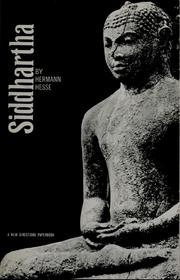 SiddharthaRecommended
by Hermann Hesse
“Hudes examined rage, motherhood, freedom, and the gendered nature of spiritual journeys, drawing inspiration from Siddhartha, Toni Morrison, and her own experiences as caretaker and mother.”
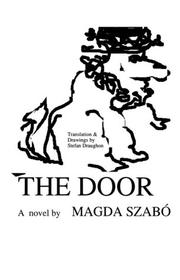 The DoorRecommended
by Magda Szabó
“Works like Sula by Toni Morrison, The Door by Magda Szabó, and Autobiography of My Mother by Jamaica Kincaid featured women who loved themselves unconditionally despite being hated.”
- Autobiography of My MotherRecommended
by Jamaica Kincaid
“Works like Sula by Toni Morrison, The Door by Magda Szabó, and Autobiography of My Mother by Jamaica Kincaid featured women who loved themselves unconditionally despite being hated.”
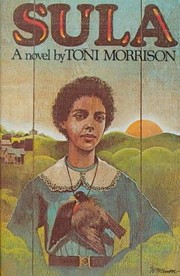 SulaRecommended
by Toni Morrison
“Works like Sula by Toni Morrison, The Door by Magda Szabó, and Autobiography of My Mother by Jamaica Kincaid featured women who loved themselves unconditionally despite being hated.”
by Quiara Alegría Hudes
“Pulitzer Prize-winning playwright Quiara Alegría Hudes discusses her debut novel The White Hot, which explores a mother who abandons her daughter to pursue self-discovery.”
More from Design Matters
We summarize every new episode. Want them in your inbox?
Similar Episodes
Related episodes from other podcasts

The Joe Rogan Experience
Sep 3
#2549 - Jared Diamond

Masters of Scale
Aug 15
Pioneers of AI: Why AI conversations are always one-sided

The Prof G Pod
Jul 16
The New Playbook for Resisting Authoritarianism — with Julia Angwin & Ami Fields-Meyer

The School of Greatness
Jun 19
The Secret Skill of People Who Never Feel Lonely | Charles Duhigg

The Diary of a CEO
May 11
Pulitzer Prize Historian: You Won't Notice Until It's Too Late!
Explore Related Topics
You're clearly into Design Matters.
Every Monday, we deliver AI summaries of the latest episodes from Design Matters and 192+ other podcasts. Free for one show.
Start My Monday DigestNo credit card · Unsubscribe anytime