Am I Addicted to My Phone? (w/ Anna Lembke) | Monday Advice
Episode
86 min
Read time
3 min
Topics
Health & Wellness, Investing, Fundraising & VC
AI-Generated Summary
Key Takeaways
- ✓Dopamine Deficit State: The brain adapts to repeated stimulation by downregulating its own dopamine production — neuroimaging confirms addicted brains have *less* dopamine transmission, not more. This means users need increasing stimulation just to feel normal, not to feel good. Recognizing this cycle is the first step to understanding why willpower alone consistently fails against compulsive phone use.
- ✓The Four C's Diagnostic Framework: Lembke uses four clinical markers to assess addiction severity: out-of-Control use, Compulsive use during unplanned moments, Craving manifesting as anxiety or elaborate rationalizations when the device is unavailable, and negative Consequences including cognitive decline, depression, and opportunity costs. Adding up daily screen time weekly — two hours daily equals one full lost day — provides a concrete reckoning.
- ✓Device Age Guidelines: Lembke recommends no personal internet-connected devices — including smartwatches and iPads — before age 13, with the ideal threshold being age 16 or high school entry. The zero-to-13 window is neurologically critical for social skill development and brain pruning. Even at 16, devices should be introduced conditionally, with removal as a consequence for misuse, since some adolescents show immediate addictive vulnerability.
- ✓Self-Binding Over Willpower: Rather than relying on willpower, Lembke recommends structural barriers between desire and consumption: accountability software that shares browsing activity with another person, deleting recommendation-driven apps, switching YouTube to manual search only (eliminating algorithmic feeds), enabling grayscale display, and physically removing devices from bedrooms. These friction-adding tactics interrupt the automatic loop before conscious decision-making engages.
- ✓Pain-First Dopamine Strategy: The most sustainable dopamine comes from activities that require upfront effort — exercise, hard work, real social connection. When the brain experiences intentional discomfort, it compensates by upregulating endogenous dopamine, opioids, and serotonin. This is the neurological basis of the runner's high. Replacing passive digital consumption with effortful activities gradually restores a healthy hedonic baseline rather than deepening the deficit.
What It Covers
Cal Newport interviews Stanford psychiatry professor Anna Lembke, author of *Dopamine Nation*, on how digital devices trigger the same neurological addiction pathways as drugs and alcohol. They cover the brain's dopamine-based reward mechanism, clinical warning signs of phone addiction, age-appropriate device guidelines for children, and concrete recovery strategies including the ITAA 12-step program.
Key Questions Answered
- •Dopamine Deficit State: The brain adapts to repeated stimulation by downregulating its own dopamine production — neuroimaging confirms addicted brains have *less* dopamine transmission, not more. This means users need increasing stimulation just to feel normal, not to feel good. Recognizing this cycle is the first step to understanding why willpower alone consistently fails against compulsive phone use.
- •The Four C's Diagnostic Framework: Lembke uses four clinical markers to assess addiction severity: out-of-Control use, Compulsive use during unplanned moments, Craving manifesting as anxiety or elaborate rationalizations when the device is unavailable, and negative Consequences including cognitive decline, depression, and opportunity costs. Adding up daily screen time weekly — two hours daily equals one full lost day — provides a concrete reckoning.
- •Device Age Guidelines: Lembke recommends no personal internet-connected devices — including smartwatches and iPads — before age 13, with the ideal threshold being age 16 or high school entry. The zero-to-13 window is neurologically critical for social skill development and brain pruning. Even at 16, devices should be introduced conditionally, with removal as a consequence for misuse, since some adolescents show immediate addictive vulnerability.
- •Self-Binding Over Willpower: Rather than relying on willpower, Lembke recommends structural barriers between desire and consumption: accountability software that shares browsing activity with another person, deleting recommendation-driven apps, switching YouTube to manual search only (eliminating algorithmic feeds), enabling grayscale display, and physically removing devices from bedrooms. These friction-adding tactics interrupt the automatic loop before conscious decision-making engages.
- •Pain-First Dopamine Strategy: The most sustainable dopamine comes from activities that require upfront effort — exercise, hard work, real social connection. When the brain experiences intentional discomfort, it compensates by upregulating endogenous dopamine, opioids, and serotonin. This is the neurological basis of the runner's high. Replacing passive digital consumption with effortful activities gradually restores a healthy hedonic baseline rather than deepening the deficit.
- •ITAA as Clinical-Grade Recovery: Internet and Technology Addicts Anonymous (ITAA) applies the full Alcoholics Anonymous 12-step model to digital addiction. Members identify specific "bottom line" behaviors — compulsive acts that once started cannot be stopped — and abstain from them entirely. The program includes daily meetings, daily outreach calls, sponsors, and a one-day-at-a-time framework. Lembke recommends it alongside evaluation by an addiction specialist, not a general mental health provider.
Notable Moment
Lembke reveals her own mild addiction — not to alcohol like her father, but to romance novels, which she describes as socially sanctioned pornography for women. She uses this to illustrate that everyone has a potential drug of choice, and the modern internet guarantees eventual exposure to whatever that specific neurological key turns out to be.
Episode Transcript
It's become fashionable when thinking about our phones to joke around about being hooked on these devices. Oh, man. I'm so addicted to my Insta, we say with a grin on our faces. But should we be taking this possibility more seriously? What is the line between using our phones too much and suffering from an actual psychopathology? And if we are addicted, what would it mean to treat it? Not just half hearted tweaks here and there, but to actually try to find real freedom from this problematic behavior. Well, it's Monday, so that means it's time for an advice episode of this show, which seems like the perfect opportunity to dive deeper into this issue. Now to help me, I'm bringing on a guest that I've long been trying to book, doctor Anna Lembke. Anna is a professor of psychiatry at Stanford University School of Medicine and chief of the Stanford Addiction Medicine Dual Diagnosis Clinic. In 2016, she published a book titled Drug Dealer MD about the opioid epidemic. But if her name sounds familiar, it's probably because of her 2021 bestseller, Dopamine Nation, which looks at how addiction functions in the brain and takes particular aim at the potential for digital devices to become addictive. Now you may have seen Anna on her popular appearances on the Joe Rogan podcast, the Andrew Huberman podcast, and the Oprah podcast. You You may have also seen her featured in the Netflix documentary, The Social Dilemma. Now, I crossed paths with Anna recently because we both just recorded a master class course. So if you like what you hear today, you should definitely check out her class, which is called dopamine, take back your brain. Now in this interview, Anna and I discuss how addiction works in our minds, how digital addictions compare to substance addictions, how to tell if you have a problem, and the best ways to get help if you do, including the recent rise in a technology related 12 step program called ITAA. We also talk about kids, and why the problem with devices and young people is worse than we thought, as well as possibilities for making all of this better. So if you've ever worried about the role of, your phone in your life or the lives of your kids or other people you care about, then you need to listen to this conversation. It's scary, but it's important. As always, I'm Cal Newport, and this is Deep Questions, the show for people seeking depth in a distracted world. Well, Anna, it's a pleasure to, have you here. I've read your work so long. It is almost a surreal experience to actually be talking to you in real time. So so thank you, for joining us on the show today. Well, thank you for having me. And likewise, I've been reading your work for many years now, and I'm an admirer of your work. So I'm honored to be here. So here's one …
Get the full transcript (15,932 words) + summary by email — free
One-time email with the complete transcript and AI summary of this episode. No account needed.
One email, no spam. We’ll also show you what SignalCast does.

You just read a 3-minute summary of a 83-minute episode.
Get Deep Questions with Cal Newport summarized like this every Monday — plus up to 2 more podcasts, free.
Pick Your Podcasts — FreeKeep Reading
More from Deep Questions with Cal Newport
An Insider's Guide to AI Doom
Oct 1 · 28 min

The Mel Robbins Podcast
How to Get Motivated: #1 Dopamine Expert’s Protocol to Build Willpower & Get Things Done
Jan 22
More from Deep Questions with Cal Newport
Kids Should *Not* Use Chatbots! (You Should Be Wary, Too…)
Sep 28 · 78 min

Odd Lots
What Francis Fukuyama Is Seeing at 'The End of History'
Sep 17
Books, tools, and gear mentioned in this episode
SignalCast may earn commission on purchases via these links. As an Amazon Associate, SignalCast earns from qualifying purchases.
Books
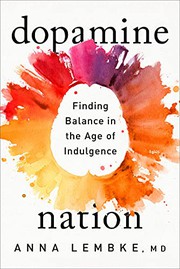
by Anna Lembke
“Cal Newport interviews Stanford psychiatry professor Anna Lembke, author of *Dopamine Nation*, on how digital devices trigger the same neurological addiction pathways as drugs and alcohol.”
other
“Internet and Technology Addicts Anonymous (ITAA) applies the full Alcoholics Anonymous 12-step model to digital addiction. Members identify specific "bottom line" behaviors — compulsive acts that once started cannot be stopped — and abstain from them entirely. The program includes daily meetings, daily outreach calls, sponsors, and a one-day-at-a-time framework. Lembke recommends it alongside evaluation by an addiction specialist.”
More from Deep Questions with Cal Newport
We summarize every new episode. Want them in your inbox?
An Insider's Guide to AI Doom
Kids Should *Not* Use Chatbots! (You Should Be Wary, Too…)
The Truth About Brain Rot
The AI Resistance is Forming. (Should You Join?)
How Worrisome is GPT-6’s “Stealth Thinking”? | Tech Decoded
Similar Episodes
Related episodes from other podcasts

The Mel Robbins Podcast
Jan 22
How to Get Motivated: #1 Dopamine Expert’s Protocol to Build Willpower & Get Things Done

Odd Lots
Sep 17
What Francis Fukuyama Is Seeing at 'The End of History'

Huberman Lab
Mar 30
How Hormones Shape Sexual Orientation & Behavior | Dr. Marc Breedlove

10% Happier with Dan Harris
Sep 7
The Science Of Building The Life You Want | Arthur Brooks
Odd Lots
Sep 3
What's Behind the Big Surge in US Government Bond Yields
Explore Related Topics
This podcast is featured in Best Mindset Podcasts (2026) — ranked and reviewed with AI summaries.
Read this week's Health & Longevity Podcast Insights — cross-podcast analysis updated weekly.
You're clearly into Deep Questions with Cal Newport.
Every Monday, we deliver AI summaries of the latest episodes from Deep Questions with Cal Newport and 192+ other podcasts. Free for one show.
Start My Monday DigestNo credit card · Unsubscribe anytime