Brené with Lisa Lahey on Immunity to Change, Part 2 of 2
Episode
66 min
Read time
2 min
Topics
Productivity, Design & UX, Software Development
AI-Generated Summary
Key Takeaways
- ✓Four Column Immunity Map: Column one identifies the change goal, column two reveals counterproductive behaviors, column three uncovers hidden competing commitments that protect self-image, and column four exposes big assumptions creating either-or thinking that traps energy in maintaining status quo.
- ✓Hidden Competing Commitments: Behaviors that sabotage goals serve legitimate protective purposes. Saying yes to one-off communications prevents feeling inaccessible, while avoiding scheduled meetings protects against drowning in mundane details. These commitments operate invisibly until mapped, explaining why willpower alone fails to create change.
- ✓Big Assumptions as Lenses: Underlying beliefs like discipline and creativity being incompatible create false either-or choices. These assumptions function as perceptual filters that limit possibilities. Testing them through intentional action designed to gather contradictory evidence builds new neural pathways, literally changing how the brain processes reality.
- ✓Retrospective Testing Method: Examining past experiences where the big assumption proved false provides initial evidence for change. Identifying areas where discipline already enhanced rather than diminished desired outcomes creates foundation for designing prospective experiments that challenge limiting beliefs with lower risk and higher confidence.
- ✓Action Bias as Avoidance: Rushing to problem-solve behaviors in column two bypasses deeper excavation of competing commitments and assumptions. This creates temporary fixes that collapse when hidden needs reassert themselves. Intentional action taken specifically to learn about assumptions differs fundamentally from action taken to avoid uncomfortable self-examination.
What It Covers
Brené Brown works through Lisa Lahey's Immunity to Change framework live, uncovering how her competing commitments to accessibility and creative freedom prevent her from establishing disciplined team meeting schedules despite genuine desire to change.
Key Questions Answered
- •Four Column Immunity Map: Column one identifies the change goal, column two reveals counterproductive behaviors, column three uncovers hidden competing commitments that protect self-image, and column four exposes big assumptions creating either-or thinking that traps energy in maintaining status quo.
- •Hidden Competing Commitments: Behaviors that sabotage goals serve legitimate protective purposes. Saying yes to one-off communications prevents feeling inaccessible, while avoiding scheduled meetings protects against drowning in mundane details. These commitments operate invisibly until mapped, explaining why willpower alone fails to create change.
- •Big Assumptions as Lenses: Underlying beliefs like discipline and creativity being incompatible create false either-or choices. These assumptions function as perceptual filters that limit possibilities. Testing them through intentional action designed to gather contradictory evidence builds new neural pathways, literally changing how the brain processes reality.
- •Retrospective Testing Method: Examining past experiences where the big assumption proved false provides initial evidence for change. Identifying areas where discipline already enhanced rather than diminished desired outcomes creates foundation for designing prospective experiments that challenge limiting beliefs with lower risk and higher confidence.
- •Action Bias as Avoidance: Rushing to problem-solve behaviors in column two bypasses deeper excavation of competing commitments and assumptions. This creates temporary fixes that collapse when hidden needs reassert themselves. Intentional action taken specifically to learn about assumptions differs fundamentally from action taken to avoid uncomfortable self-examination.
Notable Moment
Brown realizes her assumption that accepting discipline means others will dictate her creative process, when the actual opportunity involves applying structure to administrative areas that would protect and energize her unconventional creative methods rather than constrain them.
Episode Transcript
Hi, everyone. I'm Brene Brown, and this is Dare to Lead part two with Lisa Leahy. Oh my god. She is really when the conversation started, I thought we would talk about immunity to change. I did not think we would find out exactly why I'm immune to change. It just got very personal very quick, but it has been revelatory for me. Scary, hard, honest. I'm glad you're here unless you work with me. Then you'll be like, oh, this is the problem. This is why she's not coming to the meetings that we should be having. Sorry. I'm really I'm obviously, I'm working on it. You can listen to part one and two and see it's a huge issue. Alright. Stay tuned. Avoiding your unfinished home projects because you're not sure where to start? Thumbtack knows homes, so you don't have to. Don't know the difference between matte paint finish and satin or what that clunking sound from your dryer is? With Thumbtack, you don't have to be a home pro. You just have to hire one. You can hire top rated pros, see price estimates, and read reviews all on the app. Download today. Support for this show comes from Odoo. Running a business is hard enough, so why make it harder with a dozen different apps that don't talk to each other? Introducing Odoo. It's the only business software you'll ever need. It's an all in one fully integrated platform that makes your work easier. CRM, accounting, inventory, e commerce and more. And the best part? Odoo replaces multiple expensive platforms for a fraction of the cost. That's why over thousands of businesses have made the switch. So why not you? Try Odoo for free at odoo.com. That's odoo.com. Alright. So before we get started, let me tell you a little bit about doctor Leahy, Lisa. Again, Harvard Graduate School of Education faculty member, Lisa and her long, long time collaborator, Robert Keegan, are credited with a breakthrough discovery of the immunity to change, a dynamic which impedes personal and organizational transformation. Her work helps people to close the gap between their good I'm laughing because I got a big gap. To close the gap between their good intentions and behaviors. We're gonna work it. I'm gonna work the program with her guiding me through on something that's really real and vulnerable and hard. Lisa is also the founder of Minds at Work, a coaching and consulting firm serving businesses and institutions around the world. She's on the faculty at the Harvard University Graduate School of Education. She's an expert in adult development and an experienced educator and executive coach. If you're a coach, this will be a master class in coaching for you. She works with leaders and leadership teams in both for profit and nonprofit organizations. She currently leads and teaches the personal mastery program in Harvard's education leadership organizations and entrepreneurship program. It's a degree designed to advance equity, entrepreneurship program. It's a …
Get the full transcript (9,562 words) + summary by email — free
One-time email with the complete transcript and AI summary of this episode. No account needed.
One email, no spam. We’ll also show you what SignalCast does.

You just read a 3-minute summary of a 63-minute episode.
Get Dare to Lead with Brené Brown summarized like this every Monday — plus up to 2 more podcasts, free.
Pick Your Podcasts — FreeKeep Reading
More from Dare to Lead with Brené Brown
The Four Kinds of Connections We Need
Oct 8 · 63 min

The Tim Ferriss Show
#880: Relationship Tools That Work — Esther Perel, Brené Brown, Dr. Sue Johnson, Terry Real, and More on Conflict, Repair, and Lasting Love
Aug 19
More from Dare to Lead with Brené Brown
Resisting Influence in an Over-Influenced World
Oct 1 · 48 min

WorkLife with Adam Grant
ReThinking: Brené Brown on courageous leadership
Sep 30
Books, tools, and gear mentioned in this episode
SignalCast may earn commission on purchases via these links. As an Amazon Associate, SignalCast earns from qualifying purchases.
Books
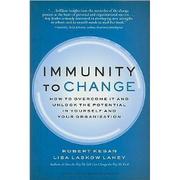 Immunity to ChangeBy guest
by Lisa Lahey
“Brené Brown works through Lisa Lahey's Immunity to Change framework live, uncovering how her competing commitments to accessibility and creative freedom prevent her from establishing disciplined team meeting schedules despite genuine desire to change.”
More from Dare to Lead with Brené Brown
We summarize every new episode. Want them in your inbox?
The Four Kinds of Connections We Need
Resisting Influence in an Over-Influenced World
Why Grit Isn’t Always Enough with Angela Duckworth
Rethinking Leadership, Work, and Human Connection in the Age of AI
Can Conflict Actually Make Our Relationships Stronger? with Priya Parker
Similar Episodes
Related episodes from other podcasts

The Tim Ferriss Show
Aug 19
#880: Relationship Tools That Work — Esther Perel, Brené Brown, Dr. Sue Johnson, Terry Real, and More on Conflict, Repair, and Lasting Love

WorkLife with Adam Grant
Sep 30
ReThinking: Brené Brown on courageous leadership

10% Happier with Dan Harris
Aug 26
How To Handle AI Anxiety: A Computer Scientist and a Buddhist Teacher On Managing Uncertainty | Cal Newport & Matthew Brensilver

No Priors: Artificial Intelligence | Technology | Startups
Jun 26
Why Traditional Benchmarks Fail Modern AI Models with OpenAI Research Scientist Noam Brown

The Mel Robbins Podcast
Jun 11
Make Yourself Recession-Proof: The New Rules of Work, Confidence, and Success in Uncertain Times
Explore Related Topics
This podcast is featured in Best Mindset Podcasts (2026) — ranked and reviewed with AI summaries.
Read this week's Software Engineering Podcast Insights — cross-podcast analysis updated weekly.
You're clearly into Dare to Lead with Brené Brown.
Every Monday, we deliver AI summaries of the latest episodes from Dare to Lead with Brené Brown and 192+ other podcasts. Free for one show.
Start My Monday DigestNo credit card · Unsubscribe anytime