Helen Castor on Medieval Power and Personalities
Episode
67 min
Read time
2 min
Topics
Personal Finance, Software Development, Science & Discovery
AI-Generated Summary
Key Takeaways
- ✓Medieval State Capacity: England's 1367 government imposed law and collected parliamentary taxation for defense but lacked monopoly on force—no police or standing army meant enforcement required cooperation from landed nobles who controlled local populations and resources through private hierarchies of power.
- ✓Constitutional Precedent Setting: The 1399 deposition of Richard II established that tyrannical kings could be removed through extra-legal means, creating precedent cited in 1640s against Charles I. Thirty-three deposition articles documented Richard's violations, showing how successful actions become embedded in constitutional evolution regardless of legality.
- ✓Kingship Legitimacy Mechanics: Medieval nobles obeyed kings because monarchy provided the hierarchical framework securing their own wealth and power—like having a referee enabling safe competition. Resisting the king risked both earthly position and immortal soul, since divine appointment meant rebellion equaled defying God's ordained order.
- ✓Parliamentary Taxation Dynamics: Kings needed parliamentary consent to tax for realm defense, but parliaments frequently refused when unconvinced of benefit. This created ongoing negotiation over what constituted national interest, with Hundred Years War fought in France justified as defensive since fighting occurred abroad rather than domestically.
- ✓Black Death Economic Impact: The 1348 plague killed one-third to one-half of England's population, creating labor shortages that enabled social mobility for lower classes while squeezing elite incomes. Political classes attempted suppressing this new worker leverage, though war machinery continued operating despite demographic catastrophe.
What It Covers
Helen Castor examines medieval English governance through Richard II and Henry IV, both born 1367, exploring how centralized state power functioned without police or standing armies, relying instead on landed nobility hierarchies and divine kingship authority.
Key Questions Answered
- •Medieval State Capacity: England's 1367 government imposed law and collected parliamentary taxation for defense but lacked monopoly on force—no police or standing army meant enforcement required cooperation from landed nobles who controlled local populations and resources through private hierarchies of power.
- •Constitutional Precedent Setting: The 1399 deposition of Richard II established that tyrannical kings could be removed through extra-legal means, creating precedent cited in 1640s against Charles I. Thirty-three deposition articles documented Richard's violations, showing how successful actions become embedded in constitutional evolution regardless of legality.
- •Kingship Legitimacy Mechanics: Medieval nobles obeyed kings because monarchy provided the hierarchical framework securing their own wealth and power—like having a referee enabling safe competition. Resisting the king risked both earthly position and immortal soul, since divine appointment meant rebellion equaled defying God's ordained order.
- •Parliamentary Taxation Dynamics: Kings needed parliamentary consent to tax for realm defense, but parliaments frequently refused when unconvinced of benefit. This created ongoing negotiation over what constituted national interest, with Hundred Years War fought in France justified as defensive since fighting occurred abroad rather than domestically.
- •Black Death Economic Impact: The 1348 plague killed one-third to one-half of England's population, creating labor shortages that enabled social mobility for lower classes while squeezing elite incomes. Political classes attempted suppressing this new worker leverage, though war machinery continued operating despite demographic catastrophe.
Notable Moment
Elizabeth I, while reviewing Tower archives in 1601 after Essex's rebellion, told the keeper she recognized herself in Richard II's predicament—both childless rulers facing succession crises and Irish troubles. Shakespeare's play about Richard had been performed the night before Essex's failed revolt.
Episode Transcript
Conversations with Tyler is produced by the Mercatus Center at George Mason University. Bridging the gap between academic ideas and real world problems. Learn more at mercatus.org. For a full transcript of every conversation enhanced with helpful links, visit conversationswithtyler.com. Hello, everyone, and welcome back to conversations with Tyler. Today, I'm very happy to be chatting with Helen Castor. She is a British historian of the medieval and Tudor period and also a BBC broadcaster. She's taught history at the University of Cambridge. She is the author of numerous books. And most recently, one of the best books of last year, she published the eagle and the heart, the tragedy of Richard the second and Henry the fourth. Helen, welcome. Thank you so much for having me. So Richard the second and Henry the fourth, they're both born in the same year, namely 1367. Just to to frame it for our listeners, could you give us a sense back then, what was it that English government sort of could do, and what could it not do? What is a government like then? I think people might be surprised at quite how much government could do in England at this point in history because England at this point was the most centralized state in Europe, and that has two reasons. One is the conquest of ten sixty six that the Normans have come in and taken the whole place over. And then the other key formative period is the late twelfth century when Henry the second is ruling an empire that stretches from the Scottish border all the way down to Southwestern France, so he has to have a system of government and of law that can function when he's not there. So by the late fourteenth century, when Richard and Henry, my two kings in this book, appear on the scene, The king has two key functions which appear on his seal, the two sides of his seal. On one side, he sits in state wearing a crown, carrying an orb and scepter as a lawgiver and a judge, and that is a key function of what he does for his people. He imposes law. He gives justice. He maintains order. And on the other side of the seal, he's wearing armor on a war horse with a sword unsheathed in his hand. And that's his function as a defender of the realm in an intensely practical way. He has to be a soldier, a warrior, to repel attacks or indeed to launch attacks if that's the best form of defense. And to do that, he needs money. And for that, the institution of parliament has developed, which both offers consent to taxation that he can demonstrate is in the national interest, and it has also come to be a lawmaking forum. So wherever he needs to make new laws, he can make statute law in parliament that, therefore, in its very nature, has the consent of the representatives of …
Get the full transcript (9,667 words) + summary by email — free
One-time email with the complete transcript and AI summary of this episode. No account needed.
One email, no spam. We’ll also show you what SignalCast does.

You just read a 3-minute summary of a 64-minute episode.
Get Conversations with Tyler summarized like this every Monday — plus up to 2 more podcasts, free.
Pick Your Podcasts — FreeKeep Reading
More from Conversations with Tyler
Jared Diamond on Leaders, Luck, and Irreplaceability
Sep 9 · 52 min

10% Happier with Dan Harris
How To Read People, Calm Tension, Build Trust, and Ask For What You're Worth | John Richardson
Jul 27
More from Conversations with Tyler
Michael Moritz on Origin Stories, Exile, and Obsessive Curiosity
Sep 2 · 41 min

The Prof G Pod
America at 250 — with Heather Cox Richardson
Jun 18
Books, tools, and gear mentioned in this episode
SignalCast may earn commission on purchases via these links. As an Amazon Associate, SignalCast earns from qualifying purchases.
Books
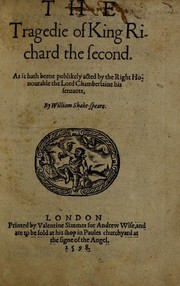
by William Shakespeare
“Elizabeth I, while reviewing Tower archives in 1601 after Essex's rebellion, told the keeper she recognized herself in Richard II's predicament—both childless rulers facing succession crises and Irish troubles. Shakespeare's play about Richard had been performed the night before Essex's failed revolt.”
More from Conversations with Tyler
We summarize every new episode. Want them in your inbox?
Jared Diamond on Leaders, Luck, and Irreplaceability
Michael Moritz on Origin Stories, Exile, and Obsessive Curiosity
Luke Burgis on Mimetic Desire, Catholicism, and the Age of Social Contagion
Daron Acemoglu on Liberalism, Automation, and the Educated Elite
Julia Ioffe on Russian Women, Missing Men, and the Roots of Autocracy
Similar Episodes
Related episodes from other podcasts

10% Happier with Dan Harris
Jul 27
How To Read People, Calm Tension, Build Trust, and Ask For What You're Worth | John Richardson

The Prof G Pod
Jun 18
America at 250 — with Heather Cox Richardson

Everything Everywhere Daily
May 18
The English Reformation

The Daily (NYT)
Mar 14
'The Interview': How Tragedy, Wealth and Trump Shaped JB Pritzker

BiggerPockets Real Estate Podcast
Mar 4
7 Ways to Lower Rental Property Expenses by Thousands Per Year
Explore Related Topics
This podcast is featured in Best Finance Podcasts (2026) — ranked and reviewed with AI summaries.
Read this week's Software Engineering Podcast Insights — cross-podcast analysis updated weekly.
You're clearly into Conversations with Tyler.
Every Monday, we deliver AI summaries of the latest episodes from Conversations with Tyler and 192+ other podcasts. Free for one show.
Start My Monday DigestNo credit card · Unsubscribe anytime