He Wanted to Teach Western Civilization. So He Quit Harvard.
Episode
81 min
Read time
3 min
Topics
Design & UX, Software Development, Psychology & Behavior
AI-Generated Summary
Key Takeaways
- ✓Why Western Civ Was Abandoned: Western civilization courses were eliminated from most American high schools and universities roughly 40 years ago, partly due to a Vietnam-era critique framing them as Cold War militarist propaganda. Hankins argues this claim is historically false but remains widely believed. Understanding this origin helps educators and advocates counter the dismissal more precisely rather than simply defending the curriculum on abstract cultural grounds.
- ✓Democracy's Actual Timeline: The founding fathers deliberately created a republic, not a democracy, drawing on detailed knowledge of how ancient republics collapsed. A review of the Federalist Papers reveals they cited historical works more frequently than political theory texts. Understanding this distinction — republic versus democracy — gives citizens a more accurate framework for evaluating modern governance debates and constitutional arguments about institutional design.
- ✓Equality's Religious Origins: Political egalitarianism did not originate with Rousseau or Marx. The Pentateuch mandated income redistribution at ten- and fifty-year intervals, premised on the idea that all property belongs to God. Seventeenth-century radical Christian movements, particularly Socinians, transferred spiritual equality into political theory. Recognizing this lineage clarifies why secular liberal values cannot be fully understood without engaging their Judeo-Christian intellectual foundations.
- ✓Christianity's Growth Mechanism: Christianity's rapid expansion in the late third century was driven by social service provision during systemic Roman collapse — currency failure, plague, and political instability averaging a new emperor every few years. Christians visibly cared for the sick during epidemics, attracting converts through demonstrated behavior rather than doctrine alone. Sociological research suggests minority groups exceeding roughly 5% of a population become effectively impossible for states to suppress or eliminate.
- ✓How Islam Spread: Early Islamic expansion was military, leveraging Arab forces trained as Roman and Persian mercenaries after those empires exhausted each other in prolonged seventh-century warfare. Mass conversion came later through structural coercion — higher taxes, legal disadvantages, and exclusion from office for non-Muslims — rather than direct force. By the fifteenth and sixteenth centuries, Islamic expansion shifted toward missionary-led conversion, mirroring the earlier Christian model of missionaries preceding state consolidation.
What It Covers
Harvard Renaissance historian James Hankins explains why he left Harvard to teach Western civilization at Hamilton School, arguing that abandoning this curriculum over the past 40 years has produced measurable cultural fragmentation. He traces democracy, rule of law, equality, and religious tolerance to specific historical origins, challenging both triumphalist and dismissive readings of the Western tradition.
Key Questions Answered
- •Why Western Civ Was Abandoned: Western civilization courses were eliminated from most American high schools and universities roughly 40 years ago, partly due to a Vietnam-era critique framing them as Cold War militarist propaganda. Hankins argues this claim is historically false but remains widely believed. Understanding this origin helps educators and advocates counter the dismissal more precisely rather than simply defending the curriculum on abstract cultural grounds.
- •Democracy's Actual Timeline: The founding fathers deliberately created a republic, not a democracy, drawing on detailed knowledge of how ancient republics collapsed. A review of the Federalist Papers reveals they cited historical works more frequently than political theory texts. Understanding this distinction — republic versus democracy — gives citizens a more accurate framework for evaluating modern governance debates and constitutional arguments about institutional design.
- •Equality's Religious Origins: Political egalitarianism did not originate with Rousseau or Marx. The Pentateuch mandated income redistribution at ten- and fifty-year intervals, premised on the idea that all property belongs to God. Seventeenth-century radical Christian movements, particularly Socinians, transferred spiritual equality into political theory. Recognizing this lineage clarifies why secular liberal values cannot be fully understood without engaging their Judeo-Christian intellectual foundations.
- •Christianity's Growth Mechanism: Christianity's rapid expansion in the late third century was driven by social service provision during systemic Roman collapse — currency failure, plague, and political instability averaging a new emperor every few years. Christians visibly cared for the sick during epidemics, attracting converts through demonstrated behavior rather than doctrine alone. Sociological research suggests minority groups exceeding roughly 5% of a population become effectively impossible for states to suppress or eliminate.
- •How Islam Spread: Early Islamic expansion was military, leveraging Arab forces trained as Roman and Persian mercenaries after those empires exhausted each other in prolonged seventh-century warfare. Mass conversion came later through structural coercion — higher taxes, legal disadvantages, and exclusion from office for non-Muslims — rather than direct force. By the fifteenth and sixteenth centuries, Islamic expansion shifted toward missionary-led conversion, mirroring the earlier Christian model of missionaries preceding state consolidation.
- •Video Games as Curriculum: The strategy game Civilization now reaches more Americans with Western history content than formal education does. A University of Chicago researcher found over 800,000 players engaged in a single online discussion about historical periodization. The game encodes a progressive modernization bias — players score by overcoming the past, treating pre-Enlightenment periods as obstacles. Educators designing Western civ curricula should treat this framing as a competing pedagogical force requiring direct engagement.
Notable Moment
Hankins recounts suggesting Elizabeth Anscombe — arguably the most influential female philosopher of the modern era and founder of virtue ethics — for Columbia's contemporary civilization curriculum in the early 1980s. The proposal was rejected, apparently because of her Catholicism, while a textbook about women in philosophy was seriously considered as a replacement for Plato or Aristotle.
Episode Transcript
Welcome to another episode of conversations with Coleman. My guest today is James Hankins. James is an intellectual historian who's taught at Harvard for the past twenty years and focuses on the Renaissance period. He's also the author of The Golden Thread, a History of the Western Tradition. In this episode, we talk about why James recently left Harvard. We talk about the importance of learning the Western canon. We talk about whether monotheisms invented the concept of objective morality. We talk about the relationship between Christianity and the enlightenment. We talk about why Christianity spread throughout the Roman Empire. We talk about whether Islam was spread mostly through conquest or voluntary conversion. And finally, I asked James if he believes China should teach the Western canon or the Chinese canon. Without further ado, James Hankins. James Hankins, thanks so much for coming on my show. It's a pleasure. I'm a great admirer of yours. Oh, thank you very much. Likewise. So we're here today to discuss this tome, this door stopper of a book called The Golden Thread, a history of the Western tradition. But before we do, we were chatting just briefly, but we didn't get to finish a conversation. You play trombone. In fact, we both play trombone. That's right. But I played, orchestral trombone. Although I did I did play in dance bands, a great American songbook, that kind of thing, but, I was studying to be or an orchestral trombonist and composer at one one time, but, I I reached the limits of my ability. So I I went back to classics, which is where I had started. It's interesting. Because I when I was 12 and 13 starting out on trombone, I was also into classical orchestral trombone. That was my initial obsession, and then I pivoted to jazz around age 14, 15, and ended up going to the Julliard jazz program for less than a year. But while I was there, I got to hang out with the classical trombone players as well, and we were kind of all friendly. And I got to know Joseph Alessi, the Oh, yeah. Lead of the New York Philharmonic, who was a is a big hero of mine. He's best friends with, my high school buddy, Karl Lenthe, who taught who was in the, Bavarian Staatsoper for a long time. I think they've recorded together. I'm I'm a big admirer of Alessi too, in fact. I studied for a while with Glenn Dodson, who is the head of Philadelphia Orchestra lead trombone. Wow. So how did you go from orchestral trombone to classics? Well, I started out in classics, and I, our high school, I went to a public high school outside of Philadelphia, and we had a pretty excellent musical program. I got sucked into that. But I spent a lot of time blowing air through a piece of metal in my high high school years. So did I. I I wanted to go to …
Get the full transcript (11,378 words) + summary by email — free
One-time email with the complete transcript and AI summary of this episode. No account needed.
One email, no spam. We’ll also show you what SignalCast does.

You just read a 3-minute summary of a 78-minute episode.
Get Conversations with Coleman summarized like this every Monday — plus up to 2 more podcasts, free.
Pick Your Podcasts — FreeKeep Reading
More from Conversations with Coleman
Do Great Men Actually Matter? With Jared Diamond
Oct 19 · 45 min

The Diary of a CEO
No.1 Brain Scientist: Your Brain Is Lying To You! Here's How I Discovered The Truth!
Nov 6
More from Conversations with Coleman
The Bible Story Every Atheist Should Read, with Megan Phelps-Roper
Oct 14 · 73 min

The Rich Roll Podcast
Arthur Brooks On The Crisis Of Meaning & How To Actually Find It
Mar 30
Books, tools, and gear mentioned in this episode
SignalCast may earn commission on purchases via these links. As an Amazon Associate, SignalCast earns from qualifying purchases.
Books
“A review of the Federalist Papers reveals they cited historical works more frequently than political theory texts.”
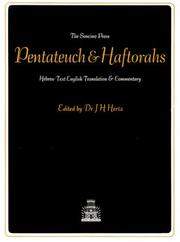
“The Pentateuch mandated income redistribution at ten- and fifty-year intervals, premised on the idea that all property belongs to God.”
Products
“The strategy game Civilization now reaches more Americans with Western history content than formal education does. A University of Chicago researcher found over 800,000 players engaged in a single online discussion about historical periodization.”
More from Conversations with Coleman
We summarize every new episode. Want them in your inbox?
Do Great Men Actually Matter? With Jared Diamond
The Bible Story Every Atheist Should Read, with Megan Phelps-Roper
Inside Israel’s War Room: What Really Happened After October 7
The Real Reason the Black Family Fell Apart
Roland Fryer on the Cost of Telling the Truth
Similar Episodes
Related episodes from other podcasts

The Diary of a CEO
Nov 6
No.1 Brain Scientist: Your Brain Is Lying To You! Here's How I Discovered The Truth!

The Rich Roll Podcast
Mar 30
Arthur Brooks On The Crisis Of Meaning & How To Actually Find It

The School of Greatness
Mar 30
How Faith, Neuroscience, and Meaning Work Together | Arthur Brooks

The Mel Robbins Podcast
Oct 30
How to Communicate With Confidence & Ease (From Harvard Business School’s #1 Professor)

The Daily (NYT)
Sep 27
The Best TV Shows of the 21st Century
Explore Related Topics
This podcast is featured in Best Philosophy Podcasts (2026) — ranked and reviewed with AI summaries.
Read this week's Software Engineering Podcast Insights — cross-podcast analysis updated weekly.
You're clearly into Conversations with Coleman.
Every Monday, we deliver AI summaries of the latest episodes from Conversations with Coleman and 192+ other podcasts. Free for one show.
Start My Monday DigestNo credit card · Unsubscribe anytime