Charles & Chase Koch on How They Quietly Built a $150B Empire
Episode
95 min
Read time
3 min
Topics
Career Growth, Investing, Startups
AI-Generated Summary
Key Takeaways
- ✓Capability-Bounded Strategy: Koch Industries expanded from crude oil gathering into chemicals, fertilizers, glass, forest products, and software by asking "where can our existing capabilities create superior value?" rather than staying industry-bounded. When acquiring Georgia Pacific for $20B in 2005, the decision hinged on operational and logistics capabilities transferring to wood products — not sector familiarity. Founders scaling businesses should map demonstrated capabilities first, then identify adjacent industries where those same strengths can be tested experimentally before full commitment.
- ✓Experimental Discovery Framework: Koch treats new business lines as experiments where the value of learning must exceed the cost of failure. This is distinct from large speculative bets — their late-1990s "gas to bread spread" strategy, which attempted to control the entire natural gas-to-grocery value chain, violated this principle and nearly wiped out all company earnings. A valid experiment is small enough that failure generates actionable knowledge; a bad experiment is one that risks the enterprise without proportional learning upside.
- ✓Values-First Hiring: Koch's two most damaging business failures — a 1973 trading crisis that nearly caused bankruptcy and the late-1990s agricultural collapse — both traced back to placing "destructively motivated" leaders in senior roles. Charles Koch's hiring rule: values first, skills second, credentials last. Their current CIO, Jared Benson, started with no college degree painting parking lot lines and built Koch's entire cybersecurity capability over 20 years by demonstrating contribution-motivated behavior consistently.
- ✓Culture Change Requires Leadership Replacement: Across Georgia Pacific, Molex, and a Minnesota refinery, Koch found that cultural transformation consistently required changing leadership rather than retraining existing management. The Georgia Pacific acquisition involved removing executives from a 51-story Atlanta headquarters with a private elevator, relocating them to standard floors, and converting executive space into open meeting rooms. The signal sent by visible structural changes accelerated cultural adoption faster than training programs or written principles alone.
- ✓Comparative Advantage Self-Assessment: Chase Koch fired himself from the presidency of Koch Fertilizer after nine months, recognizing he was an operator role misfit and that a better-suited leader would outperform him. That decision led directly to the creation of Koch Disruptive Technologies, which became Koch's early-warning system for technologies threatening core businesses. The actionable principle: regularly assess whether your current role sits in your "power alley" — the intersection of contribution motivation and demonstrated capability — and restructure accordingly.
What It Covers
Charles Koch (age 90) and his son Chase Koch detail how Koch Industries grew from 300 employees in 1961 to 130,000 across 60 countries, achieving a 9,000x increase in value. They outline the principle-based management framework driving that growth, covering capability-bounded strategy, experimental discovery, talent selection by values over credentials, and Stand Together's education and social change initiatives.
Key Questions Answered
- •Capability-Bounded Strategy: Koch Industries expanded from crude oil gathering into chemicals, fertilizers, glass, forest products, and software by asking "where can our existing capabilities create superior value?" rather than staying industry-bounded. When acquiring Georgia Pacific for $20B in 2005, the decision hinged on operational and logistics capabilities transferring to wood products — not sector familiarity. Founders scaling businesses should map demonstrated capabilities first, then identify adjacent industries where those same strengths can be tested experimentally before full commitment.
- •Experimental Discovery Framework: Koch treats new business lines as experiments where the value of learning must exceed the cost of failure. This is distinct from large speculative bets — their late-1990s "gas to bread spread" strategy, which attempted to control the entire natural gas-to-grocery value chain, violated this principle and nearly wiped out all company earnings. A valid experiment is small enough that failure generates actionable knowledge; a bad experiment is one that risks the enterprise without proportional learning upside.
- •Values-First Hiring: Koch's two most damaging business failures — a 1973 trading crisis that nearly caused bankruptcy and the late-1990s agricultural collapse — both traced back to placing "destructively motivated" leaders in senior roles. Charles Koch's hiring rule: values first, skills second, credentials last. Their current CIO, Jared Benson, started with no college degree painting parking lot lines and built Koch's entire cybersecurity capability over 20 years by demonstrating contribution-motivated behavior consistently.
- •Culture Change Requires Leadership Replacement: Across Georgia Pacific, Molex, and a Minnesota refinery, Koch found that cultural transformation consistently required changing leadership rather than retraining existing management. The Georgia Pacific acquisition involved removing executives from a 51-story Atlanta headquarters with a private elevator, relocating them to standard floors, and converting executive space into open meeting rooms. The signal sent by visible structural changes accelerated cultural adoption faster than training programs or written principles alone.
- •Comparative Advantage Self-Assessment: Chase Koch fired himself from the presidency of Koch Fertilizer after nine months, recognizing he was an operator role misfit and that a better-suited leader would outperform him. That decision led directly to the creation of Koch Disruptive Technologies, which became Koch's early-warning system for technologies threatening core businesses. The actionable principle: regularly assess whether your current role sits in your "power alley" — the intersection of contribution motivation and demonstrated capability — and restructure accordingly.
- •Incentive Alignment for Creative Destruction: Salaried managers in non-owner-operated companies default to low-risk decisions to protect employment, which systematically suppresses innovation. Koch counters this by evaluating employees on contribution to Koch's future value, including capability-building from failed experiments. KDT's early investment portfolio showed losses before winners materialized; judging it on a 3-4 year bottom-line basis would have shut it down. Founders should structure compensation to reward learning and capability-building, not just short-term profit outcomes.
- •Bottom-Up Principle Embedding: Koch abandoned "sheep dipping" — mass seminars followed by mandated behavior change — after finding it ineffective. Instead, they identified struggling business units genuinely open to change, coached them intensively, and let visible success drive adoption organically across the organization. Charles Koch references Michael Polanyi's *Personal Knowledge* to explain why behavioral rewiring requires sustained intensity over time, similar to physical training. The Principle Companion app now uses a Socratic AI model to help 130,000 employees apply the 41 principles to real-time business problems.
Notable Moment
Chase Koch described walking into his boss's office — who happened to be his father — and voluntarily removing himself from the presidency of Koch Fertilizer. Despite the humiliation of publicly failing as the founder's son, he concluded someone else held a stronger comparative advantage for the operator role. That single act of self-assessment directly produced both a stronger fertilizer business and the creation of Koch Disruptive Technologies.
Episode Transcript
What an honor to be here. Thank you for hosting us, Forbes, and welcome. This will be put out as the all in interview, so I'm really excited to share this conversation with everyone on the world on the Internet and to get some time with Charles Koch, Chase Koch. Chase and I have known each other since 2013 Yep. When we overlapped in the agriculture industry, got to know each other. We've been business partners, and Charles and I have gotten to know each other a few times over the years. But I'm really excited for this conversation tonight. So Charles, thank you for being here. Thanks for having us. It's an honor. I'm doing all in. Every few years, a new ad channel opens before the market catches on. That's axon.ai right now. The AI ad platform behind one of the biggest runs in tech with access to over a billion daily active users. Full screen video ads in mobile games watched for a median of thirty five seconds. Businesses are profitably spending hundreds of thousands of dollars a day on it, and most advertisers don't even know it exists yet. The window is open @axon.aislashallin. All in. In Silicon Valley, entrepreneurs and even mature company CEOs always like to learn about the story of other businesses and the success of those businesses. And I've always felt like Koch Industries was that untold story. Probably the most profitable private family owned business in the world. Maybe I'm off on a couple points, but certainly up there. And one of the most impressive business stories because of the evolution of the business, which I'm hopeful we can hear a little bit about how that evolution came to be tonight. And just for some statistics, if Coke were publicly traded, the revenue would put it easily in the top 25 of the Fortune 500. It's a family owned business based out of Wichita, founded in 1940 by Fred Koch, with businesses ranging from energy, agriculture, chemicals, building products, consumer products, even cloud computing, and a very active minority investment portfolio with a 120,000 plus employees. That statistic might be off across 60 countries. Very unique operating model, which we'll get into today, including principles around disruptive innovation of the business, reinvesting 90% of profits in new businesses and growth, meritocratic values. And I'm hopeful that tonight we can take an opportunity to hear about the evolution of the business and talk about some of those principles. And maybe we can get started, Charles. If you could give us a sense of the scale of the business, What are the business lines that you operate today and and maybe, you know, provide a little more color to those high level statistics I shared today? I can go back through some of the history and the failures and successes, but I'll go through what we've grown since the early nineteen sixties. And then we had 300 employees, now we have more than …
Get the full transcript (15,526 words) + summary by email — free
One-time email with the complete transcript and AI summary of this episode. No account needed.
One email, no spam. We’ll also show you what SignalCast does.
Browse all All-In with Chamath, Jason, Sacks & Friedberg transcripts →

You just read a 3-minute summary of a 92-minute episode.
Get All-In with Chamath, Jason, Sacks & Friedberg summarized like this every Monday — plus up to 2 more podcasts, free.
Pick Your Podcasts — FreeKeep Reading
More from All-In with Chamath, Jason, Sacks & Friedberg
AI Kills Everybody or Doomer Psyop? OpenAI's Math Breakthrough, Nike's $200B Collapse
Sep 11 · 95 min

Masters of Scale
Rapid Response: On's 16-year overnight success: Zendaya, Federer, and outrunning competition
Sep 12
More from All-In with Chamath, Jason, Sacks & Friedberg
GPT-6 Hits AGI? Tech Euphoria 2.0, SF Mansion Shortage, NYC Bans AI in Schools & Venezuela Oil Deal
Sep 4 · 91 min

Odd Lots
Goldman CIO Marco Argenti on the Warp-Speed Improvements in AI
Mar 30
Books, tools, and gear mentioned in this episode
SignalCast may earn commission on purchases via these links. As an Amazon Associate, SignalCast earns from qualifying purchases.
Books
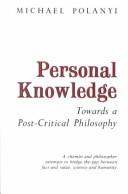
by Michael Polanyi
“Charles Koch references Michael Polanyi's *Personal Knowledge* to explain why behavioral rewiring requires sustained intensity over time, similar to physical training.”
Tools
“The Principle Companion app now uses a Socratic AI model to help 130,000 employees apply the 41 principles to real-time business problems.”
More from All-In with Chamath, Jason, Sacks & Friedberg
We summarize every new episode. Want them in your inbox?
AI Kills Everybody or Doomer Psyop? OpenAI's Math Breakthrough, Nike's $200B Collapse
GPT-6 Hits AGI? Tech Euphoria 2.0, SF Mansion Shortage, NYC Bans AI in Schools & Venezuela Oil Deal
Nvidia's Historic Quarter, SaaS Comeback, Bessent vs Druck, America's Debt Crisis, Cancer Vaccine
Eric Weinstein: The State of American Science, Breakthrough Coverups, and the Danger of Physics
Michael Kratsios: Trump's Science Agenda, Anti-Science Claims, Fauci's Damage, DEI & China
Similar Episodes
Related episodes from other podcasts

Masters of Scale
Sep 12
Rapid Response: On's 16-year overnight success: Zendaya, Federer, and outrunning competition

Odd Lots
Mar 30
Goldman CIO Marco Argenti on the Warp-Speed Improvements in AI

a16z Podcast
Feb 18
From Copilots to Agents: Rebuilding the Company Around AI

Decoder
Feb 9
Siemens CEO's mission to automate everything

The AI Breakdown
Dec 19
82% of Companies Are Seeing Positive AI ROI
Explore Related Topics
This podcast is featured in Best Tech Podcasts (2026) — ranked and reviewed with AI summaries.
Read this week's Investing & Markets Podcast Insights — cross-podcast analysis updated weekly.
You're clearly into All-In with Chamath, Jason, Sacks & Friedberg.
Every Monday, we deliver AI summaries of the latest episodes from All-In with Chamath, Jason, Sacks & Friedberg and 192+ other podcasts. Free for one show.
Start My Monday DigestNo credit card · Unsubscribe anytime