Q&A: Are AI Stocks About to Crater?
Episode
71 min
Read time
3 min
Topics
Productivity, Health & Wellness, Personal Finance
AI-Generated Summary
Key Takeaways
- ✓AI Bubble Assessment: Current AI investing differs fundamentally from the 2000 dot-com bubble because money flows to revenue-generating companies like Nvidia and Microsoft rather than unprofitable startups like pets.com. Fidelity research suggests AI stocks may experience slowdown rather than crash as the technology becomes ubiquitous across all industries, similar to how internet companies evolved from specialized category to standard business practice.
- ✓Dollar Cost Averaging Protection: Investors who bought S&P 500 at the March 2000 dot-com peak still achieved 7.5-8% annualized returns over 25 years. Regular paycheck investing spreads purchases across multiple time periods, meaning only a small slice buys at peak valuations while other contributions capture better prices. This mathematical reality makes market timing unnecessary and counterproductive for long-term wealth building.
- ✓All-Weather Portfolio Construction: Design asset allocation based on spending timeline and risk tolerance, not current market conditions. Simple approach combines total stock market, total bond market, and small international slice. Rebalance annually by buying underperforming assets or making new contributions to lagging categories. Best investment strategy involves minimal effort after initial setup, contradicting instinct that more activity produces better results.
- ✓Credit Card Survival Crisis: Living on credit cards with $28,000 debt across two 0% interest cards represents unsustainable situation requiring immediate income generation. Delaying Social Security from $1,049 monthly at 65 to $1,502 at 70 makes mathematical sense only if alternative income streams exist. Without sustainable income, all other financial decisions including portfolio optimization and home remodeling become irrelevant secondary concerns.
- ✓Rental Income Barriers: Housing shortage creates strong demand for affordable rooms, making vacancy a pricing or screening problem rather than market problem. Balance exists between rental price and occupancy rate—adjust pricing until applications flow, then apply consistent screening criteria including income requirements, credit scores, and background checks to all applicants equally. California tenant protections require careful screening upfront.
What It Covers
Paula Pant and Joe Saul-Sehy address whether AI stocks represent a bubble, examine health insurance options for entrepreneurs and small businesses, advise a listener living on credit cards with no income stream, and discuss starting a family business. They emphasize long-term investing strategies over market timing and the operational realities of entrepreneurship.
Key Questions Answered
- •AI Bubble Assessment: Current AI investing differs fundamentally from the 2000 dot-com bubble because money flows to revenue-generating companies like Nvidia and Microsoft rather than unprofitable startups like pets.com. Fidelity research suggests AI stocks may experience slowdown rather than crash as the technology becomes ubiquitous across all industries, similar to how internet companies evolved from specialized category to standard business practice.
- •Dollar Cost Averaging Protection: Investors who bought S&P 500 at the March 2000 dot-com peak still achieved 7.5-8% annualized returns over 25 years. Regular paycheck investing spreads purchases across multiple time periods, meaning only a small slice buys at peak valuations while other contributions capture better prices. This mathematical reality makes market timing unnecessary and counterproductive for long-term wealth building.
- •All-Weather Portfolio Construction: Design asset allocation based on spending timeline and risk tolerance, not current market conditions. Simple approach combines total stock market, total bond market, and small international slice. Rebalance annually by buying underperforming assets or making new contributions to lagging categories. Best investment strategy involves minimal effort after initial setup, contradicting instinct that more activity produces better results.
- •Credit Card Survival Crisis: Living on credit cards with $28,000 debt across two 0% interest cards represents unsustainable situation requiring immediate income generation. Delaying Social Security from $1,049 monthly at 65 to $1,502 at 70 makes mathematical sense only if alternative income streams exist. Without sustainable income, all other financial decisions including portfolio optimization and home remodeling become irrelevant secondary concerns.
- •Rental Income Barriers: Housing shortage creates strong demand for affordable rooms, making vacancy a pricing or screening problem rather than market problem. Balance exists between rental price and occupancy rate—adjust pricing until applications flow, then apply consistent screening criteria including income requirements, credit scores, and background checks to all applicants equally. California tenant protections require careful screening upfront.
- •Entrepreneurship Reality Check: E-Myth framework reveals most small businesses fail because founders focus on craft (baking pies) rather than systems, processes, and operations. Successful business requires project management software, standard operating procedures, team building, and organizational charts. Lean Startup methodology recommends creating minimum viable product with few features, testing with real customers, and iterating based on actual demand rather than assumptions.
Notable Moment
Julie Wainwright led pets.com through one of history's most publicized business disasters during the dot-com crash, yet later founded The RealReal, a highly successful luxury consignment company. Her trajectory demonstrates that entrepreneurial defeats need not define careers, and failure in one venture can precede massive success in another, making her story particularly relevant for aspiring entrepreneurs facing setbacks.
Episode Transcript
Hey, Joe. Look what I got. Bubbles. Bubbles. For those of you listening via audio, I am literally blowing bubbles right now. And you know why? I don't know. Because it's, because it's a celebration. Because it's a celebration, but also because everyone wants to know, is this a bubble? Is this an AI bubble? Okay. I didn't see that coming. And by the way, it may be an AI bubble because I I shouldn't admit this, but this isn't even me. I just sent my AI personality along today. Oh, this is AI Joe? This is AI Joe. Chat GP Joe. Real real Joe can't be bothered. Alright. So we're going to tackle the question today. Are we in an AI bubble? What should investors, particularly new investors, what should they do? How should they be thinking? You know, the start of the year is when a lot of new people begin investing. People who set the New Year's resolution of this is the year I'm gonna finally max out my Roth IRA. This is the year that I'm finally going to hit my four zero one k match. Like, a lot of people set New Year's resolutions, so this is a a new investor time of year, and we're gonna dive right in by talking about that. We're also going to answer a question about health insurance. We're gonna answer a question about starting a business that your kids can work in, and we are going to answer a question from a woman who is living off of credit cards and wondering what she should do. We're gonna do all that in one episode. We got a lot of ground to cover, Joe. Welcome to the Afford Anything podcast, the show that knows you can afford anything, not everything. This show covers five pillars, financial psychology, increasing your income, investing, real estate, and entrepreneurship. It's double I fire. I'm your host, Paula Pant. I trained in economic journalism at Columbia. Every other episode ish, I answer questions from you, and I do so with my buddy, the former financial planner, Joe Salcihi. What's up, Joe? Hey, Paula. You know how you make a Kleenex dance? How? You put a little boogie in it. No. And with that, we go to our first question, which Oh, come on. From Rachel. Hi, Paul and Joe. Longtime listener here, and I have a question about the supposed impending AI bubble since so much of the stock market is dominated by it. I know you've talked a bit about portfolio allocation, but I'm curious if I need to be a bit more proactive with my index fund selections to have maybe a little bit more diversity, etcetera. I'm still pretty new to the stock market. So, yeah, any hope would be great. Thanks. Rachel, welcome to the stock market. I am so glad that you are a new investor, and I want to start by inviting you to consider that are we …
Get the full transcript (13,041 words) + summary by email — free
One-time email with the complete transcript and AI summary of this episode. No account needed.
One email, no spam. We’ll also show you what SignalCast does.

You just read a 3-minute summary of a 68-minute episode.
Get Afford Anything summarized like this every Monday — plus up to 2 more podcasts, free.
Pick Your Podcasts — FreeKeep Reading
More from Afford Anything
3 Million Americans Got Rich From Boring Businesses. Here's How, with Owen Zidar & Eric Zwick
Oct 23 · 93 min

Stacking Benjamins
Love It or Leave It: Financial Edition (SB1803)
Feb 13
More from Afford Anything
Q&A: $1 Million Invested, $100K a Year to Live On. Do We Ever Need to Save Again?
Oct 20 · 57 min
Stacking Benjamins
The Worst Money Advice Ever (Episode 1800!)
Feb 6
Books, tools, and gear mentioned in this episode
SignalCast may earn commission on purchases via these links. As an Amazon Associate, SignalCast earns from qualifying purchases.
Books
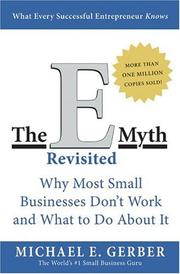 The E-MythRecommended
“E-Myth framework reveals most small businesses fail because founders focus on craft (baking pies) rather than systems, processes, and operations.”
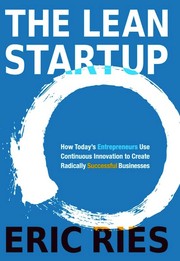 The Lean StartupRecommended
“Lean Startup methodology recommends creating minimum viable product with few features, testing with real customers, and iterating based on actual demand rather than assumptions.”
Tools
“Sponsors: Wayfair (wayfair.com)”
“Sponsors: Grammarly (grammarly.com)”
“Sponsors: Policygenius (policygenius.com)”
“Sponsors: Ava (ava app)”
“Sponsors: Indeed (indeed.com/paula)”
“Sponsors: Mint Mobile (mintmobile.com/paula)”
course
“Sponsors: Masterclass (masterclass.com/afford)”
More from Afford Anything
We summarize every new episode. Want them in your inbox?
3 Million Americans Got Rich From Boring Businesses. Here's How, with Owen Zidar & Eric Zwick
Q&A: $1 Million Invested, $100K a Year to Live On. Do We Ever Need to Save Again?
My Bank Account Hit Zero ... Then I Got Rich -- with Jaspreet Singh of Minority Mindset
My Bank Account Hit Zero ... Then I Got Rich -- with Jaspreet Singh of Minority Mindset
Q&A: "I’m 26 and No Longer Motivated by Money. Am I Unemployable?”
Similar Episodes
Related episodes from other podcasts

Stacking Benjamins
Feb 13
Love It or Leave It: Financial Edition (SB1803)
Stacking Benjamins
Feb 6
The Worst Money Advice Ever (Episode 1800!)

We Study Billionaires
Jun 21
TIP825: Meta, Adobe, Booking Holdings w/ Stig Brodersen, Tobias Carlisle & Hari Ramachandra

Investing for Beginners
Apr 16
A Contrarian Take on AI: Is It Time to Buy Software Stocks?
Stacking Benjamins
Mar 16
The One About 401k Loans (and How To Stay Away From Them) SB1816
Explore Related Topics
This podcast is featured in Best Finance Podcasts (2026) — ranked and reviewed with AI summaries.
Read this week's Health & Longevity Podcast Insights — cross-podcast analysis updated weekly.
You're clearly into Afford Anything.
Every Monday, we deliver AI summaries of the latest episodes from Afford Anything and 192+ other podcasts. Free for one show.
Start My Monday DigestNo credit card · Unsubscribe anytime