How NOT to Invest, with Barry Ritholtz
Episode
79 min
Read time
2 min
Topics
Personal Finance, Investing, Startups
AI-Generated Summary
Key Takeaways
- ✓Stock picking futility: Research from Henry Bessenbinder at Arizona State University shows only 2% of stocks create all market value. Rather than attempting to identify winners from 3,500 publicly traded companies, investors should use broad market index funds that self-adjust by market capitalization to capture returns.
- ✓Process over outcomes: Evaluate investment decisions based on sound methodology, not results. A statistically correct fourth-down conversion that fails remains the right call. Avoid outcome bias by thinking probabilistically about ranges of possibilities rather than making binary predictions about market direction or timing.
- ✓Emotional control determines success: Neurologist William Bernstein identifies managing the amygdala's fight-or-flight response as critical to investment success. Risk aversion makes losses feel twice as painful as equivalent gains. Investors must create written plans during calm periods specifying exact conditions for portfolio changes, excluding market volatility.
- ✓Context-free numbers mislead: Denominator blindness creates false narratives. A 10,000-person layoff means different things at Walmart versus a 25,000-employee regional company. The claim that groceries increased from $20 to $75 since 1990 ignores that wages rose proportionally, making the comparison meaningless without income context.
- ✓Tax optimization multiplies returns: Mega Roth backdoor conversions allow traditional 401k holders to pay taxes now and convert to tax-free growth. Multiple account types (401k, IRA, 403b, 529, HSA) provide flexibility for tax-loss harvesting and strategic withdrawals. After-tax returns, not gross performance, determine actual wealth accumulation.
What It Covers
Barry Ritholtz, founder of Ritholtz Wealth Management, explains common investing mistakes across three categories: bad ideas, bad numbers, and bad behavior. He predicted the 2008 crisis and shares strategies for avoiding portfolio-destroying errors.
Key Questions Answered
- •Stock picking futility: Research from Henry Bessenbinder at Arizona State University shows only 2% of stocks create all market value. Rather than attempting to identify winners from 3,500 publicly traded companies, investors should use broad market index funds that self-adjust by market capitalization to capture returns.
- •Process over outcomes: Evaluate investment decisions based on sound methodology, not results. A statistically correct fourth-down conversion that fails remains the right call. Avoid outcome bias by thinking probabilistically about ranges of possibilities rather than making binary predictions about market direction or timing.
- •Emotional control determines success: Neurologist William Bernstein identifies managing the amygdala's fight-or-flight response as critical to investment success. Risk aversion makes losses feel twice as painful as equivalent gains. Investors must create written plans during calm periods specifying exact conditions for portfolio changes, excluding market volatility.
- •Context-free numbers mislead: Denominator blindness creates false narratives. A 10,000-person layoff means different things at Walmart versus a 25,000-employee regional company. The claim that groceries increased from $20 to $75 since 1990 ignores that wages rose proportionally, making the comparison meaningless without income context.
- •Tax optimization multiplies returns: Mega Roth backdoor conversions allow traditional 401k holders to pay taxes now and convert to tax-free growth. Multiple account types (401k, IRA, 403b, 529, HSA) provide flexibility for tax-loss harvesting and strategic withdrawals. After-tax returns, not gross performance, determine actual wealth accumulation.
Notable Moment
Ritholtz reveals his 2008 crisis prediction came not from Wall Street expertise but from childhood dinner conversations with his real estate agent mother. This led him to examine mortgage securitization, a niche market few analysts monitored, demonstrating how unconventional perspectives identify risks others miss.
Episode Transcript
Today's guest, Barry Ritholtz, became famous for spotting the two thousand and eight financial crisis before almost anyone else did. He was warning about it publicly before people were talking about it, but it wasn't because he was some Wall Street genius. It was because, as he's about to share with us, his mom sold houses. And they had these dinner table conversations when he was a kid. And so he started looking into mortgages and securitization, and very few people at the time were paying attention to the securitization market. It was this quirky little backwater of finance. In today's interview, he shares that story with us and more broadly talks to us about how not to invest. Welcome to the Afford Anything podcast, the show that knows you can afford anything, not everything. The show covers five pillars, financial psychology, increasing your income, investing, real estate, and entrepreneurship. Acronym is FIRE with two i's, double I, FIRE. Today, we are talking about the second letter I, investing, specifically what not to do. I'm your host, Paula Pant. Our guest today, Barry Ritholtz, is the founder and chief investment officer of Ritholtz Wealth Management, a financial planning and asset management firm that manages over $5,000,000,000 of asset thunder management. In addition to correctly predicting the two thousand and eight crisis, he also, on Yahoo Television, became super bullish in March 2009, right at the bottom of the market. So he he called the market bottom. Financial Planning magazine referred to him as, quote, the prickly prophet of Wall Street. The Daily Beast referred to him as one of the 15 most important economic journalists. And The Huffington Post calls him, quote, one of the 25 most dangerous people in financial media. He formerly wrote columns for Bloomberg Opinion on the markets and investing and for the Washington Post on personal finance and investing. He's a former contributor to CNBC, a guest commentator on Bloomberg Television, and the creator and host of the Bloomberg podcast, Masters in Business. He holds a JD and used to be a lawyer. If you heard our previous interviews with Nick Majuli, Barry is Nick's boss. He has brilliant insights about the markets, and he just wrote a book called How Not to Invest. So to discuss that topic with us today, here he is, Barry Ritholtz. Hi, Barry. Hi. Thank you so much for having me. Thank you for being here. When we talk about how not to invest and when we focus on how not to make mistakes, could that have the effect of making us too conservative, too risk averse? Well, it depends. I mean, let's unpack a little bit of that. First, most of us spend a lot of our time trying to figure out how to invest, how to pick stocks, how to pick funds, how to allocate assets, where we should have our money, when we should pull our money out. And it turns out that as a species, …
Get the full transcript (12,857 words) + summary by email — free
One-time email with the complete transcript and AI summary of this episode. No account needed.
One email, no spam. We’ll also show you what SignalCast does.

You just read a 3-minute summary of a 76-minute episode.
Get Afford Anything summarized like this every Monday — plus up to 2 more podcasts, free.
Pick Your Podcasts — FreeKeep Reading
More from Afford Anything
3 Million Americans Got Rich From Boring Businesses. Here's How, with Owen Zidar & Eric Zwick
Oct 23 · 93 min

My First Million
Brutally honest guide to not losing money in the market
Jun 10
More from Afford Anything
Q&A: $1 Million Invested, $100K a Year to Live On. Do We Ever Need to Save Again?
Oct 20 · 57 min

We Study Billionaires
RWH071: Risk, Ruin, Reinvention & Resilience w/ Victor Haghani
Aug 9
Books, tools, and gear mentioned in this episode
SignalCast may earn commission on purchases via these links. As an Amazon Associate, SignalCast earns from qualifying purchases.
Books
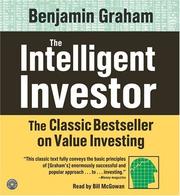
by Benjamin Graham
“Research from Henry Bessenbinder at Arizona State University shows only 2% of stocks create all market value. Rather than attempting to identify winners from 3,500 publicly traded companies, investors should use broad market index funds.”
other
“Barry Ritholtz, founder of Ritholtz Wealth Management, explains common investing mistakes across three categories: bad ideas, bad numbers, and bad behavior.”
More from Afford Anything
We summarize every new episode. Want them in your inbox?
3 Million Americans Got Rich From Boring Businesses. Here's How, with Owen Zidar & Eric Zwick
Q&A: $1 Million Invested, $100K a Year to Live On. Do We Ever Need to Save Again?
My Bank Account Hit Zero ... Then I Got Rich -- with Jaspreet Singh of Minority Mindset
My Bank Account Hit Zero ... Then I Got Rich -- with Jaspreet Singh of Minority Mindset
Q&A: "I’m 26 and No Longer Motivated by Money. Am I Unemployable?”
Similar Episodes
Related episodes from other podcasts

My First Million
Jun 10
Brutally honest guide to not losing money in the market

We Study Billionaires
Aug 9
RWH071: Risk, Ruin, Reinvention & Resilience w/ Victor Haghani

Alt Goes Mainstream
Mar 5
Stable Asset Management's Erik Serrano Berntsen - what it takes to build a great alternative asset management firm

Masters in Business
Feb 27
Financial Products for Hedging with Vest Co-Founder Jeff Chang
Masters in Business
Feb 19
At The Money: The Mega Backdoor Roth
Explore Related Topics
This podcast is featured in Best Finance Podcasts (2026) — ranked and reviewed with AI summaries.
Read this week's Investing & Markets Podcast Insights — cross-podcast analysis updated weekly.
You're clearly into Afford Anything.
Every Monday, we deliver AI summaries of the latest episodes from Afford Anything and 192+ other podcasts. Free for one show.
Start My Monday DigestNo credit card · Unsubscribe anytime