The Em Dash
Episode
39 min
Read time
2 min
Topics
Artificial Intelligence, Science & Discovery, History
AI-Generated Summary
Key Takeaways
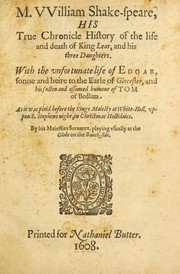
- ✓Historical punctuation evolution: Italian scholar Boncompagno da Signa created the virgula plana horizontal dash in the eleventh century as a sentence-ending mark. Shakespeare's First Folio extensively used dashes to indicate speech interruptions and character thought patterns in plays like King Lear, establishing theatrical conventions that persist in modern stage writing and demonstrating early flexibility in punctuation rules.
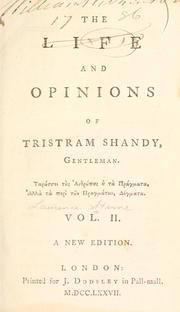
- ✓Novel realism techniques: Eighteenth-century novelists like Laurence Sterne in Tristram Shandy (1759) deployed dashes to create stream-of-consciousness narratives and censor sensitive content with first-letter-plus-dashes formatting. Jane Austen used this technique in Pride and Prejudice to redact military regiment names, adding perceived authenticity to fictional stories while titillating readers with hidden meanings requiring careful interpretation.
- ✓Peak usage statistics: Dash usage exploded in nineteenth-century English literature, with Oliver Twist containing one dash every 224 words, Moby Dick one per 129 words, and Jane Eyre one per 90 words. Emily Dickinson wrote 1,800 poems with thousands of dashes, though her first posthumous collection editors removed 1,099 of 1,151 dashes to make work more readable for 1890s audiences.
- ✓AI training data theory: Large language models likely adopted excessive em dash usage between November 2022 and July 2024 when companies like Anthropic expanded training beyond web data to include millions of destructively scanned print books from the late 1800s and early 1900s. Court documents revealed this process involved physically cutting book bindings to digitize classic literature containing period-appropriate high dash frequency.
- ✓Human-proof alternative solution: Sydney agency Cocogun created the am dash, a curved variant resembling a mustache, available through downloadable fonts Times New Human and A Real. Users type am-hyphen to insert the mark, which remains statistically improbable for language models to generate due to extreme scarcity in training data, offering symbolic resistance to AI-generated text while maintaining punctuation functionality.
What It Covers
The em dash punctuation mark faces modern stigma as an AI writing indicator, despite its 500-year literary history from Shakespeare to Emily Dickinson. The episode traces how this versatile mark evolved from Elizabethan theater through nineteenth-century novels, why large language models overuse it, and introduces the am dash as a human-proof alternative.
Key Questions Answered
- •Historical punctuation evolution: Italian scholar Boncompagno da Signa created the virgula plana horizontal dash in the eleventh century as a sentence-ending mark. Shakespeare's First Folio extensively used dashes to indicate speech interruptions and character thought patterns in plays like King Lear, establishing theatrical conventions that persist in modern stage writing and demonstrating early flexibility in punctuation rules.
- •Novel realism techniques: Eighteenth-century novelists like Laurence Sterne in Tristram Shandy (1759) deployed dashes to create stream-of-consciousness narratives and censor sensitive content with first-letter-plus-dashes formatting. Jane Austen used this technique in Pride and Prejudice to redact military regiment names, adding perceived authenticity to fictional stories while titillating readers with hidden meanings requiring careful interpretation.
- •Peak usage statistics: Dash usage exploded in nineteenth-century English literature, with Oliver Twist containing one dash every 224 words, Moby Dick one per 129 words, and Jane Eyre one per 90 words. Emily Dickinson wrote 1,800 poems with thousands of dashes, though her first posthumous collection editors removed 1,099 of 1,151 dashes to make work more readable for 1890s audiences.
- •AI training data theory: Large language models likely adopted excessive em dash usage between November 2022 and July 2024 when companies like Anthropic expanded training beyond web data to include millions of destructively scanned print books from the late 1800s and early 1900s. Court documents revealed this process involved physically cutting book bindings to digitize classic literature containing period-appropriate high dash frequency.
- •Human-proof alternative solution: Sydney agency Cocogun created the am dash, a curved variant resembling a mustache, available through downloadable fonts Times New Human and A Real. Users type am-hyphen to insert the mark, which remains statistically improbable for language models to generate due to extreme scarcity in training data, offering symbolic resistance to AI-generated text while maintaining punctuation functionality.
Notable Moment
Portland journalist Brian Vance, who publishes weekly grocery deal newsletters for Stumptown Savings as his full-time job, faced Reddit accusations of using ChatGPT based solely on his em dash usage. The accusation cited extra-long dashes impossible to replicate on normal keyboards as evidence, forcing him to publicly defend his human authorship despite spending forty hours weekly manually visiting stores.
Episode Transcript
This is 99% Invisible. I'm Roman Mars. Last summer, despite his better judgment, Brian Vance found himself in a situation that, unfortunately, many of us have been in, An argument with some random person on Reddit. Which is probably not the best thing to do. You know, getting into getting into online fights is not a good use of anyone's time, and it's definitely not good for your blood pressure. Brian is a journalist based in Portland, Oregon who founded something called Stumptown savings. That is frequent 99 contributor, Will Aspinall. Stumptown savings is a website that covers local grocery deals. Every Thursday, Brian releases a newsletter where he helps his readers find the best food prices in the area. He read me a little snippet. Pantry through August 19, equal exchange chocolate bar, select varieties, $3.99 each. Annie's organic salad dressing select varieties two for eight. You can see this is pretty dry. Like, there's not a lot that I can do to make it intriguing to read. Once again, organic peanut butter select varieties $5.99 each. Yeah. I mean, I'm not under the guys that I'm gonna win, like, a Pulitzer prize in literature for this. It mightn't be Faulkner, but Brian takes a lot of pride in his work, including visiting grocery stores in person to find the hottest deals for his readers. Stumptown savings has become my full time job. Like, I spend forty hours a week doing this. Just trying to help people, like, have some say, have some power in what feels like a powerless struggle with, you know, corporate greed and inflation. As you can tell, Brian puts a lot of effort into Stumptown savings, so he was particularly miffed when a user on Reddit accused him of the ultimate sin, using ChatGPT to compose his newsletter. Brian didn't use AI, but it wasn't just the accusation itself that he found offensive. It was the evidence the Reddit user provided to support his allegation. A Reddit user accused me of using AI, pointing to my use of, quote, extra long em dashes that are not possible to replicate on a normal keyboard, end quote. So anyone who uses an em dash must be using AI, and that's just not the case. The reason why this Redditor believed Brian was using AI was because he he chose to use an em dash. The em dash, if you're not familiar, is a form of punctuation that looks like a horizontal bar in a sentence. It gets its name from its size, which is about the width of a capital m. Not to be confused with the hyphen or its persnickety cousin, the en dash, em dashes are incredibly versatile because they can replace commas, colons, semicolons, and parentheses. It's an odd thing to be a fan of an em dash, but I am a fan of it. It's a fun it's a fun piece punctuation. There's a group of people who understand it and appreciate …
Get the full transcript (6,472 words) + summary by email — free
One-time email with the complete transcript and AI summary of this episode. No account needed.
One email, no spam. We’ll also show you what SignalCast does.

You just read a 3-minute summary of a 36-minute episode.
Get 99% Invisible summarized like this every Monday — plus up to 2 more podcasts, free.
Pick Your Podcasts — FreeKeep Reading
More from 99% Invisible
100 Objects #21: Window from the House of D
Oct 23 · 37 min

Modern Wisdom
How TikTok Hijacked The Future Of Music - Nik Nocturnal - #1095
May 9
More from 99% Invisible
Audio Guide of the Imperfections of a Perfect Masterpiece
Oct 21 · 29 min

The AI Breakdown
What Gemini 4 Argon Is Actually Good For
Oct 14
Books, tools, and gear mentioned in this episode
SignalCast may earn commission on purchases via these links. As an Amazon Associate, SignalCast earns from qualifying purchases.
Books
by William Shakespeare
“Shakespeare's First Folio extensively used dashes to indicate speech interruptions and character thought patterns in plays like King Lear”
by Laurence Sterne
“Eighteenth-century novelists like Laurence Sterne in Tristram Shandy (1759) deployed dashes to create stream-of-consciousness narratives and censor sensitive content”
by Jane Austen
“Jane Austen used this technique in Pride and Prejudice to redact military regiment names, adding perceived authenticity to fictional stories”
by Charles Dickens
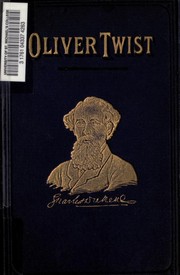
“Dash usage exploded in nineteenth-century English literature, with Oliver Twist containing one dash every 224 words”
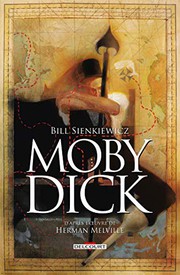
by Herman Melville
“Moby Dick one per 129 words, and Jane Eyre one per 90 words”
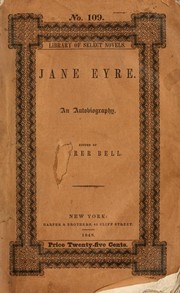
by Charlotte Brontë
“Moby Dick one per 129 words, and Jane Eyre one per 90 words”
Tools
by Cocogun
“Sydney agency Cocogun created the am dash, a curved variant resembling a mustache, available through downloadable fonts Times New Human and A Real”
by Cocogun
“Sydney agency Cocogun created the am dash, a curved variant resembling a mustache, available through downloadable fonts Times New Human and A Real”
newsletter
“Portland journalist Brian Vance, who publishes weekly grocery deal newsletters for Stumptown Savings as his full-time job”
More from 99% Invisible
We summarize every new episode. Want them in your inbox?
100 Objects #21: Window from the House of D
Audio Guide of the Imperfections of a Perfect Masterpiece
Tony Hawk's Real-Life Willy Wonka
The Problem With Football Helmets
(Not Just) Another Brick in the Wall
Similar Episodes
Related episodes from other podcasts

Modern Wisdom
May 9
How TikTok Hijacked The Future Of Music - Nik Nocturnal - #1095

The AI Breakdown
Oct 14
What Gemini 4 Argon Is Actually Good For

Software Engineering Daily
Oct 8
Steve Jobs in Exile

Stuff You Should Know
Oct 3
Selects: How Bras Work

All-In with Chamath, Jason, Sacks & Friedberg
Sep 17
Brad Gerstner: No AI Bubble, Semis Eat the Nasdaq & AI's Take Off Problem
Explore Related Topics
Read this week's AI & Machine Learning Podcast Insights — cross-podcast analysis updated weekly.
You're clearly into 99% Invisible.
Every Monday, we deliver AI summaries of the latest episodes from 99% Invisible and 192+ other podcasts. Free for one show.
Start My Monday DigestNo credit card · Unsubscribe anytime