20VC: David Tisch on Why High Ownership and Concentration is BS | Why No Manager Actually Wants to Stay Small | Why Competing with the Mega Platforms is a Losing Game | Why the Lean Startup is a Fake?
Episode
76 min
Read time
3 min
Topics
Productivity, Relationships, Investing
AI-Generated Summary
Key Takeaways
- ✓Concentrated fund win rates: Managers running concentrated portfolios routinely claim 90% win rates on targeted deals, but the realistic figure is closer to 20%. To build a 30-company portfolio at 10% ownership each, a fund likely pitches 120–150 companies. This means the 30 that make it in are not necessarily the 30 the manager most wanted — adverse selection quietly shapes concentrated portfolios in ways firms rarely admit publicly.
- ✓Dilution math has changed: Early-stage investors historically modeled 12–20% dilution per subsequent round. Today's best companies raise Series B, C, and D rounds at 3–8% dilution. Compounded across multiple rounds, this preserves early-stage ownership far more than historical models assumed. Combined with outcome sizes expanding from $1B targets to $10B+ as baseline expectations, smaller entry checks can still generate fund-returning economics.
- ✓Lean Startup methodology was counterproductive: The decade-long cultural emphasis on capital efficiency sent founders the wrong signal. Every venture-scale company ultimately requires substantial capital. The distinction between "lean" and "well-funded" is not discipline — undisciplined spending and adequate funding are separate variables. Founders who internalized lean thinking often under-resourced companies at precisely the moments when capital deployment would have accelerated compounding growth.
- ✓Pro rata rights protect founders, not just investors: Having pro rata rights in legal documents gives founders negotiating leverage when multistage firms demand 20%+ ownership in follow-on rounds. A founder can point to existing pro rata obligations to push back on dilutive term sheets. The right to invest in subsequent rounds is earned through founder relationships regardless of documentation — but documentation creates structural leverage during cap table negotiations.
- ✓Decision-making culture at Box Group: The firm prohibits negative deal feedback from partners who haven't met the founders directly. No voting occurs — one partner must affirmatively champion a deal for it to proceed. At seed stage, identifying failure modes is trivial and irrelevant since 70–90% of companies fail anyway. The analytical edge comes from identifying why something will work, not cataloguing why it won't.
What It Covers
David Tisch of Box Group challenges core venture orthodoxies across a 76-minute conversation with Harry Stebbings: why concentrated ownership models are mathematically flawed, why the Lean Startup methodology misled founders for a decade, and how Box Group built a $275M seed fund investing in ~150 companies — including early Cursor, Clay, and Rogo — without chasing ownership percentages.
Key Questions Answered
- •Concentrated fund win rates: Managers running concentrated portfolios routinely claim 90% win rates on targeted deals, but the realistic figure is closer to 20%. To build a 30-company portfolio at 10% ownership each, a fund likely pitches 120–150 companies. This means the 30 that make it in are not necessarily the 30 the manager most wanted — adverse selection quietly shapes concentrated portfolios in ways firms rarely admit publicly.
- •Dilution math has changed: Early-stage investors historically modeled 12–20% dilution per subsequent round. Today's best companies raise Series B, C, and D rounds at 3–8% dilution. Compounded across multiple rounds, this preserves early-stage ownership far more than historical models assumed. Combined with outcome sizes expanding from $1B targets to $10B+ as baseline expectations, smaller entry checks can still generate fund-returning economics.
- •Lean Startup methodology was counterproductive: The decade-long cultural emphasis on capital efficiency sent founders the wrong signal. Every venture-scale company ultimately requires substantial capital. The distinction between "lean" and "well-funded" is not discipline — undisciplined spending and adequate funding are separate variables. Founders who internalized lean thinking often under-resourced companies at precisely the moments when capital deployment would have accelerated compounding growth.
- •Pro rata rights protect founders, not just investors: Having pro rata rights in legal documents gives founders negotiating leverage when multistage firms demand 20%+ ownership in follow-on rounds. A founder can point to existing pro rata obligations to push back on dilutive term sheets. The right to invest in subsequent rounds is earned through founder relationships regardless of documentation — but documentation creates structural leverage during cap table negotiations.
- •Decision-making culture at Box Group: The firm prohibits negative deal feedback from partners who haven't met the founders directly. No voting occurs — one partner must affirmatively champion a deal for it to proceed. At seed stage, identifying failure modes is trivial and irrelevant since 70–90% of companies fail anyway. The analytical edge comes from identifying why something will work, not cataloguing why it won't.
- •Secondary sales timing: Selling early in a company's lifecycle leaves the most money on the table because the largest valuation multiples compound at the end — moving from $2B to $4B to $8B is structurally easier than zero to $1B. Founders taking secondary liquidity serves a different purpose: reducing cognitive overhead from personal financial stress, which can improve operational focus. These two decisions should not be treated as equivalent or linked.
Notable Moment
Harry Stebbings openly admitted on air that his years-long criticism of Box Group's low-ownership, diversified model was wrong. The correction came specifically because he failed to anticipate both the dramatic expansion in outcome sizes and the compression of dilution in later rounds — two structural shifts that made smaller entry checks economically viable.
Episode Transcript
I've never understood trying to compete head to head against who I would deem to be the best VCs in the world. Every concentrated manager will say that we win 90% of the deals we wanna win, and I think that's total BS. I think it's like 20%. I think the lean startup was a total fake. There's people to me right now, and this happens in hot market conditions that are playing a short game. I believe the right to invest in subsequent rounds is earned. I work for our LPs, and my customers are founders. We don't allow grenades at early stage. You're not allowed to throw a grenade on someone else's deal. This is 20 VC with me, Harry Stebbings. Now over years, me and David Tisch have done many shows, and I've always questioned his model. Low ownerships, very diverse portfolios. And you know what? I was wrong, and I was wrong on many different accounts. David has absolutely crushed it. Yes. He was an investor in Cursor from one of their earliest rounds to a $60,000,000,000 sale to mister Elon Musk and X. What an incredible outcome that was for David and Box returning the fund multiple times, but he's done it with so many companies from Base Ten to Clay to Rogo. David has crushed. He's one of the best early stage investors of our time. He's a true craftsman in a world where everyone has become a capital accumulation machine. David is one of the best. This was a phenomenal discussion, and I can't thank David enough for being so open. And in all honest, willing to go against the grain with some of the things he said today. I loved making this happen. But before we dive into the show today, what do Uber, Cursor, and Harvey have in common? Well, they made the really wise decision to build on Fireworks. Fireworks is the specialized intelligence platform behind many of the world's leading AI products. Companies use Fireworks to deploy the latest open models, specialize them with their own data, and run them in production with the speed and reliability modern AI applications demand. But getting models into production is only the beginning. As AI usage scales, the best model for one request isn't always the best model for the next. Well, that's where Fireworks Nexus comes in. Nexus connects to the AI coding tools and harnesses your engineers already use and intelligently routes each request to the best model for the job, helping you optimize for quality, latency, and cost without changing how your engineers work. To see intelligent model routing and practice, visit fireworks.ai/20vc to create a free account, and use the promo code two zero v c 50 to claim $50 in credits for 20 v c 50. While Fireworks powers AI, Laredon helps you measure its impact. Every company now runs two workforces, humans and AI agents. Laredon is the first unified dashboard across both workforces that measures …
Get the full transcript (13,889 words) + summary by email — free
One-time email with the complete transcript and AI summary of this episode. No account needed.
One email, no spam. We’ll also show you what SignalCast does.

You just read a 3-minute summary of a 73-minute episode.
Get 20VC (20 Minute VC) summarized like this every Monday — plus up to 2 more podcasts, free.
Pick Your Podcasts — FreeKeep Reading
More from 20VC (20 Minute VC)
20VC: Who Wins the Inference Market | Has Open-Source LLM Inference Peaked? | What Happens to the Cost of Compute | The Real Limits of Post-Training and RL with Erik Bernhardsson, Modal CEO
Nov 2 · 62 min

David Senra
Michael Ovitz, Co-founder of CAA
Aug 9
More from 20VC (20 Minute VC)
20VC: Anthropic Files S1 Ahead of $2TRN IPO | Instinct's Rumoured $30 Billion Fundraise | Microsoft Laysoff 27,000 While Meta Taps Equity Markets for $95 Billion Capex Spending Spree
Oct 29 · 60 min

The Tim Ferriss Show
#873: David Allen — The Art of Getting Things Done (GTD) (Repost)
Jul 2
Books, tools, and gear mentioned in this episode
SignalCast may earn commission on purchases via these links. As an Amazon Associate, SignalCast earns from qualifying purchases.
Books
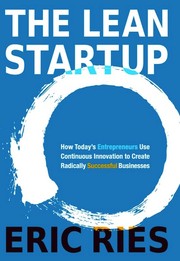
“The Lean Startup methodology misled founders for a decade... The decade-long cultural emphasis on capital efficiency sent founders the wrong signal... Founders who internalized lean thinking often under-resourced companies.”
More from 20VC (20 Minute VC)
We summarize every new episode. Want them in your inbox?
20VC: Who Wins the Inference Market | Has Open-Source LLM Inference Peaked? | What Happens to the Cost of Compute | The Real Limits of Post-Training and RL with Erik Bernhardsson, Modal CEO
20VC: Anthropic Files S1 Ahead of $2TRN IPO | Instinct's Rumoured $30 Billion Fundraise | Microsoft Laysoff 27,000 While Meta Taps Equity Markets for $95 Billion Capex Spending Spree
20VC: Satya Nadella on Open vs Closed Models: Who Wins | Whether to Trust Frontier Model Providers | Why Companies Need to Own Their Own Intelligence | The Importance of Verticalisation: From Chips to Models and More
20VC: Why Robotics Will be 100x Bigger than Coding Agents | Inference Will Be a $10TRN Market: What No One Sees | Why Software Investors are F***** Today with Naveen Rao, Unconventional
20VC: Trillion or Bust: The New VC Game | Coreweave Sell-Off Creates Panic | Town at $1B, Anduril at $90B: Revenue Multiples Out of Control | General Atlantic Eyes IPO & Modal Raises $750M at $15.75B
Similar Episodes
Related episodes from other podcasts

David Senra
Aug 9
Michael Ovitz, Co-founder of CAA

The Tim Ferriss Show
Jul 2
#873: David Allen — The Art of Getting Things Done (GTD) (Repost)

a16z Podcast
May 29
Why $1B Exits are Dead
David Senra
May 24
The Simple Genius of Rick Rubin

The Jordan Harbinger Show
May 4
1321: David Royce | The Blue-Collar Advantage in the AI Era (Bonus)
Explore Related Topics
This podcast is featured in Best Investing Podcasts (2026) — ranked and reviewed with AI summaries.
Read this week's Investing & Markets Podcast Insights — cross-podcast analysis updated weekly.
You're clearly into 20VC (20 Minute VC).
Every Monday, we deliver AI summaries of the latest episodes from 20VC (20 Minute VC) and 192+ other podcasts. Free for one show.
Start My Monday DigestNo credit card · Unsubscribe anytime