A Zen Handbook for Sanity in an Era of Uncertainty | Jiryu Rutschman-Byler
Episode
77 min
Read time
2 min
Topics
Health & Wellness, Philosophy & Wisdom, Science & Discovery
AI-Generated Summary
Key Takeaways
- ✓Zazen breath counting technique: Count each exhale from one to ten, returning to one whenever distracted. The key practice is returning with gratitude rather than self-criticism, creating moments of full presence regardless of how much time passes between them.
- ✓Eyes-open meditation rationale: Zen practice keeps eyes open during sitting to prevent withdrawing into a separate inner state. This maintains intimacy with surroundings and trains practitioners to be present with life as it unfolds, not escape into deep internal experiences.
- ✓Hara-centered breathing: Breathe naturally into the lower belly, south of the navel, where relaxed breathing naturally occurs. Take two to three deep breaths initially to reset the body, then allow natural breathing to anchor attention in embodied presence.
- ✓Problem-solving through presence: Big problems require a bigger self to hold them. Quieting the dualistic mind and including all contradictions in spacious awareness creates ground for intuitive wisdom, which often produces better decisions than analytical thinking alone can generate.
- ✓Intimacy as non-separation: Everything appearing in your life is your life, not separate objects invading your space. This shift from me-versus-world to inclusive awareness reduces resistance to reality and enables more appropriate, spontaneous responses to situations as they arise.
What It Covers
Zen priest Jiryu Rutschman-Byler explains Shunryu Suzuki's teachings on handling life's problems through embodied meditation practice, softening the dualistic mind, and cultivating intimacy with present experience rather than seeking solutions through mental analysis alone.
Key Questions Answered
- •Zazen breath counting technique: Count each exhale from one to ten, returning to one whenever distracted. The key practice is returning with gratitude rather than self-criticism, creating moments of full presence regardless of how much time passes between them.
- •Eyes-open meditation rationale: Zen practice keeps eyes open during sitting to prevent withdrawing into a separate inner state. This maintains intimacy with surroundings and trains practitioners to be present with life as it unfolds, not escape into deep internal experiences.
- •Hara-centered breathing: Breathe naturally into the lower belly, south of the navel, where relaxed breathing naturally occurs. Take two to three deep breaths initially to reset the body, then allow natural breathing to anchor attention in embodied presence.
- •Problem-solving through presence: Big problems require a bigger self to hold them. Quieting the dualistic mind and including all contradictions in spacious awareness creates ground for intuitive wisdom, which often produces better decisions than analytical thinking alone can generate.
- •Intimacy as non-separation: Everything appearing in your life is your life, not separate objects invading your space. This shift from me-versus-world to inclusive awareness reduces resistance to reality and enables more appropriate, spontaneous responses to situations as they arise.
Notable Moment
Rutschman-Byler describes how ungrounded spiritual practices worsened his mental health until discovering Zen's embodied approach. The tradition's focus on physical tasks like sweeping leaves and holding teacups provided grounding that cosmic spirituality lacked, offering both vastness and practical presence.
Episode Transcript
Hearing a voice can change everything. So AT and T wants everyone to gift their voice to loved ones this holiday season because that conversation is a chance to say something they'll hear forever. AT and T, connecting changes everything. This is the Ten Percent Happier podcast. I'm Dan Harris. Hello, everybody. How we doing? My whole life, going back to when I was a kid, I can remember always feeling like I have some problem or set of problems that I've got to deal with. The subconscious lie I've always told myself is that as soon as I get whatever problem is currently on my plate off my plate, everything will be great. The Elysian fields in perpetuity. But as my friend and teacher, Joseph Goldstein, often says, if it's not one thing, it's another. We're always gonna have problems. The question is, how do you deal with them effectively? Today, we're gonna get the Zen recipe for handling all of life's inevitable problems. My guest is Jirio Rushman Byler, a So to Zen Buddhist priest and teacher. He is the co abbot of the San Francisco Zen Center and the abiding abbot of the Green Gulch Farm Zen Center. He recently edited a book of teachings by his root teacher, the legendary Zen master, Shunryu Suzuki. Shunryu Suzuki was one of the most influential spiritual teachers of the twentieth century. He was a founding father of Zen in America, a fascinating dude, and you'll learn a little bit more about him. Other topics we hit in the interview include what is Zen, how to work with your day to day problems from a Zen perspective, how to soften the mind, whether to meditate with your eyes open or closed, what it really means to become one with everything, why life is not something to be figured out, the connection between the oft misunderstood concept of allowing and being more effective in your life, The concept and practice of faith and the magic of the universe. If softening your mind and becoming one with everything sounds interesting but esoteric, you really should check out our latest meditation, which drops today from my friend Jeff Warren, who's our teacher of the month over on danharris.com. It's all about how practically to actually relax the mind and body and connect to everything that's happening all around you. You can access it by signing up over at danharris.com. If you sign up, you'll also get invited to our weekly live meditation and Q and A sessions every Tuesday at four. Danharris.com, check it out. Okay, we'll get started with Jirio Rushman Byler right after this. I'm a big worker outer, and I've been wearing this new brand or at least new to me recently, Fabletics. They're, a sponsor on this show and sent me some stuff. I love this stuff. I'm wearing it all the time. I'm gonna work out actually after I record this ad, and I'm gonna put on some …
Get the full transcript (15,793 words) + summary by email — free
One-time email with the complete transcript and AI summary of this episode. No account needed.
One email, no spam. We’ll also show you what SignalCast does.

You just read a 3-minute summary of a 74-minute episode.
Get 10% Happier with Dan Harris summarized like this every Monday — plus up to 2 more podcasts, free.
Pick Your Podcasts — FreeKeep Reading
More from 10% Happier with Dan Harris
Neal Brennan On: Talking Back to Your Inner Critic, Why Chasing Validation Doesn't Work, and His Harrowing Psychedelic Journeys
Sep 11 · 58 min

ZOE Science & Nutrition
Recap: How exercise slows brain ageing | Dr Wendy Suzuki
Feb 17
More from 10% Happier with Dan Harris
Top 10 Practices for Resetting Your Time, Space, Body, Inner Critic, and Social Life | Laurie Santos and Gretchen Rubin
Sep 9 · 62 min

Feel Better, Live More
BITESIZE | Do This Every Day to Reduce Anxiety and Boost Your Mood, Energy & Focus | Dr Wendy Suzuki #612
Jan 16
Books, tools, and gear mentioned in this episode
SignalCast may earn commission on purchases via these links. As an Amazon Associate, SignalCast earns from qualifying purchases.
Books
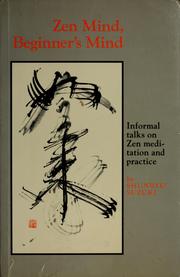 Zen Mind, Beginner's MindBy guest
by Shunryu Suzuki
“Zen priest Jiryu Rutschman-Byler explains Shunryu Suzuki's teachings on handling life's problems through embodied meditation practice, softening the dualistic mind, and cultivating intimacy with present experience.”
More from 10% Happier with Dan Harris
We summarize every new episode. Want them in your inbox?
Neal Brennan On: Talking Back to Your Inner Critic, Why Chasing Validation Doesn't Work, and His Harrowing Psychedelic Journeys
Top 10 Practices for Resetting Your Time, Space, Body, Inner Critic, and Social Life | Laurie Santos and Gretchen Rubin
The Science Of Building The Life You Want | Arthur Brooks
The Psychology Of Success | Guy Raz
When Life's Not Working, Don't Try Harder. Change Your Situation Instead. | Angela Duckworth
Similar Episodes
Related episodes from other podcasts

ZOE Science & Nutrition
Feb 17
Recap: How exercise slows brain ageing | Dr Wendy Suzuki

Feel Better, Live More
Jan 16
BITESIZE | Do This Every Day to Reduce Anxiety and Boost Your Mood, Energy & Focus | Dr Wendy Suzuki #612

Huberman Lab
Jan 15
Essentials: Tools to Boost Attention & Memory | Dr. Wendy Suzuki

The Futur
Dec 25
Building Your Client Dream Team w/ Daniel Priestley | Recast
Explore Related Topics
This podcast is featured in Best Health Podcasts (2026) — ranked and reviewed with AI summaries.
Read this week's Health & Longevity Podcast Insights — cross-podcast analysis updated weekly.
You're clearly into 10% Happier with Dan Harris.
Every Monday, we deliver AI summaries of the latest episodes from 10% Happier with Dan Harris and 192+ other podcasts. Free for one show.
Start My Monday DigestNo credit card · Unsubscribe anytime