




How the Ex-Goldman CEO actually invests his own money
My First MillionAI Summary
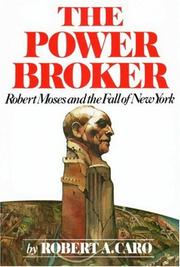
→ WHAT IT COVERS Former Goldman Sachs CEO Lloyd Blankfein discusses his personal investment approach — 98% equities, concentrated in big tech, with daily active trading — alongside lessons on luck versus skill in elite careers, wealth psychology rooted in poverty, the Warren Buffett $5B handshake deal during the 2008 crisis, and why reading history outperforms any market research. → KEY INSIGHTS - **Portfolio Construction:** Blankfein holds 98% in equities, split roughly 75-90% in individual stocks and 10-25% in ETFs, with heavy concentration in large-cap tech hyperscalers like Google, Microsoft, and NVIDIA, plus select second-tier names like Oracle. He maintains only 1% in index funds or bonds. For non-professionals, he recommends the inverse — 90% broad index ETFs like VOO, with a smaller tech-tilted ETF allocation for added sector exposure. - **Active Trading as a Hobby:** Blankfein trades daily on an iPad and phone, monitoring markets as background noise throughout the day. He justifies this by citing four decades of professional trading experience and the fact that losses cannot materially affect his lifestyle. The key distinction: active trading is only rational when you have deep domain expertise AND financial resilience to absorb losses without behavioral panic or life disruption. - **Skill vs. Luck in Elite Careers:** The margin separating top performers from those who fail is smaller than most assume — comparable to a one-stroke golf tournament victory. Winner-take-all markets amplify tiny skill differences into enormous outcome gaps. Blankfein credits becoming Goldman CEO partly to his predecessor's Treasury appointment. Acknowledging luck's role while maintaining rigorous preparation is the realistic framework for evaluating career outcomes. - **Risk Aversion as a Wealth Trap:** As individuals and institutions accumulate wealth, they shift from growth-seeking to loss-avoidance — what Blankfein calls "conserving." He observed this inside Goldman post-2008, where gun-shy partners talked themselves out of viable opportunities. The antidote is recognizing that refusing all risk guarantees stagnation. Good risk managers must sometimes actively encourage risk-taking, not just suppress it, to maintain organizational forward momentum. - **Reputation as Binding Contract:** In trading markets, most transactions execute without written documentation — bonds are bought and sold on verbal agreement, with settlement two days later. Trust and reputation function as enforceable contracts because violating them ends careers permanently. The Buffett-Goldman $5B preferred stock deal during the 2008 crisis was structured on a phone call, with Buffett's only written request being a verbal commitment that Goldman wouldn't sell shares before he did. - **History as Investor Education:** Blankfein recommends history over financial analysis for developing investor judgment, specifically because historical patterns rhyme with current market cycles without repeating exactly. He cites Barbara Tuchman's *Guns of August* — about how WWI mobilization became unstoppable — as a model for understanding momentum-driven market vortexes. Rereading Robert Caro's *The Power Broker* decades apart revealed how personal experience changes the evaluation of achievement versus character flaws. → NOTABLE MOMENT During the 2008 financial crisis, Buffett committed $5 billion to Goldman Sachs in a phone call, declining any due diligence. When Blankfein pushed to disclose his concerns first, Buffett responded that Blankfein worried enough for both of them — then noted the sum represented less than a bad East Coast hurricane for Berkshire's insurance operations. 💼 SPONSORS [{"name": "HubSpot", "url": "https://hubspot.com"}, {"name": "Hampton", "url": "https://joinhampton.com"}] 🏷️ Portfolio Strategy, Active Trading, Goldman Sachs, 2008 Financial Crisis, Wealth Psychology, Investing Philosophy


