Brené and Adam on What They Will Never Agree On | from The Curiosity Shop with Brené Brown and Adam Grant
Episode
58 min
Read time
2 min
Topics
Career Growth, Relationships, Leadership
AI-Generated Summary
Key Takeaways
- ✓Authenticity requires boundaries: Brown's definition of authenticity explicitly includes boundaries — "be yourself with people who've earned the right to see you, and share your story with people who've earned the right to hear it." Stripping that boundary clause from her work, as frequently happens in viral clips, inverts her actual message and makes vulnerability advice actively harmful in unsafe environments.
- ✓Armor in organizations signals leadership failure: When Brown conducts Dare to Lead interventions, she opens by asking employees with the least formal power why armor is required or rewarded there. Most CEOs exit the process at this stage. Leaders who stay discover that mandatory armor suppresses innovation, trust, and performance simultaneously — making it both a moral and strategic failure.
- ✓Asking for help builds trust faster than reliability does: Across surveys of over 10,000 leaders at organizations including the Gates Foundation, the behavior that most reliably increases a direct report's trust score is asking for help — not dependability or competence. Grant's COVID-era outreach to Brown, despite their conflict, exemplifies this dynamic and directly triggered their reconciliation.
- ✓Effective apology has a specific structure: Grant's repair process names the precise harm caused, acknowledges the gap between intention and impact, takes full ownership without deflection, and commits to a concrete course correction. Brown contrasts this with shame-bound family systems where admitting wrongdoing collapses into identity-level self-condemnation, blocking the adaptive guilt response that actually motivates behavioral change.
- ✓Elegant simplicity differs from ignorant simplicity: Drawing on Oliver Wendell Holmes — "for the simplicity on this side of complexity I wouldn't give a fig, but for the simplicity on the other side I would give anything" — Grant distinguishes naive reductions that strip nuance from elegant distillations that preserve it. Metaphor, story, and analogy are the primary tools for achieving the latter without losing accuracy.
What It Covers
Brené Brown and Adam Grant launch The Curiosity Shop podcast by revisiting their 2016 public LinkedIn dispute over authenticity, tracing how four years of mutual avoidance gave way to reconciliation, and identifying where their research-versus-lived-experience worldviews will likely never converge.
Key Questions Answered
- •Authenticity requires boundaries: Brown's definition of authenticity explicitly includes boundaries — "be yourself with people who've earned the right to see you, and share your story with people who've earned the right to hear it." Stripping that boundary clause from her work, as frequently happens in viral clips, inverts her actual message and makes vulnerability advice actively harmful in unsafe environments.
- •Armor in organizations signals leadership failure: When Brown conducts Dare to Lead interventions, she opens by asking employees with the least formal power why armor is required or rewarded there. Most CEOs exit the process at this stage. Leaders who stay discover that mandatory armor suppresses innovation, trust, and performance simultaneously — making it both a moral and strategic failure.
- •Asking for help builds trust faster than reliability does: Across surveys of over 10,000 leaders at organizations including the Gates Foundation, the behavior that most reliably increases a direct report's trust score is asking for help — not dependability or competence. Grant's COVID-era outreach to Brown, despite their conflict, exemplifies this dynamic and directly triggered their reconciliation.
- •Effective apology has a specific structure: Grant's repair process names the precise harm caused, acknowledges the gap between intention and impact, takes full ownership without deflection, and commits to a concrete course correction. Brown contrasts this with shame-bound family systems where admitting wrongdoing collapses into identity-level self-condemnation, blocking the adaptive guilt response that actually motivates behavioral change.
- •Elegant simplicity differs from ignorant simplicity: Drawing on Oliver Wendell Holmes — "for the simplicity on this side of complexity I wouldn't give a fig, but for the simplicity on the other side I would give anything" — Grant distinguishes naive reductions that strip nuance from elegant distillations that preserve it. Metaphor, story, and analogy are the primary tools for achieving the latter without losing accuracy.
Notable Moment
Grant reveals that every organization he visited over four years — when he asked who had the most positive impact — named Brown. His initial reaction was competitive frustration. Repeated exposure to that answer, combined with absorbing her research, gradually shifted his view before he ever contacted her directly.
Episode Transcript
Today's episode is sponsored by Your Next Dollar, a podcast from NerdWallet Wealth Partners. Most financial content out there focuses on the basics budgeting, paying off debt, building an emergency fund. But maybe you're past that stage and wondering what's next. When the question shifts from how do I save more to what should I actually do with what I have, that's where Your Next Dollar comes in. The podcast covers both sides of the equation, building wealth and spending intentionally on what actually matters to you, your family, and your future. Financial advisors from NerdWallet Wealth Partners join the show regularly to dig into the nuanced real world questions that everyday financial content just doesn't get into. If you want help getting more out of every dollar you earn, follow Your Next Dollar wherever you get your podcasts. Sponsored by Your Next Dollar, a podcast from NerdWallet Wealth Partners, an SEC registered investment advisor. This podcast is for informational purposes only and is not investment, tax, or legal advice. This episode is sponsored by Range Rover Sport. Life moves fast, and when the world around you feels like it's changing a mile a minute, you need a vehicle that helps you rise to the challenge. Dynamic by design, the Range Rover Sport combines ultimate luxury and unbridled agility for a powerful drive filled with the latest innovations to keep you and your vehicle connected. An elegant 13 inch touchscreen lets you seamlessly navigate and control vehicle systems. And interior refinements like heated seating with a massage function mean comfort and luxury for every journey. Every detail of the Range Rover Sport has been engineered for impact, and its uncompromising design commands attention wherever it goes. With a variety of unique colors, interior finishes, accessories, and even wheel options, the ways to personalize your Range Rover Sport are nearly unlimited. When your time to lead arrives, you need a vehicle that rises to meet it, the Range Rover Sport. Exclusive offers available now. Explore further at rangerover.com. This episode is brought to you by LinkedIn. Running a small business means every hire matters. A bad hire can cost you time, money, and momentum. A good hire, they can change everything. But finding great talent isn't easy, especially when you don't have the time or resources to sift through piles of resumes and find the right fit. That's why LinkedIn Build Hiring Pro, your new hiring partner that screens candidates for you. So instead of sorting through applications, you can spend your time talking to candidates and finding your next great hire. With Hiring Pro, you can hire with confidence, knowing you're getting the best talent for your business. In fact, LinkedIn found that its users are 24% less likely to need to reopen a role within twelve months compared to the leading competitor. Join the 2,700,000 small businesses using LinkedIn to hire. Get started by posting your job for free at linkedin.com/worklife. Terms and conditions apply. Hey, everyone. I'm excited …
Get the full transcript (11,467 words) + summary by email — free
One-time email with the complete transcript and AI summary of this episode. No account needed.
One email, no spam. We’ll also show you what SignalCast does.

You just read a 3-minute summary of a 55-minute episode.
Get WorkLife with Adam Grant summarized like this every Monday — plus up to 2 more podcasts, free.
Pick Your Podcasts — FreeKeep Reading
More from WorkLife with Adam Grant
How to say no | from WorkLife with Adam Grant
Sep 8 · 36 min

Dare to Lead with Brené Brown
Brené and Adam Grant on Rewarding Effort With Time
Oct 22
More from WorkLife with Adam Grant
How to help your people feel heard with Kaya Henderson
Sep 1 · 45 min
Dare to Lead with Brené Brown
Brené and Adam Grant on the Skillsets of Empathy
Oct 15
Books, tools, and gear mentioned in this episode
SignalCast may earn commission on purchases via these links. As an Amazon Associate, SignalCast earns from qualifying purchases.
Books
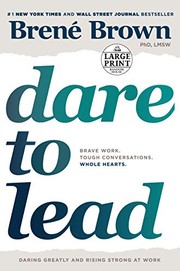 Dare to LeadBy guest
by Brené Brown
“When Brown conducts Dare to Lead interventions, she opens by asking employees with the least formal power why armor is required or rewarded there.”
More from WorkLife with Adam Grant
We summarize every new episode. Want them in your inbox?
How to say no | from WorkLife with Adam Grant
How to help your people feel heard with Kaya Henderson
How to find a peer group that lifts you up with Bill Gurley
Forget the corporate ladder — winners take risks with Molly Graham | from TED Talks Daily
Can AI make you a better manager? with Hilary Gridley
Similar Episodes
Related episodes from other podcasts

Dare to Lead with Brené Brown
Oct 22
Brené and Adam Grant on Rewarding Effort With Time
Dare to Lead with Brené Brown
Oct 15
Brené and Adam Grant on the Skillsets of Empathy
Dare to Lead with Brené Brown
Oct 8
Brené and Adam Grant on Empathy vs. Enmeshment
Dare to Lead with Brené Brown
Oct 1
Brené and Adam Grant on Time Scarcity, Asking Questions, and Pocket Presence
Dare to Lead with Brené Brown
Sep 24
Brené and Adam Grant on the Paradox Tug of War and Leadership Theater
Explore Related Topics
This podcast is featured in Best Business Podcasts (2026) — ranked and reviewed with AI summaries.
You're clearly into WorkLife with Adam Grant.
Every Monday, we deliver AI summaries of the latest episodes from WorkLife with Adam Grant and 192+ other podcasts. Free for one show.
Start My Monday DigestNo credit card · Unsubscribe anytime