Brené with Viola Davis on Being Brave, Speaking Truth, and Finding Me
Episode
58 min
Read time
2 min
Topics
Relationships, Science & Discovery
AI-Generated Summary
Key Takeaways
- ✓Representative self vs. authentic self: Davis describes sending a polished representative version of herself into professional spaces while her real self stayed home, creating constant anxiety about saying or doing the wrong thing that could ruin opportunities or relationships.
- ✓Thick skin costs connection: When advised to develop thicker skin against criticism, Davis discovered she became numb to everything—unable to feel love, joy, or vulnerability required for both acting and meaningful relationships. Translucent skin became her goal instead of armor.
- ✓Therapy as trailblazing guide: Davis frames therapists as guides who show you how to navigate life's labyrinth, similar to Joseph Campbell's concept of heroes who've gone before. Her first therapist asked if she'd be okay if nothing changed, unlocking self-acceptance.
- ✓Life as relay race with yourself: Davis reframes legacy not as passing a baton to others, but recognizing all versions of yourself—the six-year-old survivor, 14-year-old dreamer, 28-year-old trauma processor—are runners in your own race, each completing their leg successfully.
What It Covers
Brené Brown interviews Viola Davis about her memoir Finding Me, exploring childhood trauma, navigating Hollywood as a dark-skinned Black woman, therapy's transformative role, and choosing authentic self-expression over people-pleasing.
Key Questions Answered
- •Representative self vs. authentic self: Davis describes sending a polished representative version of herself into professional spaces while her real self stayed home, creating constant anxiety about saying or doing the wrong thing that could ruin opportunities or relationships.
- •Thick skin costs connection: When advised to develop thicker skin against criticism, Davis discovered she became numb to everything—unable to feel love, joy, or vulnerability required for both acting and meaningful relationships. Translucent skin became her goal instead of armor.
- •Therapy as trailblazing guide: Davis frames therapists as guides who show you how to navigate life's labyrinth, similar to Joseph Campbell's concept of heroes who've gone before. Her first therapist asked if she'd be okay if nothing changed, unlocking self-acceptance.
- •Life as relay race with yourself: Davis reframes legacy not as passing a baton to others, but recognizing all versions of yourself—the six-year-old survivor, 14-year-old dreamer, 28-year-old trauma processor—are runners in your own race, each completing their leg successfully.
Notable Moment
Davis reveals she removed and reinserted her abortion story from the manuscript repeatedly, recognizing women discuss sexual assault more readily than abortion. She chose to include it so women feel less alone with ambiguous, difficult choices.
Episode Transcript
Hi, everyone. I'm Brene Brown, and this is Unlocking Us. Have an incredible conversation for you today with none other than the amazing singular Viola Davis. Just what a you know, talking about tough and tender and brave and vulnerable, she's got a new memoir out called Finding Me. I just read that it'll debut at number one on the New York Times bestseller list, which is so exciting for her and so well deserved. We're gonna talk about the book. It is a very deep reflection that takes us on a journey through Viola's childhood, overcoming trauma, finding her voice, what it's like being in just a kind of brutal industry, to be honest with you, and just some some extraordinary experiences that have changed her. And because of who she is, they've, by turn, changed us. I am so glad you're here for this conversation. Before we go to our first break, I want to in case you don't know, I announced on Monday, and then we've gone off on social this week. I am, for the first time in my career, going on a very serious sabbatical this summer. We're also doing kind of a critical mass restoration and rest at Brene Brown Education Research, our company. And so we're going away for a few months. We are taking a hiatus with a podcast. We're going dark on social for four months. It's scary and it's weird, but I'm so driven by this idea. It's a quote that is often attributed to Viktor Frankl. No one really knows where it comes from, but I think Viktor Frankl's work is so represented in it that I'm choosing that. But it's got an interesting history. You can read more on brenebrown.com. But the quote is between stimulus and response, there is a space. And in that space, there's the power of choice. And with that choice comes freedom and learning. And so celebrating twenty six years sobriety this month, that's the first time I ever got a glimpse of that space between stimulus and response. And I'm gonna celebrate those twenty six years by reinvesting in the next twenty six with creating some space. So we'll be gone until September, but I'm so glad you're here for this conversation. At Criminal, we've made it a tradition every December to dedicate an episode entirely to animals who are really going for it. And Tony, what happened when you pulled over? Nothing out of the ordinary until I saw the cat on the back of the roof behind the luggage carrier. Listen to our fifth annual Animals episode on Criminal wherever you get your podcasts. Before we jump in, let me tell you a little bit about Viola. Not that you need it, but it's very interesting. She is a critically revered actress of film, television, and theater. She's won rave reviews for her multiple and substantial and intriguingly diverse roles. She has Oscar nominated performances in The Help, Doubt, Ma …
Get the full transcript (7,839 words) + summary by email — free
One-time email with the complete transcript and AI summary of this episode. No account needed.
One email, no spam. We’ll also show you what SignalCast does.

You just read a 3-minute summary of a 55-minute episode.
Get Unlocking Us summarized like this every Monday — plus up to 2 more podcasts, free.
Pick Your Podcasts — FreeKeep Reading
More from Unlocking Us
VP Kamala Harris on Courageous Leadership and Winning in 2024
Oct 28 · 61 min

WorkLife with Adam Grant
ReThinking: Brené Brown on courageous leadership
Sep 30
More from Unlocking Us
Grief, Laughter, and Sisterhood: Losing Our Mom and Holding On to Each Other
Oct 23 · 50 min

Dare to Lead with Brené Brown
Brené with Paul Leonardi and Tsedal Neeley on The Digital Mindset, Part 2 of 2
Dec 27
Books, tools, and gear mentioned in this episode
SignalCast may earn commission on purchases via these links. As an Amazon Associate, SignalCast earns from qualifying purchases.
Books
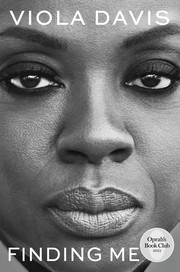
by Viola Davis
“Brené Brown interviews Viola Davis about her memoir Finding Me, exploring childhood trauma, navigating Hollywood as a dark-skinned Black woman, therapy's transformative role, and choosing authentic self-expression over people-pleasing.”
More from Unlocking Us
We summarize every new episode. Want them in your inbox?
VP Kamala Harris on Courageous Leadership and Winning in 2024
Grief, Laughter, and Sisterhood: Losing Our Mom and Holding On to Each Other
Dr. Heather Cox Richardson on Democracy Awakening: Notes on the State of America, Part 2 of 2
Dr. Heather Cox Richardson on Democracy Awakening: Notes on the State of America, Part 1 of 2
Dr. Mary Claire Haver on the New Menopause
Similar Episodes
Related episodes from other podcasts

WorkLife with Adam Grant
Sep 30
ReThinking: Brené Brown on courageous leadership

Dare to Lead with Brené Brown
Dec 27
Brené with Paul Leonardi and Tsedal Neeley on The Digital Mindset, Part 2 of 2
Dare to Lead with Brené Brown
Sep 22
Brené with Erika James and Lynn Perry Wooten on The Prepared Leader, Part 1 of 2
Dare to Lead with Brené Brown
Apr 25
Brené with Ruchika Tulshyan on Inclusion on Purpose
Dare to Lead with Brené Brown
Feb 28
Brené with Megan Reitz and John Higgins on Leading in an Age of Employee Activism
Explore Related Topics
This podcast is featured in Best Mindset Podcasts (2026) — ranked and reviewed with AI summaries.
You're clearly into Unlocking Us.
Every Monday, we deliver AI summaries of the latest episodes from Unlocking Us and 192+ other podcasts. Free for one show.
Start My Monday DigestNo credit card · Unsubscribe anytime