Brené with Father Richard Rohr on Breathing Under Water, Falling Upward, and Unlearning Certainty, Part 1 of 2
Episode
42 min
Read time
2 min
Topics
Productivity, Health & Wellness, Leadership
AI-Generated Summary
Key Takeaways
- ✓Cult of Innocence: Modern Christianity creates a system where people seek to prove their righteousness rather than embrace transformation. This leads to scapegoating, blaming others, and avoiding critical self-examination, making religion part of the problem rather than a healing force.
- ✓Counterintuitive Spiritual Principles: Recovery and spiritual growth operate on paradoxes: suffer to get well, surrender to win, die to live, give away to keep. These principles directly oppose capitalist quid pro quo thinking that dominates American culture and requires control through performance.
- ✓Unlearning Over Learning: Mature spirituality focuses on unlearning ego patterns rather than accumulating knowledge or memorizing scripture. Smart people ask good questions instead of having quick answers. Vulnerability, not certainty, opens the path to genuine spiritual transformation and understanding grace.
- ✓Hour-by-Hour Gratitude: Sustained gratitude strong enough to overcome resentment comes from recognizing everything as undeserved grace—opening eyes each morning, reaching old age, opportunities given. Gratitude must be universal, not selective, or it becomes another form of self-justification.
What It Covers
Brené Brown interviews Franciscan friar Richard Rohr about his book Breathing Underwater, exploring how spirituality intersects with 12-step recovery, the cult of innocence in modern Christianity, and counterintuitive spiritual principles like surrendering to win.
Key Questions Answered
- •Cult of Innocence: Modern Christianity creates a system where people seek to prove their righteousness rather than embrace transformation. This leads to scapegoating, blaming others, and avoiding critical self-examination, making religion part of the problem rather than a healing force.
- •Counterintuitive Spiritual Principles: Recovery and spiritual growth operate on paradoxes: suffer to get well, surrender to win, die to live, give away to keep. These principles directly oppose capitalist quid pro quo thinking that dominates American culture and requires control through performance.
- •Unlearning Over Learning: Mature spirituality focuses on unlearning ego patterns rather than accumulating knowledge or memorizing scripture. Smart people ask good questions instead of having quick answers. Vulnerability, not certainty, opens the path to genuine spiritual transformation and understanding grace.
- •Hour-by-Hour Gratitude: Sustained gratitude strong enough to overcome resentment comes from recognizing everything as undeserved grace—opening eyes each morning, reaching old age, opportunities given. Gratitude must be universal, not selective, or it becomes another form of self-justification.
Notable Moment
Rohr describes grace as perpetually humiliating because it cannot be earned through performance, worthiness, or education. This unrelenting, undeserved nature of grace frustrates the ego's need for control and makes receiving it an act of vulnerability rather than achievement.
Episode Transcript
Hi, everyone. I'm Brene Brown, and this is unlocking us. Today, I am talking to someone who has really shaped and blessed my life in in profound ways, father Richard Rohr. This is part one of a two part special. I actually flew to Albuquerque and met with father Richard at the Center for Action and Contemplation. It was an incredible trip, just a beautiful space holding beautiful ideas and beautiful people. I don't know what else to say. We had Richard on earlier this year talking about infinite love, and we're gonna dig into some of my quotes from a couple of my favorite books, and we're gonna talk about, I guess, the things that really matter the most. I'm glad you're here. Avoiding your unfinished home projects because you're not sure where to start? Thumbtack knows homes, so you don't have to. Don't know the difference between matte paint finish and satin, or what that clunking sound from your dryer is? With Thumbtack, you don't have to be a home pro. You just have to hire one. You can hire top rated pros, see price estimates, and read reviews all on the app. Download today. At Criminal, we've made it a tradition every December to dedicate an episode entirely to animals who are really going for it. And Tony, what happened when you pulled over? Nothing out of the ordinary until I saw the cat on the back of the roof behind the luggage carrier. Listen to our fifth annual Animals episode on Criminal wherever you get your podcasts. Before we get started, let me tell you a little bit about father Richard. He is a Franciscan friar and teacher, an internationally recognized author and spiritual leader. He teaches primarily on incarnational mysticism, nondual consciousness, and contemplation with a particular emphasis on how these affect the social justice issues of our time. He is the author of, I don't know, 60 books, and he has been a huge influence on my life. I wanted to connect with him about his writings and ask him about a number of my favorite quotes. And so in this episode, we focus on his writing in oh, this book is so dang good. Breathing underwater, spirituality and the 12 steps. We talk about the cult of innocence, permission to make up prayers, a little bit on living as an enneagram one, which I don't think I realized he was, but I am. The thing that made me so mad at church that I had to leave, and unrelenting and humiliating grace. I'm glad you're here. Father Richard. Yes. Good day. Good day. I'm so I can't even tell you what it feels like to be with you here. Really? Yes. That's so humbling. Thank you. Brene's here at our center in Albuquerque. It feels special here. It does. Well, it is. We have good people and good places. Our little we have three facilities on this one street. So people from the …
Get the full transcript (5,852 words) + summary by email — free
One-time email with the complete transcript and AI summary of this episode. No account needed.
One email, no spam. We’ll also show you what SignalCast does.

You just read a 3-minute summary of a 39-minute episode.
Get Unlocking Us summarized like this every Monday — plus up to 2 more podcasts, free.
Pick Your Podcasts — FreeKeep Reading
More from Unlocking Us
VP Kamala Harris on Courageous Leadership and Winning in 2024
Oct 28 · 61 min

WorkLife with Adam Grant
ReThinking: Brené Brown on courageous leadership
Sep 30
More from Unlocking Us
Grief, Laughter, and Sisterhood: Losing Our Mom and Holding On to Each Other
Oct 23 · 50 min

Dare to Lead with Brené Brown
Brené with Erika James and Lynn Perry Wooten on The Prepared Leader, Part 1 of 2
Sep 22
Books, tools, and gear mentioned in this episode
SignalCast may earn commission on purchases via these links. As an Amazon Associate, SignalCast earns from qualifying purchases.
Books
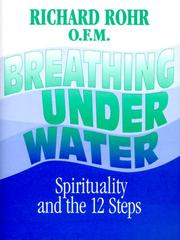
by Richard Rohr
“Brené Brown interviews Franciscan friar Richard Rohr about his book Breathing Underwater, exploring how spirituality intersects with 12-step recovery, the cult of innocence in modern Christianity, and counterintuitive spiritual principles like surrendering to win.”
More from Unlocking Us
We summarize every new episode. Want them in your inbox?
VP Kamala Harris on Courageous Leadership and Winning in 2024
Grief, Laughter, and Sisterhood: Losing Our Mom and Holding On to Each Other
Dr. Heather Cox Richardson on Democracy Awakening: Notes on the State of America, Part 2 of 2
Dr. Heather Cox Richardson on Democracy Awakening: Notes on the State of America, Part 1 of 2
Dr. Mary Claire Haver on the New Menopause
Similar Episodes
Related episodes from other podcasts

WorkLife with Adam Grant
Sep 30
ReThinking: Brené Brown on courageous leadership

Dare to Lead with Brené Brown
Sep 22
Brené with Erika James and Lynn Perry Wooten on The Prepared Leader, Part 1 of 2
Dare to Lead with Brené Brown
Apr 25
Brené with Ruchika Tulshyan on Inclusion on Purpose
Dare to Lead with Brené Brown
Feb 21
Brené with Debbie Millman on Why Design Matters

Deep Questions with Cal Newport
Dec 22
Ep 384: What Should I Read for a Deeper New Year?
Explore Related Topics
This podcast is featured in Best Mindset Podcasts (2026) — ranked and reviewed with AI summaries.
Read this week's Health & Longevity Podcast Insights — cross-podcast analysis updated weekly.
You're clearly into Unlocking Us.
Every Monday, we deliver AI summaries of the latest episodes from Unlocking Us and 192+ other podcasts. Free for one show.
Start My Monday DigestNo credit card · Unsubscribe anytime