Winter Book Club: Octavia Butler’s Visionary Fiction
Episode
63 min
Read time
2 min
Topics
Leadership, Design & UX, Software Development
AI-Generated Summary
Key Takeaways
- ✓Visionary Fiction Method: Butler observed current events like California's Proposition 187, prison expansion over education funding, and environmental degradation, then extrapolated forward to create speculative futures that function as warnings rather than predictions about societal collapse if present trajectories continue unchecked.
- ✓Writing Through Trauma: Butler transformed personal experiences of poverty, watching her mother work as a maid facing humiliation, and witnessing systemic racism into narratives like Kindred, designed to make readers emotionally feel historical realities rather than just intellectually know facts about slavery and oppression.
- ✓Earthseed Philosophy: The parable series introduces a survival religion based on the principle that change is inevitable and adaptation is essential, offering practical frameworks for building community and maintaining hope during societal breakdown through collective action rather than individual accumulation of resources.
- ✓Breaking Genre Barriers: As the first Black woman to win both Nebula and Hugo Awards and first science fiction writer to receive a MacArthur Genius grant, Butler created space for African futurist writers by centering Black characters with no limitations in speculative worlds previously dominated by white male perspectives.
- ✓Power as Tool: Butler evolved from viewing power-seeking as inherently corrupting to understanding power as neutral tool dependent on application, demonstrating through characters like Lauren Olamina that marginalized people must claim power through community building and adaptive leadership to survive hostile systems.
What It Covers
Octavia Butler pioneered Afrofuturism through science fiction that used historical trauma and present-day social issues to create cautionary tales about humanity's future, centering Black women's experiences while exploring power, survival, and transformation.
Key Questions Answered
- •Visionary Fiction Method: Butler observed current events like California's Proposition 187, prison expansion over education funding, and environmental degradation, then extrapolated forward to create speculative futures that function as warnings rather than predictions about societal collapse if present trajectories continue unchecked.
- •Writing Through Trauma: Butler transformed personal experiences of poverty, watching her mother work as a maid facing humiliation, and witnessing systemic racism into narratives like Kindred, designed to make readers emotionally feel historical realities rather than just intellectually know facts about slavery and oppression.
- •Earthseed Philosophy: The parable series introduces a survival religion based on the principle that change is inevitable and adaptation is essential, offering practical frameworks for building community and maintaining hope during societal breakdown through collective action rather than individual accumulation of resources.
- •Breaking Genre Barriers: As the first Black woman to win both Nebula and Hugo Awards and first science fiction writer to receive a MacArthur Genius grant, Butler created space for African futurist writers by centering Black characters with no limitations in speculative worlds previously dominated by white male perspectives.
- •Power as Tool: Butler evolved from viewing power-seeking as inherently corrupting to understanding power as neutral tool dependent on application, demonstrating through characters like Lauren Olamina that marginalized people must claim power through community building and adaptive leadership to survive hostile systems.
Notable Moment
Writer Nnedi Okorafor discovered Butler's Wild Seed at a bookstore during a writing workshop, seeing a Black woman on a science fiction cover for the first time, then opening it to find an Igbo protagonist's name she could pronounce, creating an instant transformative connection.
Episode Transcript
This message comes from Amazon Pharmacy. Waiting in line at the pharmacy takes time away from anything else you would rather be doing. Amazon Pharmacy delivers meds to you fast. Health hack unlocked. Thanks to Amazon Pharmacy, health care just got less painful. Welcome back to ThruLine Book Club. Today, we're talking about one of our favorite authors, Octavia Butler. Does it ever seem to you that there are people among us who hold up the sky and make the rivers flow? People who are just like other people, just like the rest of us, only different. They're the structural beams in the house we all share, the house that has a sky for a roof. And usually they don't wanna call attention to themselves. They just wanna be who they are, do what they do with as little interference as possible. Octavia comes to my mind as first among that group of people. In her books, she showed us the horrors and the great good that humans can create, and the choices that she made in her books and in her life always gave us new ways of seeing. She was a beacon of hope, sometimes even when she wasn't trying. These novels are not prophetic. These novels are cautionary tales. These novels are if we are not careful, you know, if we carry on as we have been, this is what we might wind up with. You have to think about what kind of world you wanna live in, and I don't think there's a person alive who would want to live in the world that I've written about, but we can arrange it. The problems that I write about are problems that we can do something about. That's that's why I write about them. All that you touch, you change. You're listening to THROUGHLINE from NPR. All that you change changes you. Will we go back in time? The only lasting truth is change. To understand the present. God is changed. Today, Octavia Butler's World. All that you touch, you change. All that you change, changes you. The only lasting truth is change. God is change. I found myself over the years returning to this quote over and over. It helps me so much when change comes and is unexpected, and especially when change comes and is undesired. My name is Adrienne Maree Brown, and I am a writer and an Octavia Butler scholar. Adrienne Maree Brown is one of a growing group of Octavia's, quote, unquote, children writers, thinkers, scholars, activists who see themselves as her spiritual descendants in a way and who look to Octavia Butler as a leader, a guide. In that vein, Adrienne Maree Brown co edited a book called Octavia's Brood, and she co hosts a podcast called Octavia's Parables. I am actually so enthralled with Butler's thinking that I have a tattoo that runs down my left arm, starts up on my shoulder. And it's just my own handwriting. I wrote …
Get the full transcript (9,782 words) + summary by email — free
One-time email with the complete transcript and AI summary of this episode. No account needed.
One email, no spam. We’ll also show you what SignalCast does.

You just read a 3-minute summary of a 60-minute episode.
Get Throughline summarized like this every Monday — plus up to 2 more podcasts, free.
Pick Your Podcasts — FreeKeep Reading
More from Throughline
Is it time for a Luddite Renaissance?
Sep 8 · 16 min

Modern Wisdom
Why You Feel Overwhelmed All The Time (and how to fix it) - David Epstein - #1121
Jul 9
More from Throughline
Why American public schools are still broken
Sep 3 · 36 min

On Being
adrienne maree brown — Hope Portal, Episode 2
Jun 5
Books, tools, and gear mentioned in this episode
SignalCast may earn commission on purchases via these links. As an Amazon Associate, SignalCast earns from qualifying purchases.
Books
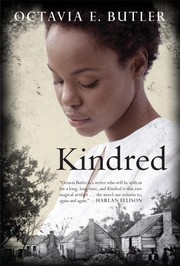
by Octavia Butler
“Butler transformed personal experiences of poverty, watching her mother work as a maid facing humiliation, and witnessing systemic racism into narratives like Kindred, designed to make readers emotionally feel historical realities rather than just intellectually know facts about slavery and oppression.”

by Octavia Butler
“Writer Nnedi Okorafor discovered Butler's Wild Seed at a bookstore during a writing workshop, seeing a Black woman on a science fiction cover for the first time, then opening it to find an Igbo protagonist's name she could pronounce, creating an instant transformative connection.”
More from Throughline
We summarize every new episode. Want them in your inbox?
Similar Episodes
Related episodes from other podcasts

Modern Wisdom
Jul 9
Why You Feel Overwhelmed All The Time (and how to fix it) - David Epstein - #1121

On Being
Jun 5
adrienne maree brown — Hope Portal, Episode 2

Everything Everywhere Daily
Aug 17
John Dickinson: The Reluctant Revolutionary

The Daily (NYT)
Jun 14
Do Aliens Exist? Steven Spielberg Believes They Do

The Diary of a CEO
May 11
Pulitzer Prize Historian: You Won't Notice Until It's Too Late!
Explore Related Topics
This podcast is featured in Best History Podcasts (2026) — ranked and reviewed with AI summaries.
Read this week's Software Engineering Podcast Insights — cross-podcast analysis updated weekly.
You're clearly into Throughline.
Every Monday, we deliver AI summaries of the latest episodes from Throughline and 192+ other podcasts. Free for one show.
Start My Monday DigestNo credit card · Unsubscribe anytime