Edward Said and the Question of Palestine
Episode
50 min
Read time
2 min
Topics
Software Development, Books & Authors
AI-Generated Summary
Key Takeaways
- ✓Orientalism framework: Said's 1978 book exposed how Western scholars created stereotypical representations of the Middle East as mysterious and barbaric, establishing cultural walls that justified colonialism and shaped modern perceptions of Arabs and Palestinians.
- ✓Political translation work: Said translated Yasser Arafat's 1974 UN speech into English in 48 hours, including the famous olive branch metaphor, marking the first time many Americans heard a Palestinian perspective on television in their own language.
- ✓Oslo Accords critique: Said immediately condemned the 1993 Oslo Accords because Arafat signed without consulting Palestinians, the agreement didn't end occupation or settlements, and Israel maintained military control—predictions that proved accurate as violence escalated afterward.
- ✓West Eastern Divan Orchestra: Said and Israeli conductor Daniel Barenboim created an orchestra bringing together Palestinian, Arab, and Israeli musicians to perform classical music, demonstrating coexistence through art despite accusations of normalizing occupation realities.
What It Covers
Edward Said's life as a Palestinian intellectual who introduced Western audiences to orientalism and Palestinian identity, advocating for coexistence between Israelis and Palestinians while facing threats and controversy until his death in 2003.
Key Questions Answered
- •Orientalism framework: Said's 1978 book exposed how Western scholars created stereotypical representations of the Middle East as mysterious and barbaric, establishing cultural walls that justified colonialism and shaped modern perceptions of Arabs and Palestinians.
- •Political translation work: Said translated Yasser Arafat's 1974 UN speech into English in 48 hours, including the famous olive branch metaphor, marking the first time many Americans heard a Palestinian perspective on television in their own language.
- •Oslo Accords critique: Said immediately condemned the 1993 Oslo Accords because Arafat signed without consulting Palestinians, the agreement didn't end occupation or settlements, and Israel maintained military control—predictions that proved accurate as violence escalated afterward.
- •West Eastern Divan Orchestra: Said and Israeli conductor Daniel Barenboim created an orchestra bringing together Palestinian, Arab, and Israeli musicians to perform classical music, demonstrating coexistence through art despite accusations of normalizing occupation realities.
Notable Moment
When Said threw a rock at an abandoned Israeli watchtower after Lebanon's occupation ended in 2000, a photograph sparked calls for his removal from Columbia University, though administrators defended him as making a symbolic gesture of celebration.
Episode Transcript
This message comes from Progressive Insurance. Progressive makes it easy to see if you could save when you bundle your home and auto policies. Try it at progressive.com. Progressive Casualty Insurance Company and affiliates. Potential savings will vary. Not available in all states. Imagine it's the year 1982. You've just turned on the TV. You're flipping through channels, and then this generic Arabian melody catches your ear. So you linger. A grainy black and white video shows a man flying across the screen on a floating carpet. Suddenly, it cuts to a belly dancer bedazzled in red and yellow sequins, spinning around as a sheer orange scarf envelops her. Cut again, a forlorn face hunched over in a dark black shroud, only one eye peering out. Cut. A man in a white turban with furrowed brows stares intensely, angrily back at you. And then, as this visual collage continues, you hear a voice. The Orient, the mysterious East, a place of fantasy, imagination, desire. The voice belongs to a man named Edward Said, and he's narrating this documentary on PBS called The Shadow of the West. Said was himself from the so called Orient, the Middle East. I was born in Jerusalem when it was part of a country called Palestine. By 1948, when Palestine became Israel, all my family had left. My birthplace is now inaccessible to me. For many hundreds of thousands of my fellow Palestinians, their native towns, villages, farms are inaccessible to them. For a lot of people tuning in, this might have been the first time they're hearing someone called a Palestinian talk about a place called Palestine in English on their TV. It wasn't a common thing to see in the eighties, and Edward Said might not have been what they expected. He had, like, a pocket watch that he would use to check the time, wrote with a fountain pen, very well dressed. Think tweed jacket, no turban or kefir in sight. He exuded a kind of old European charm. He had two pianos and loved playing from the time he was a kid. Classical music was the soundtrack of his life. Beethoven, Mozart, Bach. Music has curative powers. You're taken outside of yourself. I mean, there's a state of almost ecstasy. And it was this person who, in the second half of the twentieth century, took it on as his mission to explain Palestine to the West. For nearly thirty years, you could find him narrating documentaries on TV, lecturing on college campuses, writing for the New York Times, engaging politicians. And in The US, he became The most distinguished and certainly the best known representative of the Palestine struggle for national independence, for liberation. Today I would encourage the other side to not so lightly throw around the idea of innocent Palestinian civilians. The conversation around Palestinians remains fraught. I don't think we would so lightly throw around the term innocent Nazi civilians. The situation on the ground is worse than …
Get the full transcript (7,169 words) + summary by email — free
One-time email with the complete transcript and AI summary of this episode. No account needed.
One email, no spam. We’ll also show you what SignalCast does.

You just read a 3-minute summary of a 47-minute episode.
Get Throughline summarized like this every Monday — plus up to 2 more podcasts, free.
Pick Your Podcasts — FreeKeep Reading
More from Throughline
How baseball got its beat
Sep 10 · 32 min

The Diary of a CEO
Likeability Expert: Stop Doing This, It’s Why People Quietly Avoid You! | Vanessa Van Edwards
Sep 10
More from Throughline
Is it time for a Luddite Renaissance?
Sep 8 · 16 min

a16z Podcast
Sarah Rogers: Free Speech, AI Diplomacy, and What America Owes Its Allies
May 4
Books, tools, and gear mentioned in this episode
SignalCast may earn commission on purchases via these links. As an Amazon Associate, SignalCast earns from qualifying purchases.
Books
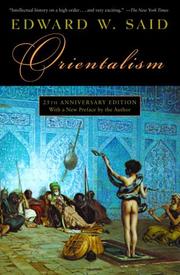 OrientalismBy guest
by Edward Said
“Said's 1978 book exposed how Western scholars created stereotypical representations of the Middle East as mysterious and barbaric, establishing cultural walls that justified colonialism and shaped modern perceptions of Arabs and Palestinians.”
More from Throughline
We summarize every new episode. Want them in your inbox?
Similar Episodes
Related episodes from other podcasts

The Diary of a CEO
Sep 10
Likeability Expert: Stop Doing This, It’s Why People Quietly Avoid You! | Vanessa Van Edwards

a16z Podcast
May 4
Sarah Rogers: Free Speech, AI Diplomacy, and What America Owes Its Allies

Up First (NPR)
Apr 15
Dave Chappelle on free speech and the purpose of comedy | NPR’s Newsmakers

Freakonomics Radio
Mar 6
666. This Is How Progress Happens

Stuff You Should Know
Feb 14
Selects: How Charles Darwin Worked
Explore Related Topics
This podcast is featured in Best History Podcasts (2026) — ranked and reviewed with AI summaries.
Read this week's Software Engineering Podcast Insights — cross-podcast analysis updated weekly.
You're clearly into Throughline.
Every Monday, we deliver AI summaries of the latest episodes from Throughline and 192+ other podcasts. Free for one show.
Start My Monday DigestNo credit card · Unsubscribe anytime