The Outsider at the Gate: Are We Lovable When Persona Washes Away?
Episode
61 min
Read time
3 min
Topics
Design & UX, Psychology & Behavior, Philosophy & Wisdom
AI-Generated Summary
Key Takeaways
- ✓Persona versus authenticity: The prince searches the world for a real princess but cannot discern authenticity beneath courtly personas of fine clothing, etiquette, and political arrangements. His ego fails at this task. Only when stripped of all persona—drenched, bedraggled, arriving at night during a storm—does the true princess appear, demonstrating that genuine connection requires vulnerability beyond social masks and status symbols.
- ✓The number 40 as transformation: The 20 mattresses plus 20 feather beds equal 40, an archetypal number representing testing and wholeness. Human pregnancy lasts 40 weeks, desert wanderings 40 days, and 40 amplifies the number 4 which Jung associated with structural completeness. This numerical symbolism suggests the princess undergoes an initiatic ordeal requiring the right amount of time for something to ripen psychologically.
- ✓The pea as discernment test: The pea functions as a seed containing growth potential, representing the smallest kernel with largest effect. It tests whether the princess can sense authentic potential beneath layers of obfuscation and comfort. Her physical bruising the next morning provides objective proof her sensitivity registered reality, validating highly sensitive people whose perceptions others often dismiss as exaggeration or weakness.
- ✓Storm as psychic dissolution: Lightning, thunder, and torrential rain represent solutio in alchemical terms—everything breaking down to original state. The opus begins in darkness and confusion. Rain symbolizes feeling and tears. This psychic storm creates conditions where the unconscious delivers what the conscious ego cannot procure, shaking up rigid structures so new perception becomes possible through chaos.
- ✓Parental wisdom intervenes: When the ego fails, deeper wisdom figures act. The king hears knocking at the gate despite the storm and opens defenses. The queen designs the evaluative test. These parental images represent superordinate aspects of psyche that intervene when conscious efforts exhaust themselves, offering guidance the immature ego cannot yet access independently through its own discrimination.
What It Covers
Jungian analysts Deborah Stewart and Joseph Lee analyze Hans Christian Andersen's "The Princess and the Pea" through psychological and archetypal lenses, exploring themes of authenticity, sensitivity, and wholeness. They examine the tale's symbolism including the number 40, the pea as seed, and storm imagery, then interpret a listener's dream about flooding moonlight and boats.
Key Questions Answered
- •Persona versus authenticity: The prince searches the world for a real princess but cannot discern authenticity beneath courtly personas of fine clothing, etiquette, and political arrangements. His ego fails at this task. Only when stripped of all persona—drenched, bedraggled, arriving at night during a storm—does the true princess appear, demonstrating that genuine connection requires vulnerability beyond social masks and status symbols.
- •The number 40 as transformation: The 20 mattresses plus 20 feather beds equal 40, an archetypal number representing testing and wholeness. Human pregnancy lasts 40 weeks, desert wanderings 40 days, and 40 amplifies the number 4 which Jung associated with structural completeness. This numerical symbolism suggests the princess undergoes an initiatic ordeal requiring the right amount of time for something to ripen psychologically.
- •The pea as discernment test: The pea functions as a seed containing growth potential, representing the smallest kernel with largest effect. It tests whether the princess can sense authentic potential beneath layers of obfuscation and comfort. Her physical bruising the next morning provides objective proof her sensitivity registered reality, validating highly sensitive people whose perceptions others often dismiss as exaggeration or weakness.
- •Storm as psychic dissolution: Lightning, thunder, and torrential rain represent solutio in alchemical terms—everything breaking down to original state. The opus begins in darkness and confusion. Rain symbolizes feeling and tears. This psychic storm creates conditions where the unconscious delivers what the conscious ego cannot procure, shaking up rigid structures so new perception becomes possible through chaos.
- •Parental wisdom intervenes: When the ego fails, deeper wisdom figures act. The king hears knocking at the gate despite the storm and opens defenses. The queen designs the evaluative test. These parental images represent superordinate aspects of psyche that intervene when conscious efforts exhaust themselves, offering guidance the immature ego cannot yet access independently through its own discrimination.
- •Highly sensitive validation: The tale validates sensory processing sensitivity rather than mocking it. The princess feels the pea through 40 layers, suffers real bruising, and this proves her worth. Highly sensitive people often face dismissal—told their perceptions are exaggerated or they should just get over things. The story affirms that heightened sensitivity detects real phenomena others miss, standing people in good stead.
Notable Moment
The analysts reveal Hans Christian Andersen himself was a gay, artistic orphan living where no place existed for him. They reframe his tales as personal fantasies of recognition—he becomes the ugly duckling, the little match girl, the bedraggled figure at the gate hoping someone will see past appearances and validate his existence, making his seemingly silly stories carry profound loneliness.
Episode Transcript
Guess how many weeks a woman is pregnant? Forty. And, you know, forty is an amplification of the number four, which in Jung's theory and thinking had to do with structural wholeness. So it's the right amount of time for something to grow and ripen in the psyche. And she is under 40 mattresses and eider down feather beds. Welcome to this Jungian life. Three good friends and Jungian analysts, Lisa Marciano, Deborah Stewart, and Joseph Lee, invite you to join them for an intimate and honest conversation that brings a psychological perspective to important issues of the day. I'm Lisa Marciano, and I'm a Jungian analyst in Philadelphia. I'm Joseph Lee, and I'm a Jungian analyst in Virginia Beach, Virginia. I'm Deborah Stewart, a Jungian analyst in Cape Cod. This week, as Lisa can't be here, Joseph and I are going to do as we've done before, a fairy tale and unpack it, see what all its layers, nuances, and possible meanings are. And I especially wanted to do this one. It's a tale by Hans Christian Andersen from about 1835. So it's pretty recent in the genre that we call fairy tales, but it's imaginative and symbolic material. And perhaps after another thousand years have gone by, it will have been granted official fairy tale status. This was a story I read as a child, and I believed every single word. I've gone back to it several times, and I'm really looking forward to seeing all of its nuances and possible meanings and also the fun embedded in this fairy tale, the princess and the pea. And here is the story. It's very short. Once upon a time, there was a prince who wanted to marry a princess, but she would have to be a real one. He traveled around the whole world looking for her, but every time he met a princess, there was always something amiss. There were plenty of princesses, but not one of them was quite to his taste. Something was always the matter. They just weren't real princesses. So he returned home very sad and sorry, for he had set his heart on marrying a real princess. One evening, a storm broke over the kingdom. The lightning flashed, the thunder roared, and the rain came down in bucketfuls. In the midst of this horrible storm, someone knocked on the city gate, and the king himself went down to open it. On the other side of the gate stood a princess, but goodness, how wet she was. Water ran down her hair and her clothes in streams. It flowed in through the heels of her shoes and out through the toes. But she said that she was a real princess. We'll find that out quickly enough, thought the old queen, but she didn't say a word out loud. She hurried to the guest room and took all the bed clothes off the bed. Then on the bare bedstead, she put a pea. On top …
Get the full transcript (7,815 words) + summary by email — free
One-time email with the complete transcript and AI summary of this episode. No account needed.
One email, no spam. We’ll also show you what SignalCast does.

You just read a 3-minute summary of a 58-minute episode.
Get This Jungian Life summarized like this every Monday — plus up to 2 more podcasts, free.
Pick Your Podcasts — FreeKeep Reading
More from This Jungian Life
Lindsay Clancy & Maternal Infanticide: An Archetypal Perspective
Sep 3 · 90 min

The Ezra Klein Show
Christopher Nolan Stared Into Elon Musk’s Soul
Aug 2
More from This Jungian Life
Goblins, Demons and Goddesses: A Conversation at the Edge of AI
Aug 27 · 94 min

The Founders Podcast
#425 The Merchant Bankers
Jul 19
Books, tools, and gear mentioned in this episode
SignalCast may earn commission on purchases via these links. As an Amazon Associate, SignalCast earns from qualifying purchases.
Books
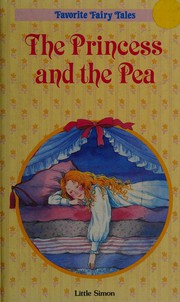
by Hans Christian Andersen
“Jungian analysts Deborah Stewart and Joseph Lee analyze Hans Christian Andersen's "The Princess and the Pea" through psychological and archetypal lenses, exploring themes of authenticity, sensitivity, and wholeness.”
More from This Jungian Life
We summarize every new episode. Want them in your inbox?
Lindsay Clancy & Maternal Infanticide: An Archetypal Perspective
Goblins, Demons and Goddesses: A Conversation at the Edge of AI
The Psychology of Magic: A Jungian Exploration
In Search of the Wild Man: Befriending Bigfoot
Jung vs. Borg: Staying Human in the Age of AI
Similar Episodes
Related episodes from other podcasts

The Ezra Klein Show
Aug 2
Christopher Nolan Stared Into Elon Musk’s Soul

The Founders Podcast
Jul 19
#425 The Merchant Bankers

The Money Guy Show
Mar 18
The BEST and WORST Cars (And Which Brands We Avoid)

Deep Questions with Cal Newport
Mar 12
AI Reality Check: Is the Economy About to Collapse?
The Money Guy Show
Mar 2
They Turned Real Estate Into Wealth, But Still Feel Stuck | Making a Millionaire
Explore Related Topics
This podcast is featured in Best Mindset Podcasts (2026) — ranked and reviewed with AI summaries.
You're clearly into This Jungian Life.
Every Monday, we deliver AI summaries of the latest episodes from This Jungian Life and 192+ other podcasts. Free for one show.
Start My Monday DigestNo credit card · Unsubscribe anytime