What the AI overlords get wrong about being alive
Episode
40 min
Read time
2 min
Topics
Productivity, Relationships, Fundraising & VC
AI-Generated Summary
Key Takeaways
- ✓AI and cognitive offloading: Using AI to handle thinking tasks measurably reduces mental sharpness over time. Victoria Song's practice of writing four to five handwritten sentences summarizing each book section dramatically improved her recall and comprehension — a result backed by research showing physical writing strengthens memory retention more than digital note-taking or passive consumption.
- ✓Friction as value mechanism: Difficulty and inconvenience are not problems to eliminate — they are the mechanism through which experiences become valuable. The effort invested in a gift, hobby, or relationship directly determines its perceived worth. When AI removes that effort, recipients register the absence as indifference, not efficiency, producing the emotional equivalent of a recycled birthday present.
- ✓Art as human transmission: Consuming books, music, and film is not resource extraction — it is direct contact with another person's lived experience. Michelle Zauner's memoir about losing her Korean mother to illness provided genuine comfort during a similar loss precisely because the grief was real and singular. AI-generated writing cannot replicate this because it has no experience to transmit.
- ✓Hobby struggle builds social infrastructure: Picking up a new skill — rock climbing, bridge, cross-stitching — generates friendships through repeated shared presence, not through the skill itself. Liz Lopato joined a standing weekly bridge game by attending a physical club repeatedly. The social connection emerged as a byproduct of showing up consistently, something AI companionship structurally cannot replicate.
- ✓AI tools vs. AI replacement: The negative public sentiment toward AI — declining in every successive survey — stems from tech leaders framing AI as a replacement for meaningful human activity rather than a targeted tool. The earlier framing of machine learning as a specific-purpose instrument generated enthusiasm; the current framing of AI as a life-management system generates resistance and distrust.
What It Covers
The Vergecast hosts David Amell, Liz Lopato, and Victoria Song examine Mark Zuckerberg's 6,500-word AI manifesto "The Future is for Everyone," arguing that the activities AI promises to optimize — creative expression, gift-giving, hobbies, and human connection — are precisely what makes life meaningful.
Key Questions Answered
- •AI and cognitive offloading: Using AI to handle thinking tasks measurably reduces mental sharpness over time. Victoria Song's practice of writing four to five handwritten sentences summarizing each book section dramatically improved her recall and comprehension — a result backed by research showing physical writing strengthens memory retention more than digital note-taking or passive consumption.
- •Friction as value mechanism: Difficulty and inconvenience are not problems to eliminate — they are the mechanism through which experiences become valuable. The effort invested in a gift, hobby, or relationship directly determines its perceived worth. When AI removes that effort, recipients register the absence as indifference, not efficiency, producing the emotional equivalent of a recycled birthday present.
- •Art as human transmission: Consuming books, music, and film is not resource extraction — it is direct contact with another person's lived experience. Michelle Zauner's memoir about losing her Korean mother to illness provided genuine comfort during a similar loss precisely because the grief was real and singular. AI-generated writing cannot replicate this because it has no experience to transmit.
- •Hobby struggle builds social infrastructure: Picking up a new skill — rock climbing, bridge, cross-stitching — generates friendships through repeated shared presence, not through the skill itself. Liz Lopato joined a standing weekly bridge game by attending a physical club repeatedly. The social connection emerged as a byproduct of showing up consistently, something AI companionship structurally cannot replicate.
- •AI tools vs. AI replacement: The negative public sentiment toward AI — declining in every successive survey — stems from tech leaders framing AI as a replacement for meaningful human activity rather than a targeted tool. The earlier framing of machine learning as a specific-purpose instrument generated enthusiasm; the current framing of AI as a life-management system generates resistance and distrust.
Notable Moment
Victoria Song described a scene from the Korean film Train to Busan where a neglectful father asks someone else what children like, then gifts his daughter a duplicate toy she already owns. Song realized this mirrors exactly how AI-assisted gift-giving feels to recipients — effort outsourced, attention absent.
Episode Transcript
Welcome to the Vergecast, the flagship podcast of things that hopefully make you feel alive. I'm David Amell. A few weeks ago, Liz Lopato wrote an article that really stuck with me. It was titled Mark Zuckerberg Doesn't Understand How to Live, and it came right after Zuckerberg's 6,500 word AI manifesto called The Future is for Everyone. He tried to make the case that everyone will have their own personal AI agent that will help you do things, I guess. But Liz has made the case that those are the things that actually make life worth living in the first place. I was having a very long conversation about this with my good friend V Song while I was on the airplane a few weeks ago. And like any group of 30, we just stopped and said, wait. We should just record a podcast because our conversations are so interesting. They are. They're so interesting. So today, we're talking to Liz Lopatto, author of said article, and Vsong, author of the text that she sent me in reply to my thoughts about said article, about what it means to be human and why so much of Mark Zuckerberg's manifesto feels so very hollow. But first, here's what's happening on The Verge today. This is ninety seconds on The Verge for Tuesday, 09/01/2026. Today, Dyson unveiled the $499 Camerajet electric toothbrush, which uses an integrated camera in the brush head to detect gaps between your teeth. Dyson said that an AI algorithm detects when to blast those gaps with mouthwash, which will effectively take care of flossing for you. The toothbrush also pairs with an app to give you a livestream of the inside of your mouth so you can see where it's most effective to brush. This is one of those products that nobody really needs, but everyone kinda wants, including me. YouTuber Mark Replier has acquired 8.5% of GoPro, making him the biggest individual shareholder in the company. The news comes just a couple of days after he published a sponsored review of the newly released GoPro Mission one ILS camera. This morning, GoPro entered into an agreement to merge with Starman Optical Inc, a privately held optical photonics company. And finally, today is John Turnis' first day as the CEO of Apple, ending a fifteen year tenure for Tim Cook. Turnis marked the occasion by tweeting a simple hello on Twitter with no capitalization. Turnis was previously the senior vice president of hardware engineering, so we'll be waiting to see if he makes hardware a key point for the company moving forward. You can read more at theverge.com. That's ninety seconds on the verge for Tuesday, 09/01/2026. Are you a pet owner? Every six seconds, a pet owner in The US gets hit with a vet bill over a thousand dollars. Always an unwelcome surprise. That's where Fetch comes in. Fetch is the most complete pet insurance for dogs and cats. According to consumeradvocate.org, you get paid …
Get the full transcript (8,018 words) + summary by email — free
One-time email with the complete transcript and AI summary of this episode. No account needed.
One email, no spam. We’ll also show you what SignalCast does.

You just read a 3-minute summary of a 37-minute episode.
Get The Vergecast summarized like this every Monday — plus up to 2 more podcasts, free.
Pick Your Podcasts — FreeKeep Reading
More from The Vergecast
Everything's recording everybody. What now?
Oct 15 · 39 min

Practical AI
Education is Failing our Students in this AI-Driven World
Oct 15
More from The Vergecast
The $8 million AI music scam
Oct 14 · 38 min

David Senra
Lessons from Napoleon, Steve Jobs, Joan of Arc & Other Leaders | Ben Wilson
Oct 14
Books, tools, and gear mentioned in this episode
SignalCast may earn commission on purchases via these links. As an Amazon Associate, SignalCast earns from qualifying purchases.
Books
 The Future is for EveryoneBy guest
by Mark Zuckerberg
“Mark Zuckerberg's 6,500-word AI manifesto "The Future is for Everyone," arguing that the activities AI promises to optimize — creative expression, gift-giving, hobbies, and human connection — are precisely what makes life meaningful.”
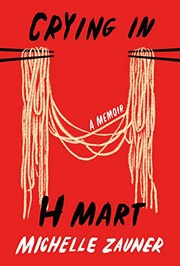 Crying in H MartBy guest
by Michelle Zauner
“Michelle Zauner's memoir about losing her Korean mother to illness provided genuine comfort during a similar loss precisely because the grief was real and singular.”
Products
“Victoria Song described a scene from the Korean film Train to Busan where a neglectful father asks someone else what children like, then gifts his daughter a duplicate toy she already owns.”
More from The Vergecast
We summarize every new episode. Want them in your inbox?
Everything's recording everybody. What now?
The $8 million AI music scam
HomeView: Apple just got serious about the smart home | Livestream
The AI is in the computer
The many pluses and minuses of Alexa Plus
Similar Episodes
Related episodes from other podcasts

Practical AI
Oct 15
Education is Failing our Students in this AI-Driven World

David Senra
Oct 14
Lessons from Napoleon, Steve Jobs, Joan of Arc & Other Leaders | Ben Wilson

The Founders Podcast
Oct 5
#436 Ari Emanuel's Autobiography

a16z Podcast
Oct 4
David George & Jack Altman on AI, Autonomy, and the Next $25 Trillion

The Daily (NYT)
Sep 29
Are Prediction Markets Gambling? A Lot Rides on the Answer.
Explore Related Topics
This podcast is featured in Best Tech Podcasts (2026) — ranked and reviewed with AI summaries.
You're clearly into The Vergecast.
Every Monday, we deliver AI summaries of the latest episodes from The Vergecast and 192+ other podcasts. Free for one show.
Start My Monday DigestNo credit card · Unsubscribe anytime