505: How to Be a Good Wartime CEO
Read time
2 min
Topics
Relationships, Leadership, Software Development
AI-Generated Summary
Key Takeaways
- ✓Perpetual Wartime Mindset: Shah argues no true peacetime exists in business because competition and threats are constant, even when invisible. CEOs should maintain wartime urgency consistently rather than switching modes based on perceived external threats or market stability.
- ✓Context Determines Communication Style: During crisis situations, abrupt commands and rapid decision-making without consensus are understood as necessary urgency, not personal attacks. In stable periods, the same communication style damages relationships and morale because context shapes how teams interpret leadership behavior.
- ✓Speed Over Strategy in Crisis: Wartime requires prioritizing tactical execution and rapid implementation over strategic planning. The concept of reversible versus irreversible decisions becomes less relevant during crisis because most actions can be undone when circumstances are extreme and fluid.
- ✓Sense of Urgency as Core Principle: Rather than oscillating between wartime and peacetime modes, effective CEOs cultivate consistent urgency in their teams. This means moving fast and maintaining momentum without creating burnout or resorting to abrasive management tactics that damage culture.
What It Covers
Steli Efti and Hiten Shah examine Ben Horowitz's wartime versus peacetime CEO framework, debating whether businesses should always operate with wartime urgency and intensity regardless of external threats or market conditions.
Key Questions Answered
- •Perpetual Wartime Mindset: Shah argues no true peacetime exists in business because competition and threats are constant, even when invisible. CEOs should maintain wartime urgency consistently rather than switching modes based on perceived external threats or market stability.
- •Context Determines Communication Style: During crisis situations, abrupt commands and rapid decision-making without consensus are understood as necessary urgency, not personal attacks. In stable periods, the same communication style damages relationships and morale because context shapes how teams interpret leadership behavior.
- •Speed Over Strategy in Crisis: Wartime requires prioritizing tactical execution and rapid implementation over strategic planning. The concept of reversible versus irreversible decisions becomes less relevant during crisis because most actions can be undone when circumstances are extreme and fluid.
- •Sense of Urgency as Core Principle: Rather than oscillating between wartime and peacetime modes, effective CEOs cultivate consistent urgency in their teams. This means moving fast and maintaining momentum without creating burnout or resorting to abrasive management tactics that damage culture.
Notable Moment
Shah challenges the entire wartime-peacetime framework by questioning why CEOs should not always operate with wartime intensity, suggesting the duality merely excuses poor leadership behavior rather than representing genuinely different operational requirements.

Get The Startup Chat summarized like this every Monday — plus up to 2 more podcasts, free.
Pick Your Podcasts — FreeKeep Reading


Books, tools, and gear mentioned in this episode
SignalCast may earn commission on purchases via these links. As an Amazon Associate, SignalCast earns from qualifying purchases.
Books
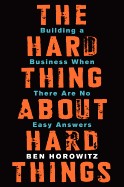
by Ben Horowitz
“Steli Efti and Hiten Shah examine Ben Horowitz's wartime versus peacetime CEO framework, debating whether businesses should always operate with wartime urgency and intensity regardless of external threats or market conditions.”
More from The Startup Chat
We summarize every new episode. Want them in your inbox?
Similar Episodes
Related episodes from other podcasts

Practical AI
May 7
The Myth of Model Wars: Open vs Closed AI in 2026

Modern Wisdom
May 7
DEBATE: Why Do Gen Z Women Hate Men So Much? - #1094

a16z Podcast
Jan 2
Wartime vs Peacetime: Ben Horowitz on Leadership

Marketing School
Dec 9
Founders Must Let The Cake Bake
a16z Podcast
Dec 2
How To Lead | Ben Horowitz on My First Million
Explore Related Topics
This podcast is featured in Best Business Podcasts (2026) — ranked and reviewed with AI summaries.
Read this week's Software Engineering Podcast Insights — cross-podcast analysis updated weekly.
You're clearly into The Startup Chat.
Every Monday, we deliver AI summaries of the latest episodes from The Startup Chat and 192+ other podcasts. Free for one show.
Start My Monday DigestNo credit card · Unsubscribe anytime