How to Reignite a Dream After You've Lost Everything | Shaun White
Episode
70 min
Read time
3 min
Topics
Career Growth, Relationships, Leadership
AI-Generated Summary
Key Takeaways
- ✓Motivation Reset: When passion for a pursuit disappears, addressing unrelated life friction first restores it. White rebuilt his drive for snowboarding not by training harder, but by repairing his relationship with his brother, eliminating inauthentic sponsored social media obligations, and taking a genuine vacation. Removing accumulated personal burdens restored enthusiasm at the mountain more effectively than any technical adjustment to his training regimen.
- ✓Support Team Architecture: Build a dedicated, traveling support team rather than using ad-hoc professionals. White credits his 2018 gold to locking in a traveling physical therapist who knew his body deeply, a coach with personal rapport (JJ Thomas, a former pro), and aligned management. He describes the shift as embarrassing in hindsight — elite performance without consistent specialists is leaving measurable results unrealized.
- ✓Reframing Loss as a Design Tool: After Sochi, White deliberately asked "if this loss were the best thing that ever happened to me, what would the outcome look like?" This question restructured his planning from reactive grief to proactive scenario-building — identifying the exact coach, PT, and schedule he needed. Treating setbacks as design prompts rather than verdicts produces concrete next steps instead of paralysis.
- ✓Byron Katie's Four Questions for Emotional Triggers: When a situation produces a strong negative reaction, run it through four questions: Is it true? Is it really true? How do you react when you believe that thought? Then turn the statement around. White applies this framework in real time to defuse disproportionate responses, noting that nearly every distressing belief fails the second question, collapsing its emotional charge immediately.
- ✓Delayed Happiness Is a Performance Trap: Structuring fulfillment around future outcomes — "if I win the Olympics, then I'll be happy" — is unsustainable and, per White, constitutes what Tony Robbins calls "success without fulfillment." The practical fix is embedding enjoyable sub-goals alongside the primary objective. White used a Rolling Stone cover concept and custom Guns N' Roses-style pants as motivational anchors that made the Olympic training cycle genuinely engaging.
What It Covers
Three-time Olympic gold medalist Shaun White details how a fourth-place finish at the 2014 Sochi Olympics triggered a complete life overhaul — rebuilding family relationships, assembling a dedicated support team, processing a 62-stitch facial injury in New Zealand, and ultimately winning his third gold at the 2018 PyeongChang Games through mental and emotional reconstruction.
Key Questions Answered
- •Motivation Reset: When passion for a pursuit disappears, addressing unrelated life friction first restores it. White rebuilt his drive for snowboarding not by training harder, but by repairing his relationship with his brother, eliminating inauthentic sponsored social media obligations, and taking a genuine vacation. Removing accumulated personal burdens restored enthusiasm at the mountain more effectively than any technical adjustment to his training regimen.
- •Support Team Architecture: Build a dedicated, traveling support team rather than using ad-hoc professionals. White credits his 2018 gold to locking in a traveling physical therapist who knew his body deeply, a coach with personal rapport (JJ Thomas, a former pro), and aligned management. He describes the shift as embarrassing in hindsight — elite performance without consistent specialists is leaving measurable results unrealized.
- •Reframing Loss as a Design Tool: After Sochi, White deliberately asked "if this loss were the best thing that ever happened to me, what would the outcome look like?" This question restructured his planning from reactive grief to proactive scenario-building — identifying the exact coach, PT, and schedule he needed. Treating setbacks as design prompts rather than verdicts produces concrete next steps instead of paralysis.
- •Byron Katie's Four Questions for Emotional Triggers: When a situation produces a strong negative reaction, run it through four questions: Is it true? Is it really true? How do you react when you believe that thought? Then turn the statement around. White applies this framework in real time to defuse disproportionate responses, noting that nearly every distressing belief fails the second question, collapsing its emotional charge immediately.
- •Delayed Happiness Is a Performance Trap: Structuring fulfillment around future outcomes — "if I win the Olympics, then I'll be happy" — is unsustainable and, per White, constitutes what Tony Robbins calls "success without fulfillment." The practical fix is embedding enjoyable sub-goals alongside the primary objective. White used a Rolling Stone cover concept and custom Guns N' Roses-style pants as motivational anchors that made the Olympic training cycle genuinely engaging.
- •Strategic Non-Competitiveness: Deliberately losing low-priority events to gather intelligence and protect the body is a long-game tactic. White entered early qualifying events with no intention of winning, using them to assess competitor levels without revealing his own capabilities. Combined with taking full seasons off after each Olympic cycle — four years of rest across five Olympics — this approach extended his competitive career well past the typical athlete's peak window.
Notable Moment
At the 2018 PyeongChang qualifier in Aspen, White had not decided what trick to execute on his final run with seconds remaining. His coach unexpectedly told him to attempt a harder move than planned on the opening hit instead. White dropped in without a confirmed strategy, landed a perfect 100 score, and won — securing his Olympic spot.
Episode Transcript
Welcome back everyone on School of Greatness. We've got the legendary Sean White in the house. My man. Hey. So good to see you. Thanks for having me. Been following your career for a long time. We've got a lot of mutual friends and, it's inspiring to see what you're able to do at 35 years of age. Three Olympic golds. Is that right now? Yeah. Three Olympic golds. Four Olympics. Three three golds. Three golds. You're going back for another one. Mhmm. And I'm I'm curious. How do you continue to stay so disciplined at this age with your body, your mindset, your training Mhmm. To continue preparing at this level Yeah. After so many years competing? You know, it's tough. Honestly, you know, as you get older, there's just more things that interest you. You know, you're enticed by this, you know, starting a company or, you know, you know, just even just normal life things that are going on. Relationships. Yeah. You know, you know, birthday party. You know, moving home, you know, like, just anything like that. And I found that, like, oddly enough for me, like, taking the time to do those things actually makes me better at snowboarding. Really? Because I have the, you know, the muscle memory and I've done it my whole life. So it's it's like, you know, you're it's like riding a bike, you know it. You know, it's just like how enthused are you once you get there? Right. So if I'm really motivated when I get to the mountain, then I'm dangerous because I I'm pumped. I wanna learn the new tricks, and I have the ability to do that. Mhmm. It's just when I get there and I maybe don't wanna be there, and that's when it's really hard. So I think after the not the last Olympics, but the one before that after I I I lost in Sochi in Russia. You know, I missed the podium and I I remember standing there. I had the winning run. I mean, I had all the tricks to do it. I just couldn't I just in my head, I just knew I wasn't gonna do well. Really? Which is really, you know, a a horrible feeling. You're like watching a movie. You can't really Why don't you think Here we go. Why why did you not think you could do it well? You know, I I don't know. It's just something was just off. And I just I all I can chalk it up to is that my heart just wasn't fully into it. And I didn't think that that fully mattered at the time. I was like, I can just kinda Wing it. I could phone it in. I got the tricks. I mean, you know what I mean? Just something in me didn't want it. I couldn't I couldn't get to that place. And I was in that pressure cooker situation where I was like the …
Get the full transcript (15,250 words) + summary by email — free
One-time email with the complete transcript and AI summary of this episode. No account needed.
One email, no spam. We’ll also show you what SignalCast does.

You just read a 3-minute summary of a 67-minute episode.
Get The School of Greatness summarized like this every Monday — plus up to 2 more podcasts, free.
Pick Your Podcasts — FreeKeep Reading
More from The School of Greatness
How to Know You’re on the Right Path | Katt Williams
Oct 21 · 56 min

The Rich Roll Podcast
The Most Decorated Winter Olympian Ever: Johannes Klæbo On Training, Mindset & Reinventing His Sport
Aug 10
More from The School of Greatness
What Sociopaths Really Feel | Dr. Patric Gagne
Oct 19 · 107 min

Deep Questions with Cal Newport
How I’m Organizing My Life this Fall | Advice
Sep 7
Books, tools, and gear mentioned in this episode
SignalCast may earn commission on purchases via these links. As an Amazon Associate, SignalCast earns from qualifying purchases.
Books
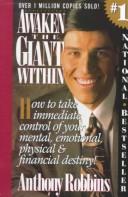
by Tony Robbins
“per White, constitutes what Tony Robbins calls 'success without fulfillment'”
More from The School of Greatness
We summarize every new episode. Want them in your inbox?
How to Know You’re on the Right Path | Katt Williams
What Sociopaths Really Feel | Dr. Patric Gagne
Your Anxiety Is a Smoke Alarm, Not a Broken Brain | Dr. John Delony
The Ancient 4-Step Method to Clear Your Mind | Shaolin Master Shi Heng Yi
How Stress Can Cause a Heart Attack (And How to Heal) | Dr. Tara Narula
Similar Episodes
Related episodes from other podcasts

The Rich Roll Podcast
Aug 10
The Most Decorated Winter Olympian Ever: Johannes Klæbo On Training, Mindset & Reinventing His Sport

Deep Questions with Cal Newport
Sep 7
How I’m Organizing My Life this Fall | Advice

David Senra
Jun 7
Gustav Söderström, Spotify

The Daily (NYT)
Apr 28
Assassination Attempt Suspect Charged

Lenny's Podcast
Mar 29
From skeptic to true believer: How OpenClaw changed my life | Claire Vo
Explore Related Topics
This podcast is featured in Best Mindset Podcasts (2026) — ranked and reviewed with AI summaries.
You're clearly into The School of Greatness.
Every Monday, we deliver AI summaries of the latest episodes from The School of Greatness and 192+ other podcasts. Free for one show.
Start My Monday DigestNo credit card · Unsubscribe anytime