653. London’s Golden Age: The Shadow of the Madhouse (Part 4)
Episode
67 min
Read time
3 min
Topics
Productivity, Health & Wellness, Personal Finance
AI-Generated Summary
Key Takeaways
- ✓Mental health and patronage: Johnson's OCD and depression — manifesting as compulsive post-touching, counting doorway steps, and hoarding orange peel — were managed not through isolation but through structured domestic care. The Thrales provided Johnson a room at Streatham Park, 100 acres of grounds, and consistent social engagement, demonstrating that proximity to trusted companions and routine luxury can stabilize severe psychological deterioration more effectively than solitude.
- ✓Transactional social networks: The Johnson-Thrale arrangement operated as a mutual exchange: Johnson received food, shelter, family life, and emotional stability; Henry Thrale gained access to London's premier intellectual circle including Burke, Garrick, and Reynolds at his dinner table. Recognizing that elite social capital flows both ways — prestige for resources — explains how Georgian literary culture sustained itself outside formal institutions.
- ✓Biographical methodology: Boswell's Life of Johnson, published 1791 after seven years of work, established the template modern biography still follows: verify every fact, interview all associates, preserve contradictions and eccentricities, and reconstruct conversation scenes with documentary precision. His innovation was treating psychological complexity as a feature rather than a flaw, producing the first portrait of a complete human being rather than a streamlined archetype.
- ✓Rivalry and documentation: Boswell faced direct competition from two rival Johnson biographies — Hester Piozzi's waspish 1786 memoir and Sir John Hawkins's 1787 formal biography — both published years before his own. The lesson: in any field where firsthand access creates authority, delay allows competitors to define the narrative. Boswell's advantage was depth and intimacy, but speed of publication matters when public memory is at its peak.
- ✓Dependency and rupture: Johnson's 1784 letter condemning Hester Thrale's marriage to Italian music teacher Gabriel Piozzi — calling it an abandonment of children and religion — destroyed a 15-year friendship instantly. The episode illustrates how relationships built on emotional dependency rather than mutual autonomy become fragile when the dependent party perceives abandonment, and how even gifted communicators send irretrievable messages under emotional distress.
What It Covers
Part 4 of The Rest is History's London Golden Age series examines Samuel Johnson's 15-year relationship with Hester Thrale, the Welsh socialite who housed and stabilized him through mental breakdown, his adoptive son Francis Barber, James Boswell's rivalry for Johnson's affections, and how Boswell's Life of Johnson — published 1791 — permanently transformed biographical writing.
Key Questions Answered
- •Mental health and patronage: Johnson's OCD and depression — manifesting as compulsive post-touching, counting doorway steps, and hoarding orange peel — were managed not through isolation but through structured domestic care. The Thrales provided Johnson a room at Streatham Park, 100 acres of grounds, and consistent social engagement, demonstrating that proximity to trusted companions and routine luxury can stabilize severe psychological deterioration more effectively than solitude.
- •Transactional social networks: The Johnson-Thrale arrangement operated as a mutual exchange: Johnson received food, shelter, family life, and emotional stability; Henry Thrale gained access to London's premier intellectual circle including Burke, Garrick, and Reynolds at his dinner table. Recognizing that elite social capital flows both ways — prestige for resources — explains how Georgian literary culture sustained itself outside formal institutions.
- •Biographical methodology: Boswell's Life of Johnson, published 1791 after seven years of work, established the template modern biography still follows: verify every fact, interview all associates, preserve contradictions and eccentricities, and reconstruct conversation scenes with documentary precision. His innovation was treating psychological complexity as a feature rather than a flaw, producing the first portrait of a complete human being rather than a streamlined archetype.
- •Rivalry and documentation: Boswell faced direct competition from two rival Johnson biographies — Hester Piozzi's waspish 1786 memoir and Sir John Hawkins's 1787 formal biography — both published years before his own. The lesson: in any field where firsthand access creates authority, delay allows competitors to define the narrative. Boswell's advantage was depth and intimacy, but speed of publication matters when public memory is at its peak.
- •Dependency and rupture: Johnson's 1784 letter condemning Hester Thrale's marriage to Italian music teacher Gabriel Piozzi — calling it an abandonment of children and religion — destroyed a 15-year friendship instantly. The episode illustrates how relationships built on emotional dependency rather than mutual autonomy become fragile when the dependent party perceives abandonment, and how even gifted communicators send irretrievable messages under emotional distress.
- •Legacy through proxy: Francis Barber, formerly enslaved, brought from Jamaica to England at age 10, became Johnson's de facto adopted son over decades of shared life in Bolt Court. Johnson funded his schooling, extracted him from Royal Navy service, and named him primary heir. Barber used the inheritance to establish a draper's shop in Lichfield, Johnson's birthplace, with descendants reportedly still there — a concrete example of how deliberate intergenerational wealth transfer reshapes family trajectories across centuries.
Notable Moment
When the Thrales arrived unannounced at Johnson's Fleet Street rooms, they found him mid-breakdown — kneeling before a clergyman, sobbing and confessing vague sins incoherently. The clergyman, visibly relieved, immediately left. Henry Thrale's response was not alarm but pragmatism: he told his wife to take Johnson directly to their Streatham country estate to recover.
Episode Transcript
Most honored madam. Since while I am staying in your house, I'm obliged to spend several hours a day in the strictest solitude, tell me, I beg you, whether you wish me to submit fully to this isolation or else to do so within limits set by you. And supposing that you wish me to stay confined to my bedroom, then do not, I beg you, require me to serve as my own sentry, but rather take steps yourself to make sure that I cannot leave my room. This will cost you no more trouble than the turning of a key in the door twice a day. I submit to you as my mistress, so that I may be bolstered in my weakness by your judgment and your vigilance. I wish, my patroness, always to be sensible of that authority which you wield over me, and to be held by you in that slivery which you know so well, how to make a happy one. So that was a letter written by Samuel Johnson, a man, of course, of the Midlands, as people can tell from that reading. But he wrote it originally in French. And he wrote it a few months before he left on his tour to The Hebrides with James Boswell in August 1773. So listeners who have followed us in this epic series will know that on that tour, Johnson was in splendid form. There was a lot of Caledonian ribaldry. There was a lot of general banter. There was a lot of sulking while riding down mountains on ponies. There was a lot of actually, him being surprisingly nice about Scotland, which is we always try to do on the rest is history. But this doctor Johnson, in his letter, this is a very different character. He's back to his old eccentric ways. He's a bit awkward, isn't he? And he's very submissive. So what's going on here, Tom? Why is he like this? And to whom is he writing? Well, I think that letter is a reminder that the Johnson that we get from Boswell is not the only Johnson, that there are people who actually are seeing Johnson far more often than Boswell does, and that these people perhaps are aware of entire aspects of Johnson's character that Boswell, at this point, can really only guess at. And of all the people who knew Samuel Johnson in the final decades of his life, the one who knew him probably well, not probably. I mean, certainly knew him best was the recipient of that letter, which you read out so sonorously and splendidly. And this is a woman who was over thirty years younger than Johnson, and she was called missus Thrail. And there are people who complain that there is far too much Welsh history on this podcast. But I'm afraid that sometimes it just can't be helped because missus Srail was Welsh, and she was born Hester Lynch Salisbury, and she belonged …
Get the full transcript (11,380 words) + summary by email — free
One-time email with the complete transcript and AI summary of this episode. No account needed.
One email, no spam. We’ll also show you what SignalCast does.

You just read a 3-minute summary of a 64-minute episode.
Get The Rest is History summarized like this every Monday — plus up to 2 more podcasts, free.
Pick Your Podcasts — FreeKeep Reading
More from The Rest is History
705. Queen Victoria’s Revenge: The Mad Emperor of Abyssinia (Part 1)
Sep 13 · 70 min

Lex Fridman Podcast
#497 – Biggest Mysteries in Physics: Antimatter, Dark Energy & ToE – Don Lincoln
May 29
More from The Rest is History
704. Roman Civil War: Master of the Republic (Part 4)
Sep 9 · 70 min

Morning Brew Daily
Trump Calls for 10% Cap on Credit Card Interest & Golden Globes Welcome Podcasts
Jan 12
Books, tools, and gear mentioned in this episode
SignalCast may earn commission on purchases via these links. As an Amazon Associate, SignalCast earns from qualifying purchases.
Books
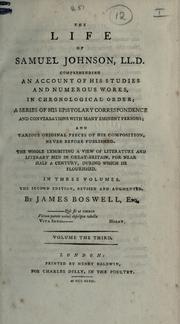 Life of JohnsonBy guest
by James Boswell
“Boswell's Life of Johnson — published 1791 — permanently transformed biographical writing.”
More from The Rest is History
We summarize every new episode. Want them in your inbox?
705. Queen Victoria’s Revenge: The Mad Emperor of Abyssinia (Part 1)
704. Roman Civil War: Master of the Republic (Part 4)
703. Roman Civil War: Marching on the Senate (Part 3)
702. Roman Civil War: The Barbarian Invasion (Part 2)
701. Roman Civil War: Rise of the General (Part 1)
Similar Episodes
Related episodes from other podcasts

Lex Fridman Podcast
May 29
#497 – Biggest Mysteries in Physics: Antimatter, Dark Energy & ToE – Don Lincoln

Morning Brew Daily
Jan 12
Trump Calls for 10% Cap on Credit Card Interest & Golden Globes Welcome Podcasts

Modern Wisdom
Sep 12
Raccoon Wars, NFL Scammers & Past Crimes - Matt McCusker #1149

a16z Podcast
Sep 10
How AI Is Rewriting the Power Law of Venture Capital

Lenny's Podcast
Sep 6
Why companies are becoming a series of loops | Anish Acharya (a16z)
Explore Related Topics
This podcast is featured in Best History Podcasts (2026) — ranked and reviewed with AI summaries.
Read this week's Health & Longevity Podcast Insights — cross-podcast analysis updated weekly.
You're clearly into The Rest is History.
Every Monday, we deliver AI summaries of the latest episodes from The Rest is History and 192+ other podcasts. Free for one show.
Start My Monday DigestNo credit card · Unsubscribe anytime