650. London’s Golden Age: The Mad Life of Dr Johnson (Part 1)
Episode
65 min
Read time
3 min
Topics
Career Growth, Sales & Revenue, Crypto & Web3
AI-Generated Summary
Key Takeaways
- ✓Documenting conversation as historical record: Boswell's compulsive journal-keeping, beginning the night he met Johnson on May 16, 1763, created an unprecedented archive of a living person's speech. Before audio recording existed, no figure in history had their conversation preserved so completely. Writers and historians can learn from Boswell's method: record encounters immediately, in detail, treating ordinary dialogue as primary source material worth preserving for posterity.
- ✓Celebrity built on conversation, not just publication: Johnson became Georgian London's dominant cultural figure primarily through talk, not writing. His circle included David Garrick, Joshua Reynolds, and Edmund Burke — all treating him as a gravitational center. His most quoted lines ("When a man is tired of London, he is tired of life") spread orally first. Building intellectual reputation through consistent, high-quality verbal engagement remains a replicable strategy for establishing authority in any field.
- ✓Overcoming compounding disadvantage through specialization: Johnson entered adulthood with near-blindness from tubercular wet-nurse milk, no university degree, no money, convulsive physical tics, and shabby appearance. He compensated by developing near-total mastery of Latin, Greek, English literature, and Shakespeare. His trajectory demonstrates that extreme depth in a narrow domain can override multiple structural disadvantages when pursued with sufficient consistency over decades.
- ✓The dictionary as career-defining hack work: Johnson completed a comprehensive English dictionary in nine years with six assistants — a task that took Italian academics 20 years and French academics 55 years. The commission came in 1746 specifically because publishers recognized his linguistic precision. The lesson: sustained, unglamorous technical work done at exceptional quality eventually commands recognition, even when years of obscurity precede it. Johnson's £300 annual pension from the Crown followed directly.
- ✓Depression managed through social structure, not isolation: Johnson described his recurring "morbid melancholy" — likely clinical depression — as his greatest obstacle, distinct from laziness. His coping mechanism was relentless socialization: maintaining a fixed apartment in Inner Temple Lane, frequenting The Mitre pub on Fleet Street, and anchoring himself to Covent Garden's bookshops. He deliberately built external social accountability structures rather than relying on internal motivation during depressive episodes.
What It Covers
Hosts Tom Holland and Dominic Sandbrook profile Samuel Johnson, the 18th-century literary giant who rose from poverty in Lichfield to dominate Georgian London's intellectual scene, and James Boswell, the 22-year-old Scottish diarist whose obsessive documentation of Johnson's conversation produced what many consider the greatest biography in the English language.
Key Questions Answered
- •Documenting conversation as historical record: Boswell's compulsive journal-keeping, beginning the night he met Johnson on May 16, 1763, created an unprecedented archive of a living person's speech. Before audio recording existed, no figure in history had their conversation preserved so completely. Writers and historians can learn from Boswell's method: record encounters immediately, in detail, treating ordinary dialogue as primary source material worth preserving for posterity.
- •Celebrity built on conversation, not just publication: Johnson became Georgian London's dominant cultural figure primarily through talk, not writing. His circle included David Garrick, Joshua Reynolds, and Edmund Burke — all treating him as a gravitational center. His most quoted lines ("When a man is tired of London, he is tired of life") spread orally first. Building intellectual reputation through consistent, high-quality verbal engagement remains a replicable strategy for establishing authority in any field.
- •Overcoming compounding disadvantage through specialization: Johnson entered adulthood with near-blindness from tubercular wet-nurse milk, no university degree, no money, convulsive physical tics, and shabby appearance. He compensated by developing near-total mastery of Latin, Greek, English literature, and Shakespeare. His trajectory demonstrates that extreme depth in a narrow domain can override multiple structural disadvantages when pursued with sufficient consistency over decades.
- •The dictionary as career-defining hack work: Johnson completed a comprehensive English dictionary in nine years with six assistants — a task that took Italian academics 20 years and French academics 55 years. The commission came in 1746 specifically because publishers recognized his linguistic precision. The lesson: sustained, unglamorous technical work done at exceptional quality eventually commands recognition, even when years of obscurity precede it. Johnson's £300 annual pension from the Crown followed directly.
- •Depression managed through social structure, not isolation: Johnson described his recurring "morbid melancholy" — likely clinical depression — as his greatest obstacle, distinct from laziness. His coping mechanism was relentless socialization: maintaining a fixed apartment in Inner Temple Lane, frequenting The Mitre pub on Fleet Street, and anchoring himself to Covent Garden's bookshops. He deliberately built external social accountability structures rather than relying on internal motivation during depressive episodes.
- •Tory politics as pro-poor philosophy in 18th-century context: Johnson's Toryism in the 1740s-1760s meant something distinct from modern conservatism. He viewed the Crown and Church of England as institutional protections for the poor against Whig commercial interests. He gave money consistently to street beggars, opposed American slaveholders' liberty rhetoric as hypocrisy, and criticized colonial land seizures from Native Americans. His political identity combined hierarchy, paternalism, and genuine material concern for the economically vulnerable simultaneously.
Notable Moment
Johnson's pension acceptance created an apparent contradiction: his own dictionary defined "pension" as payment given to a state hireling for betraying their country, yet he accepted £300 annually from George III. The Prime Minister resolved this by framing the payment as recognition for past achievement rather than future political compliance, which Johnson accepted.
Episode Transcript
At rank t at Davis's in Russell Street and about seven came in the great mister Samuel Johnson, whom I have so long wished to see. Mister Davies introduced me to him. As I knew his mortal antipathy of the Scotch, I cried to Davies, don't tell where I come from. However, he said, from Scotland. Mister Johnson, said I, indeed I come from Scotland, but I cannot help it. Sir, replied he, that I find is what a very great many of your countrymen cannot help. Mister Johnson is a man of a most dreadful appearance. He's a very big man, is troubled with sore eyes, the palsy, and the king's evil. He's very slovenly in his dress and speaks with a most uncouth voice, Yet his great knowledge and strength of expression command vast respect, and they render him very excellent company. He has great humor, and he is a worthy man. But his dogmatical roughness of manners is disagreeable. It's crunch time at work, and you need to bring wings to your workday. Visit redbull.com/gettingitdone and answer a couple questions about your work style to get a Spotify customized playlist tuned to your productivity. Plus, score a can of Red Bull on us while you go from to do to done. And remember, Red Bull gives you wings. Supplies are limited. Terms apply. Visit the website for more information. Springsteen, Deliver Me from Nowhere is now streaming on Hulu and Hulu on Disney plus. Everything died. Trying to find something real in all the noise. You always do. Everything The artist you know, the story you don't. See Golden Globes nominee, Jeremy Allen White, as Bruce Springsteen. Critics are saying it's a career defining performance. Let's burn this place down, Johnny. Springsteen, Deliver Me from Nowhere, now streaming on Hulu and Hulu on Disney plus. Rated PG 13. So that is arguably the most famous meeting in British literary history, perhaps all literary history. It took place in Thomas Davies's bookshop off Covent Garden in London on the 05/16/1763. Now one of these people was then unknown, but the other one was already a celebrity. This was the great mister Samuel Johnson. He was a 53 year old poet. He was a biographer. He was a critic. He was a great essayist on morals, and he was what's called a lexicographer, which means somebody who basically write down the definition of words and compiled dictionaries. And Mr. Samuel Johnson had lived for decades in obscurity and indeed in relative poverty. But in recent years before this meeting in 1763, he had emerged to become one of the preeminent, well, let's use the word, celebrities of Georgian London, fated across Britain and known indeed across Europe. So Tom, tell us all about Doctor Johnson. So, yeah, he is absolutely, by this point, the dominant literary figure in London. And he is feared as well as admired. So he's been given this nickname, the great cham, which is basically, …
Get the full transcript (11,426 words) + summary by email — free
One-time email with the complete transcript and AI summary of this episode. No account needed.
One email, no spam. We’ll also show you what SignalCast does.

You just read a 3-minute summary of a 62-minute episode.
Get The Rest is History summarized like this every Monday — plus up to 2 more podcasts, free.
Pick Your Podcasts — FreeKeep Reading


Books, tools, and gear mentioned in this episode
SignalCast may earn commission on purchases via these links. As an Amazon Associate, SignalCast earns from qualifying purchases.
Books
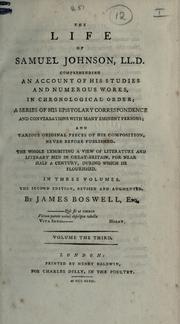
by James Boswell
“James Boswell, the 22-year-old Scottish diarist whose obsessive documentation of Johnson's conversation produced what many consider the greatest biography in the English language.”
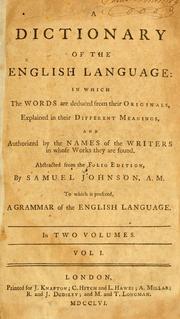
by Samuel Johnson
“Johnson completed a comprehensive English dictionary in nine years with six assistants — a task that took Italian academics 20 years and French academics 55 years.”
More from The Rest is History
We summarize every new episode. Want them in your inbox?
716. King Arthur: The Truth Behind the Legend (Part 4)
715. King Arthur: The Mysteries of Merlin (Part 3)
714. King Arthur: Lancelot and the Round Table (Part 2)
713. King Arthur: The Once & Future King (Part 1)
712. The Terror: The Fall of Robespierre (Part 6)
Similar Episodes
Related episodes from other podcasts


Explore Related Topics
This podcast is featured in Best History Podcasts (2026) — ranked and reviewed with AI summaries.
You're clearly into The Rest is History.
Every Monday, we deliver AI summaries of the latest episodes from The Rest is History and 192+ other podcasts. Free for one show.
Start My Monday DigestNo credit card · Unsubscribe anytime