Ep. 386: Hegel on Society (Part Two)
Episode
60 min
Read time
3 min
Topics
Relationships, Software Development, Philosophy & Wisdom
AI-Generated Summary
Key Takeaways
- ✓Ethical Development Arc: Hegel maps a three-stage progression in sections 438–463: immediate ethical life (living by custom without reflection), the split into human law versus divine law, and eventual collapse into individual moral conscience. Understanding this arc helps readers see why Kantian morality appears late in Hegel's system — not as the foundation of ethics, but as a transitional, incomplete resolution of a deeper social contradiction.
- ✓Human Law vs. Divine Law Distinction: Human law operates in two registers simultaneously — universal known custom and the concrete particularity of government institutions. Divine law, by contrast, is the pre-articulate ethical substrate of the family, the intuitive sense of obligation that precedes legislation. Recognizing this distinction clarifies why Antigone's duty to bury her brother and Creon's civic prohibition represent genuinely competing ethical claims, not simply stubbornness on either side.
- ✓Spirit as Social, Not Individual: Hegel insists that spirit operates at the communal level, not the individual level. When a person makes an ethical decision, they implicitly invoke a universal framework that is socially constructed and historically embedded. This means individual moral reasoning is always already an abstraction from collective life — a point that directly challenges Kantian ethics, which treats the individual rational will as the primary ethical unit.
- ✓Alienation as the Engine of Dialectic: Alienation recurs across every stage of Hegel's Phenomenology — from consciousness through ethical life — and functions as the structural driver of dialectical movement. Each apparent resolution (custom, law, conscience) contains a new form of alienation that forces the next stage. Feuerbach and Marx later argue Hegel never fully resolves alienation, making this the central contested claim in the post-Hegelian tradition.
- ✓The Family as Ethical Training Ground: Hegel argues in section 450 that the family's ethical significance does not derive from bonds of love but from the individual's relation to the family as a whole unit. The family trains individuals toward concern for a collective end, which then prepares them for citizenship in the broader community. Love alone cannot ground ethics because it is contingent and particular, whereas ethical obligation must be non-contingent and universal.
What It Covers
Part two of The Partially Examined Life's reading of Hegel's Phenomenology of Spirit (sections 438–463) traces how ethical life evolves from unreflective custom through the conflict between human law and divine law, using Sophocles' Antigone as the central case study, culminating in the Enlightenment's dissolution of that tension into individual moral conscience.
Key Questions Answered
- •Ethical Development Arc: Hegel maps a three-stage progression in sections 438–463: immediate ethical life (living by custom without reflection), the split into human law versus divine law, and eventual collapse into individual moral conscience. Understanding this arc helps readers see why Kantian morality appears late in Hegel's system — not as the foundation of ethics, but as a transitional, incomplete resolution of a deeper social contradiction.
- •Human Law vs. Divine Law Distinction: Human law operates in two registers simultaneously — universal known custom and the concrete particularity of government institutions. Divine law, by contrast, is the pre-articulate ethical substrate of the family, the intuitive sense of obligation that precedes legislation. Recognizing this distinction clarifies why Antigone's duty to bury her brother and Creon's civic prohibition represent genuinely competing ethical claims, not simply stubbornness on either side.
- •Spirit as Social, Not Individual: Hegel insists that spirit operates at the communal level, not the individual level. When a person makes an ethical decision, they implicitly invoke a universal framework that is socially constructed and historically embedded. This means individual moral reasoning is always already an abstraction from collective life — a point that directly challenges Kantian ethics, which treats the individual rational will as the primary ethical unit.
- •Alienation as the Engine of Dialectic: Alienation recurs across every stage of Hegel's Phenomenology — from consciousness through ethical life — and functions as the structural driver of dialectical movement. Each apparent resolution (custom, law, conscience) contains a new form of alienation that forces the next stage. Feuerbach and Marx later argue Hegel never fully resolves alienation, making this the central contested claim in the post-Hegelian tradition.
- •The Family as Ethical Training Ground: Hegel argues in section 450 that the family's ethical significance does not derive from bonds of love but from the individual's relation to the family as a whole unit. The family trains individuals toward concern for a collective end, which then prepares them for citizenship in the broader community. Love alone cannot ground ethics because it is contingent and particular, whereas ethical obligation must be non-contingent and universal.
- •Death as Universalization: Hegel makes the counterintuitive claim that the dead individual achieves a form of simple universality — freed from the contingent accidents of lived experience and concentrated into a completed singular shape. The family holds ethical responsibility for the dead precisely because the state's ethical relationship to a person ends at death. This framing explains why Antigone's insistence on burial carries genuine ethical weight within Hegel's framework.
Notable Moment
The hosts note that Hegel treats the American founding as a rare historical example of deliberate, self-conscious social planning — contrasting it with societies that simply inherit custom unreflectively. This frames constitutional democracy not as a political preference but as a specific philosophical stage in spirit's self-realization.
Episode Transcript
You are listening to the partially examined life episode three eighty six, part two, discussing Hegel's phenomenology of spirit, the spirit section sections four thirty eight through four sixty three. And we've given a lot of summary and a lot of context and a lot of where is this going. But as far as getting through the actual text, I think you've gotten through three of the sections. Are we up to, Yeah. Maybe we can try to be more synoptic, but Yep. Yeah. Four forty one, spirit manifests itself as the ethical life of a nation. Yep. The the communal life. Yep. But we have to move beyond that. We have to move beyond the does he use the word beautiful here? The beauty of ethical life. Yes. Okay. He says, yeah, he says, it must advance to the consciousness of what it is immediately. Must leave behind it the beauty of ethical life by passing through a series of shapes attained to a knowledge of itself. So the beauty of ethical life, I think, from commentary, basically, is just this stage of living without questioning. Right? Living in custom without having reflectively questioned it yet. And the whole Antigone movement, which we're gonna get a preamble to here, this conflict between what the state demands and what the family might demand of me. I gotta bury my brother. Creon won't let me. That internal contradiction is gonna move us out of this beautiful stage where there seems to become some kind of harmony between the demands of the state and the demands of the family or the the divine law. Yeah. So four forty two and four forty three are the end of this introductory section. So to say where we're headed in this whole 150 pages or whatever it is of the spirit section is the living ethical world, spirit in its truth. We have spirit in its immediacy. Right? That's the always the the preliminary stage. We're just living according to custom. The spirit in its truth is a a society that really understands what it is doing, that is doing self conscious planning. This is my interpretation, instead of just letting, oh, the customs are just what we've adopted. We've, you know, we need to actually deliberately have a society. So maybe the American founding would be something that would qualify as like a deliberate plan for government, maybe the first one in history. So so we often claim. Yeah. So we go from spontaneous ethical life to formal legal systems, and that gives us this split between ultimately, he'll say culture and faith, basically. But, ultimately, at the end of the section, we get this collapse back. So we get this division between culture and faith, and then it collapses back into individual moral conscience, which replaces, I think, God in a way as the essential thing, God of the community as the essential thing. So, in a weird way, it's almost like the …
Get the full transcript (10,762 words) + summary by email — free
One-time email with the complete transcript and AI summary of this episode. No account needed.
One email, no spam. We’ll also show you what SignalCast does.

You just read a 3-minute summary of a 57-minute episode.
Get The Partially Examined Life summarized like this every Monday — plus up to 2 more podcasts, free.
Pick Your Podcasts — FreeKeep Reading
More from The Partially Examined Life
Ep. 402: Plato Talks Homer: Hippias Minor and Ion (Part Two)
Oct 19 · 55 min

The Daily (NYT)
'The Interview': Wellness Guru Jay Shetty Has Raised Some Doubts. Including His Own.
Feb 21
More from The Partially Examined Life
PEL Presents NEM#262: Bruce Cockburn Expands Political/Spiritual Folk
Oct 18 · 66 min

Cognitive Revolution
A World Model of Life: Biohub's Alex Rives on Virtual Cells, Measurement, & the $1.8B Data Push
Oct 20
Books, tools, and gear mentioned in this episode
SignalCast may earn commission on purchases via these links. As an Amazon Associate, SignalCast earns from qualifying purchases.
Books
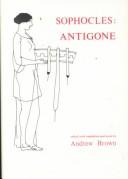
by Sophocles
“using Sophocles' Antigone as the central case study, culminating in the Enlightenment's dissolution of that tension into individual moral conscience”
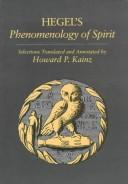
by Georg Wilhelm Friedrich Hegel
“Part two of The Partially Examined Life's reading of Hegel's Phenomenology of Spirit (sections 438–463) traces how ethical life evolves from unreflective custom through the conflict between human law and divine law”
podcast
“Part two of The Partially Examined Life's reading of Hegel's Phenomenology of Spirit”
More from The Partially Examined Life
We summarize every new episode. Want them in your inbox?
Ep. 402: Plato Talks Homer: Hippias Minor and Ion (Part Two)
PEL Presents NEM#262: Bruce Cockburn Expands Political/Spiritual Folk
PEL Presents PMP#232: Obsession (for Men?)
Ep. 402: Plato Talks Homer: Hippias Minor and Ion (Part One)
PEL Presents Closereads: Gilbert Ryle on Self-Knowledge (Part One)
Similar Episodes
Related episodes from other podcasts

The Daily (NYT)
Feb 21
'The Interview': Wellness Guru Jay Shetty Has Raised Some Doubts. Including His Own.

Cognitive Revolution
Oct 20
A World Model of Life: Biohub's Alex Rives on Virtual Cells, Measurement, & the $1.8B Data Push

Huberman Lab
Oct 12
How Food Choices Shape Memory, Cognition & Cravings | Dr. Scott Kanoski

The Proof
Oct 5
My Plaque Protocol, and Why I Started a PCSK9 Inhibitor | Simon Hill, MSc

a16z Podcast
Sep 24
The Case Against an AI Pause | Eddy Lazzarin
Explore Related Topics
This podcast is featured in Best Philosophy Podcasts (2026) — ranked and reviewed with AI summaries.
Read this week's Software Engineering Podcast Insights — cross-podcast analysis updated weekly.
You're clearly into The Partially Examined Life.
Every Monday, we deliver AI summaries of the latest episodes from The Partially Examined Life and 192+ other podcasts. Free for one show.
Start My Monday DigestNo credit card · Unsubscribe anytime